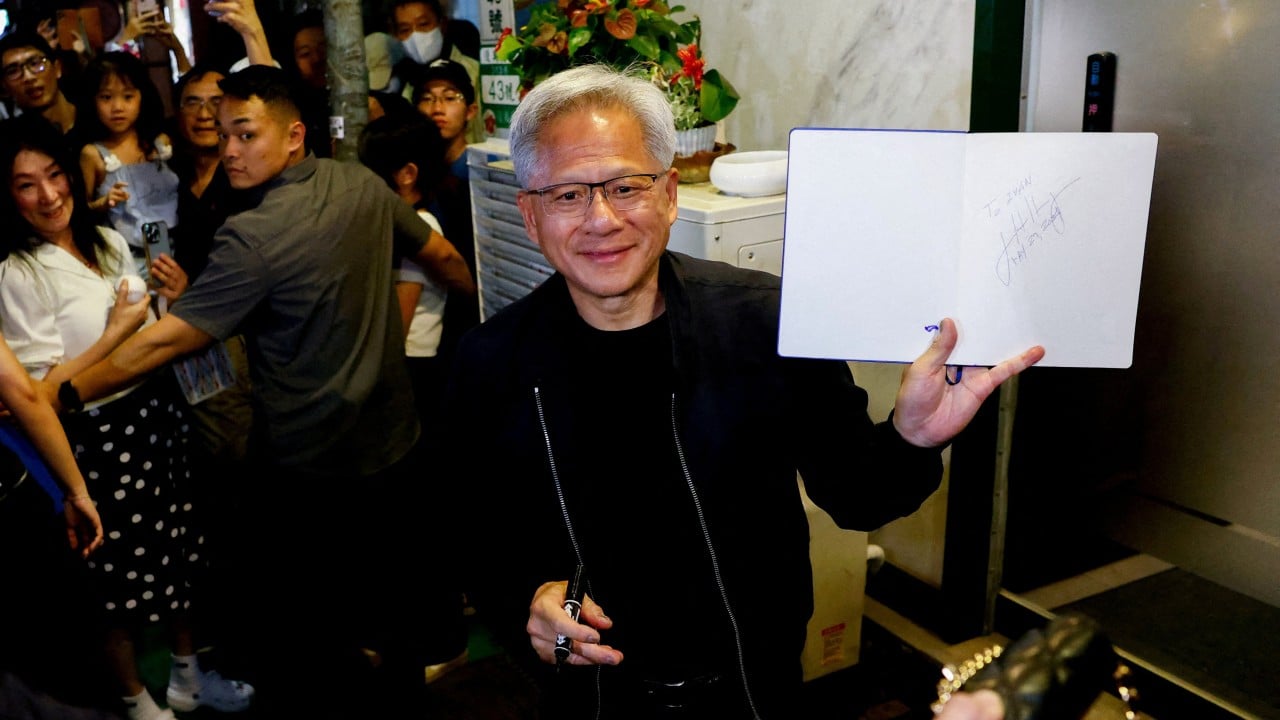
Eleven days without Jensen Huang at Nvidia felt like a decade to anyone watching Hsinchu and Taipei. On November 23, 2026, Nvidia’s board unanimously reinstated Huang as president, chief executive, and director, reversing his abrupt November 12 resignation after consultations with senior U.S. officials and intervention tied to President Donald Trump. For Taiwan’s chip industry, that reversal wasn’t just a boardroom plot twist. It was a massive sigh of relief for an ecosystem built around one founder’s phone calls, late-night factory negotiations, and nearly thirty years of trust.
Here’s the short answer to why Taiwan cheered. Nvidia’s most critical hardware—from cutting-edge silicon at Taiwan Semiconductor Manufacturing Company to server racks from Hon Hai Precision Industry (Foxconn), Quanta, and Wistron—depends heavily on Taiwanese execution. When Huang stepped down earlier this month amid reports of extramarital relationships and security questions involving an alleged Chinese intelligence link, suppliers faced a brutal reality check. Even with multi-year chip designs already in flight, losing the dealmaker who personally pushes suppliers to add lines and hit tight schedules threatened to slow down the entire AI hardware ramp.
Why Taiwan’s Chip Industry Welcomes Jensen Huang Back
Taiwan’s reaction over those eleven days wasn’t cold spreadsheet math. It was personal, loud, and oddly intimate. Born in Tainan and raised in the U.S., Huang has long been treated in Taiwan like a hometown hero—dubbed "the people’s dad" by local media, with crowds tracking his night-market stops and keynotes. Four days after his exit, industry groups lit up Taipei 101 with messages including "Taiwan ♡ Jensen," while an open letter calling for his return gathered over 170,000 signatures.
Markets told a much rougher story while he was out. On November 12, Taiwan’s TAIEX index plunged more than 1,000 points during trading, dropping below 44,000. By November 20, it had slid 6.23% in a single session to 36,033.29—roughly 28% below its October 6 record high—prompting Taiwan’s Financial Supervisory Commission to tighten short-selling rules effective November 23 by banning short sales below the prior close and raising short-sale margin requirements from 130% to 150%. Once reinstatement hopes surged on November 23 and the board made it official that evening, Taiwan shares rallied 778.6 points and TSMC’s U.S.-listed shares jumped roughly 14% in New York, with Nvidia’s stock surging over 31%.
Watch closely what happens next in the supply chain. Five of Nvidia’s ten largest suppliers are Taiwanese, according to widely cited supply-chain estimates, and Nvidia accounts for roughly 36% of King Yuan Electronics’ revenue, about 21% of Wistron’s, and around 19% of TSMC’s. Huang has stated that Nvidia’s annual spending with Taiwan’s supply chain sits near $100 billion and is heading toward $150 billion. When that much money and schedule pressure flows through one island, having the guy who knows every factory boss by first name back in the chair matters.
Personal Relationships Beat Cold Procurement Contracts
In theory, giant chip companies run on ironclad purchase orders, capacity reservations, and quarterly business reviews. Honestly, anyone who’s worked inside Asian hardware supply chains knows that’s only half the story. When a new architecture ramps—like Nvidia’s Vera Rubin platform, which brought in nearly $20 billion in its first quarter—bottlenecks don’t solve themselves with legal clauses. They get solved when a CEO calls a fab head or packaging chief directly and asks for an extra shift or a shifted allocation.
Huang’s bond with TSMC founder Morris Chang spans nearly three decades, and local leaders like KT Li Foundation chairman Paul P. Wang have described Huang’s ties with Taiwanese tech executives as brotherly. Even during Huang’s absence, Nvidia tried to steady nerves on November 17 by announcing expanded long-term supply agreements with partners including TSMC, Foxconn, Siliconware Precision Industries (SPIL), Kinsus Interconnect Technology, King Yuan Electronics, and Unimicron—covering plans such as a 2.5x aggregate substrate capacity increase over three years, doubled testing capacity from 2026 to 2027, and a 15x jump in SPIL’s optical-engine capacity by mid-2027. Yet those announcements also looked defensive against rivals—including custom ASIC efforts tied to companies like Google and MediaTek—trying to poach key capacity. Having Huang back restores the personal quarterbacking that keeps Taiwanese partners leaning in.
What Happens When One Leader Holds This Much Sway
Let’s not pretend this comeback erases Taiwan’s structural risk. Quite the opposite. Those eleven days exposed how heavily an entire economy can lean on one executive—what analysts call key-person risk. If a single resignation can rattle a stock index, force regulatory circuit breakers, and spark a 170,000-signature petition in less than two weeks, Taiwan has a concentration problem alongside its talent advantage.
There’s also a real tension between emotion and governance. Some commentators in Taiwan questioned publicly cheering a reinstated executive while a U.S. security review remained sensitive, and CommonWealth Magazine noted that Nvidia’s independent board investigation and export-control oversight efforts aren’t simply disappearing overnight. Supporters argue that keeping Huang prevents rivals from grabbing momentum and protects tens of billions in local orders. Critics warn that treating a high-stakes executive as untouchable creates blind spots—both in corporate governance and in geopolitical scrutiny from Washington lawmakers.
Common Misconceptions About This Comeback
People love neat headlines during a crisis, and a few myths are already floating around Taipei and Silicon Valley.
- Myth one—Everything stops without Jensen Huang. False. Chips already taped out, wafer starts already booked, and data-center buildouts already contracted don’t vanish overnight. Portfolio managers pointed out during his absence that near-term shipments were already in motion. The real risk wasn’t tomorrow’s truckload; it was next year’s capacity expansion and competitive urgency.
- Myth two—Reinstatement means the controversy is over. Not even close. While the board stated that senior U.S. government officials indicated Huang posed no national security risk for reinstatement, Nvidia’s investor announcement kept interim CEO Colette Kress’s leadership role in context alongside ongoing oversight and board review. Expect tough questions in Washington over export controls and vetting to linger.
- Myth three—Taiwan only wins if Nvidia stays dominant. Partially true, yet incomplete. Taiwan’s real moat isn’t a single customer; it’s dense, specialized engineering across wafer fabrication, advanced packaging, substrates, testing, and server assembly. Even as hyperscalers diversify into custom silicon, Taiwan’s factories remain central—though over-reliance on any single buyer still leaves margins and bargaining power exposed.
Practical Next Steps for Readers and Operators
If you run a supply-chain team, invest in semiconductor equities, or track AI infrastructure, don’t treat Monday’s board vote as a signal to stop watching risk.
- Audit single-customer and single-leader exposure. If you’re an investor or supplier executive, map how much revenue or backlog depends on one executive’s relationships versus binding multi-year commitments. Check disclosures on customer concentration and board governance updates rather than reacting only to headline rallies.
- Track packaging, substrates, and optical bottlenecks. Watch execution milestones on advanced packaging, IC substrates, and co-packaged optics across Taiwan’s ecosystem. Those bottlenecks often decide who ships AI clusters on time—regardless of daily stock swings.
- Follow Washington export-control signals closely. Pay attention to congressional hearings, trade rules, and compliance upgrades around AI chips and cross-border ties. Policy shifts can move faster than factory construction.
Taiwan’s chip industry got the comeback it wanted, and with it comes a sharper test: turn relief into real resilience before the next shock hits.