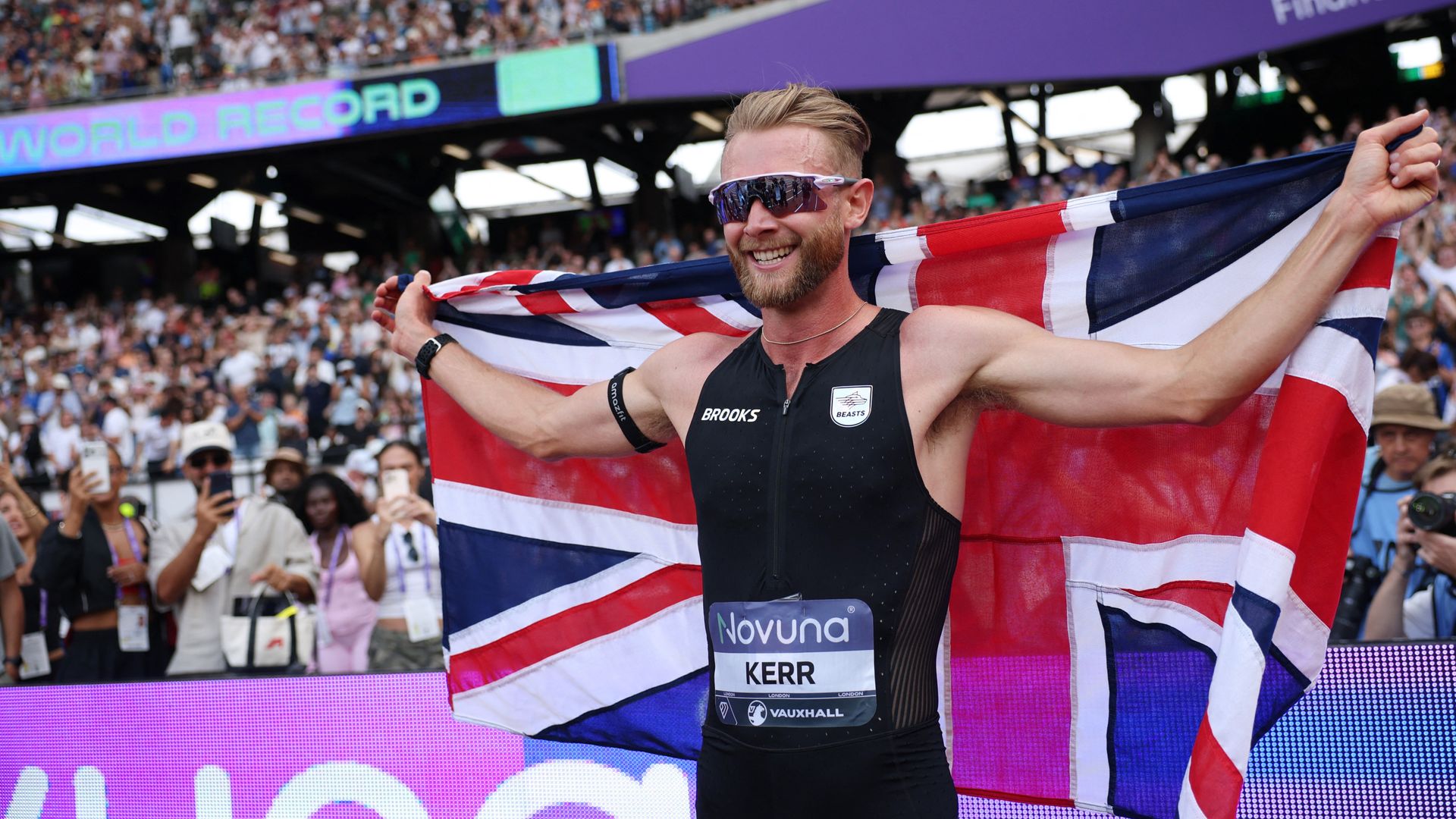
Hicham El Guerrouj’s men’s mile world record stood so long it started to feel immortal. Set in Rome back in July 1999, the time of 3:43.13 mocked generation after generation of middle-distance runners. Track fans openly wondered if human biology had hit a hard ceiling. Then Josh Kerr stepped onto the London Stadium track at the 2026 Diamond League, threw down a blistering 3:42.66, and completely changed the conversation about what's possible on two legs.
If you think this was just another good day at the office for a world-class runner, you're missing the bigger picture. This wasn't a surprise victory or a lucky break with the weather. Kerr targeted this exact moment with a hyper-focused public campaign called "Project 222." He literally told the entire world exactly what he was going to do, invited the pressure, and then executed the plan flawlessly in front of 60,000 screaming home fans.
The Mechanics of Breaking a 27-Year-Old Wall
To truly appreciate what happened in London, you need to understand the terrifying pace required to run a 3:42.66 mile. We aren't just talking about a fast sprint. This is about maintaining a near-sprint for four consecutive laps without letting lactic acid paralyze your muscles.
Kerr leaned heavily on a disciplined pacing strategy executed by his training partner Brannon Kidder and Žan Rudolf. The pacemakers did exactly what they were paid to do. They towed Kerr through the first 400 meters in a scorching 54.75 seconds. By the time they hit the 800-meter mark at 1:50.63, the pacers stepped aside. Kerr was entirely on his own, standing on the edge of history.
He reached the 1200-meter split at 2:46.39. Think about that for a second. Most elite regional runners would be thrilled to hit that time for a 1K race, but Kerr still had an entire lap to go.
The Duel That Made the Record Possible
World records rarely happen in a vacuum. You need someone pushing you, breathing down your neck, making sure you don't sub-consciously relax. For Kerr, that shadow was Team USA's Yared Nuguse.
Nuguse didn't just show up to watch a British coronation. He tracked Kerr’s heels through the third lap, applying massive pressure and forcing the pace to stay honest. When you're running at that velocity, the temptation to ease off by a fraction of a second is overwhelming. Nuguse eliminated that option.
Ultimately, Nuguse couldn't hold onto the brutal closing tempo, finishing second in an incredibly fast 3:45.69. Great Britain's Jake Heyward grabbed third with a personal best of 3:46.73. But it was Kerr’s final surge over the last 110 meters that broke the Moroccan legend's ghost. Kerr admitted after the race that he felt his body slowing down on the home stretch, but the deafening roar of the home crowd kept his legs moving just fast enough to glide across the line.
Why the Mile Still Holds Magic in 2026
We live in an era dominated by the 1500 meters at the Olympics and World Championships. The mile is technically a non-Olympic distance, a relic of a bygone era of track and field. Yet, it retains a cultural grip that the metric equivalent simply cannot match. Ever since Roger Bannister cracked the four-minute barrier in 1954, the mile has been the ultimate yardstick for human speed and endurance.
What makes Kerr’s achievement so staggering is the sheer gap between generations. In 1999, track technology looked vastly different. There were no advanced carbon-plated spikes, no sophisticated wave-light pacing technology embedded in the track rails, and training methodologies were vastly different.
Purists will undoubtedly argue that modern super-shoes make comparison unfair. But tools don't run the laps. Kerr still had to internalize the agony of a 3:42 pace and find a way to shave nearly half a second off a record that defied every great runner for nearly three decades.
What This Means for Middle-Distance Running
Kerr’s historic run shatters the psychological barrier holding back the current crop of elite milers. For years, athletes treated El Guerrouj’s time like a sacred, untouchable monument. By going under 3:43, Kerr proved the old gods can be dethroned.
If you want to track where middle-distance running goes from here, keep your eyes on the upcoming Diamond League circuit. The rivalry between Kerr, Nuguse, and Jakob Ingebrigtsen is no longer just about medals. It's an all-out war against the clock.
Pay close attention to the splits in the next few 1500m races. Now that the mile record has fallen, expect the 1500m world record of 3:26.00—another El Guerrouj masterpiece from 1998—to face a serious, coordinated assault. The psychological ceiling is gone, and the track world is officially operating in uncharted territory.