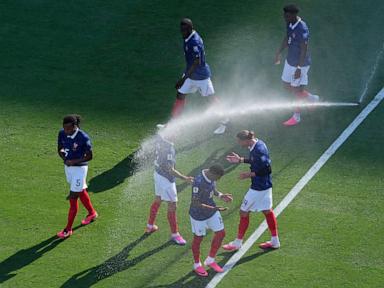
Playing high-stakes soccer in 100-degree weather isn't just brutal. It's downright dangerous. As millions of fans pack up their coolers for the historic 250th Independence Day weekend, an unforgiving meteorological monster is crashing the party. A massive heat dome is parked directly over the central and eastern United States and parts of Canada. This isn't your average summer sweat-fest. We're looking at heat indices climbing between 105 and 115 degrees Fahrenheit. Right now, as the World Cup knockout rounds heat up, the actual physical safety of the world's best athletes and hundreds of thousands of traveling fans is on the line.
The timing couldn't be worse. The tournament has reached its most intense phase. Players are already exhausted from a grueling club season and a demanding group stage. Now, they have to sprint miles on scorching grass while breathing in air that feels like a sauna. FIFA thinks mandatory hydration breaks will solve the problem. They won't. They're just a band-aid on a gaping wound.
The Dangerous reality of the 2026 Heat Dome
A heat dome happens when a high-pressure system traps hot air and humidity over a massive region. It acts like a giant lid on a boiling pot. This specific system is pulling immense moisture straight from the Gulf of Mexico, turning major metropolitan areas from Kansas City to Toronto, East Rutherford, and Philadelphia into literal pressure cookers.
The National Weather Service has issued sweeping heat alerts for major hubs like Chicago, Detroit, Washington, D.C., and New York. What makes this specific weather event terrifying is the lack of nighttime relief. Usually, temperatures drop after dark, giving the human body a chance to recover. Not this time. Overnight lows are hovering in the high 70s and low 80s. AccuWeather Senior Meteorologist Alan Reppert pointed out that New York is staring down its highest temperatures since 2013. Even for evening matches, when the sun dips below the horizon, the thick, humid air will remain heavy and hazardous.
The Wet Bulb Problem facing elite athletes
Soccer is a sport built on continuous movement. Midfielders regularly run upward of seven miles per match. When you subject that level of cardiovascular strain to a heat index of 115 degrees, the human cooling system begins to fail.
Sports scientists look closely at the Wet Bulb Globe Temperature (WBGT) rather than just the number on a standard thermometer. The WBGT measures heat stress in direct sunlight, taking into account humidity, wind speed, and cloud cover. Once the WBGT crosses 28 degrees Celsius (around 82 degrees Fahrenheit in wet bulb terms, which correlates to a 105-degree heat index), strenuous physical activity becomes high-risk. The World Weather Attribution group has flagged this exact threshold for the July 4 weekend matches.
When humidity is this high, sweat doesn't evaporate off the skin. If sweat can't evaporate, the body can't shed heat. Internal core temperatures spike. Performance drops off a cliff. Worse, players risk heat exhaustion and heat stroke, which can cause organs to shut down.
Last year's Club World Cup in the U.S. was described by FIFPRO, the global players' union, as a serious wake-up call regarding extreme weather. That warning was ignored. Now, the tournament is locked into these dates, and the players have to deal with the fallout.
Hydration breaks are a corporate band aid
FIFA's primary solution to this crisis is a mandatory three-minute hydration break in each half of every match. It looks good on a broadcast. It gives commentators something to talk about. But let's be honest about what it actually accomplishes.
Three minutes of drinking water doesn't lower a player's core body temperature when they are running on a field surrounded by concrete. Critics are right to point out that these breaks disrupt the flow and tactical rhythm of the game. More importantly, they provide a false sense of security. Drinking water prevents dehydration, but it does not stop the body from overheating when the external environment is hotter than human skin.
Some host cities are better equipped than others. Stadiums in Atlanta, Dallas, and Houston feature retractable roofs and heavy-duty air conditioning. The matches inside those venues will be perfectly fine. But getting to the game is a different story.
Take the home of the Dallas Cowboys in Arlington. The stadium itself will be cool, but the trek across the vast, sprawling asphalt parking lots is a localized nightmare. Cities built around car infrastructure absorb and radiate heat long after the sun goes down. The urban heat island effect means the concrete outside the stadium can be significantly hotter than the reported regional temperature.
Other venues don't even have the luxury of a roof. Venues like Lincoln Financial Field in Philadelphia or MetLife Stadium in New Jersey leave both players and fans completely exposed to the elements. Toronto recently triggered its Heat Relief Strategy ahead of the Portugal and Croatia match after Environment and Climate Change Canada issued urgent warnings. Local governments are scrambling, but you can't air-condition an open-air stadium.
The fan zones are a major medical emergency waiting to happen
While players have elite medical staffs monitoring their every breath, the fans in the stands and the packed fan zones have no such luxury. The Fourth of July weekend is already one of the busiest travel periods of the year. Combine holiday crowds, alcohol consumption, and a historic 250th American birthday celebration with triple-digit heat, and you have a recipe for a medical crisis.
New York Mayor Zohran Mamdani recently urged residents and visitors to use designated cooling centers, while city workers extended public pool hours and set up misting stations. But fan zones are fundamentally designed to hold thousands of people packed tightly together.
Dr. Alina Mitina, an emergency department physician at Hackensack University Medical Center, warned that fans must actively seek out shade and immediately recognize early signs of heat illness. Dizziness, nausea, heavy sweating, and sudden fatigue aren't just signs that you need a break. They mean your body is losing the battle against the heat dome. Shady areas and accessible water stations will literally save lives over the next 48 hours.
How to survive the match if you are going anyway
If you have tickets to one of these knockout matches, don't count on stadium organizers to keep you safe. You need to manage your own health proactively.
- Ditch the alcohol until after sunset. Alcohol dehydrates your system faster than almost anything else. If you're drinking beer in a 110-degree parking lot before kickoff, you're begging for a trip to the medical tent.
- Pre-hydrate twenty-four hours before. Drinking water right when you get to the gate is too late. Start chugging water and electrolyte drinks the day before the match.
- Find the cooling zones early. Walk around the concourse before the match starts to find the shaded spots, misting fans, and first-aid stations. Know where to go before you feel dizzy.
- Wear loose, light clothing. Dark team jerseys look great, but they trap heat. Stick to lightweight fabrics that allow your skin to breathe.
The tournament will go on because there are billions of dollars on the line. FIFA won't postpone matches, and teams won't refuse to play. It's up to the players to pace themselves and the fans to look out for each other. Stay smart, drink water, and don't underestimate this heat dome.