Look at the NHL leaderboard right now and Linus Ullmark practically jumps off the screen. A 1.44 goals-against average. A 12-1-0 record when he starts for an Ottawa Senators squad sitting at 16-6-3. Just 18 goals allowed. If you're a fan or a fantasy manager checking box scores over your morning coffee, those numbers look like pure dominance.
Ullmark doesn't buy the hype for a second.
After stopping 35 of 36 shots in a gritty 2-1 win over the Calgary Flames on Monday night, November 23, 2026, the 33-year-old netminder didn't sound like a guy celebrating a Vezina-caliber heater. He sounded like a craftsman inspecting a workbench with a magnifying glass. He told reporters he felt "awful" after the first period, admitted he caught a few lucky breaks, and said flatly, "I'm not perfect. Still things to clean up."
Most athletes ride hot streaks until the wheels fall off. Ullmark treats a shiny stat line like a smoke screen that can hide sloppy habits if you let it. That mindset is the real story behind Ottawa's surge—and honestly, it explains why his comeback hits so differently than a typical bounce-back season.
Why Linus Ullmark Looks Past Great Numbers
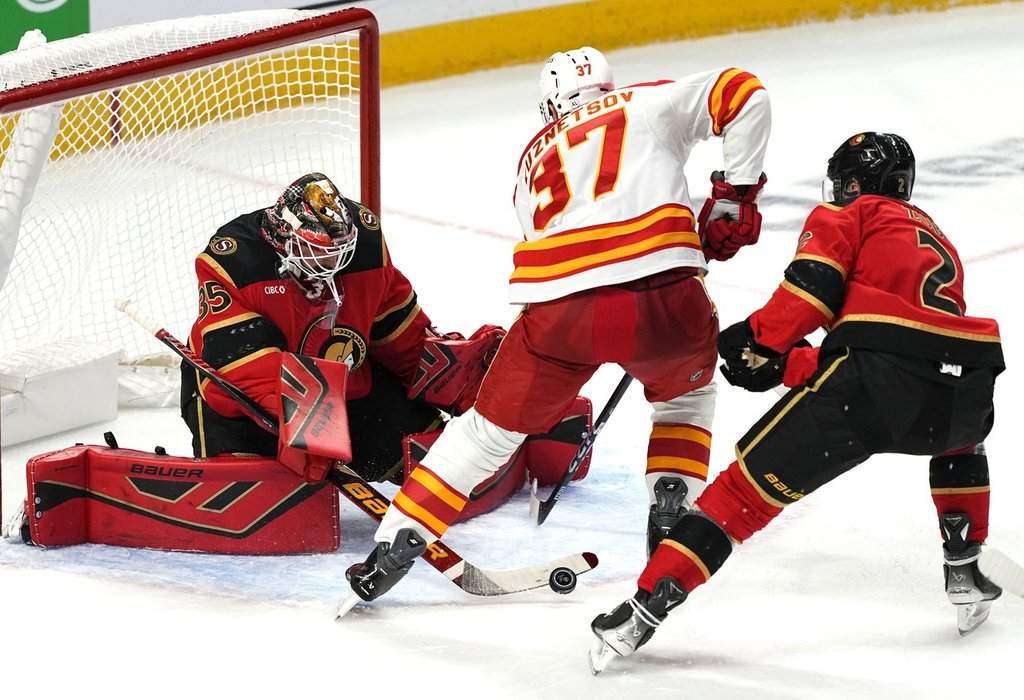
Box scores are great for bragging rights, not for honest self-evaluation. A goalie can get peppered from bad angles, watch pucks hit posts, or ride a red-hot penalty kill and walk away with a .972 save percentage on a night his feet felt heavy. Against Calgary, Ottawa jumped out to a 2-0 lead in the first period on goals from Michael Amadio and Shane Pinto, while Ullmark had to weather a storm—including robbing Matt Coronato on a power play before Coronato finally beat him late with 4:20 left.
On paper, 35 saves on 36 shots looks like a clinic. Inside Ullmark's head, the first twenty minutes felt off, cluttered with extra thoughts that didn't belong on the ice. Relying on luck isn't a strategy. You can get away with drifting slightly out of depth or over-rotating on a cross-crease pass when the puck hits your chest or slides wide—until you play a playoff-style game against a team that finishes its chances.
There's also a practical reality in Ottawa's crease that makes Ullmark's self-audit even sharper. The Senators have had real trouble keeping the puck out when he isn't in net. While Ullmark has allowed just 18 goals, his counterparts Samuel Ersson and Jonas Johansson (recalled during Ullmark's injury absence) have surrendered a combined 47 goals. When a team's margin without its No. 1 starter looks that thin, it's tempting to coast on the contrast. Ullmark refuses to use his backups' rough stretches as a cushion.
The Trap of "Good Enough" Stats
In hockey analytics and everyday fan chatter, we love neat summaries. Goals-against average tells you how many pucks went in per 60 minutes, not whether three of them were tipped off a defenseman's shin pad or whether a goalie got bailed out by three crossbars. Save percentage tells you how often a goalie stopped the puck, not how controlled his rebounds were or whether he gave shooters half the net to aim at.
I've watched plenty of players—across hockey and other high-pressure sports—fall in love with their surface stats right before hitting a wall. When everything is going your way, small flaws feel harmless. You stop questioning your pre-shot reads because the scoreboard keeps saying W. Ullmark's whole point is that perfection on the outside doesn't mean your mechanics or your headspace are spotless on the inside.
What Changed Off the Ice After His Leave of Absence
You can't really understand how Ullmark talks right now without looking back at what happened during the 2025-26 season. Last December, after a 7-5 loss to the Toronto Maple Leafs on December 27-28, 2025, Ullmark stepped away from the Senators on a leave of absence. Before that break, his numbers were rough—an .881 save percentage and a 2.95 GAA across 28 games—and fans and pundits were quick to pile on.
Nobody outside his inner circle knew what he was carrying. In January 2026, Ullmark sat down with TSN's Claire Hanna and shared that the real reason behind his leave was mental health and serious anxiety before and during games. Worse yet, baseless online rumors exploded within hours of his stepping away, forcing him to watch ugly speculation spread while he couldn't defend himself—until general manager Steve Staios put out a public statement pushing back on the noise.
That stretch changed how Ullmark handles pressure. Instead of bottling things up until anxiety hijacks his game, he's leaning into openness. After that shaky opening period against Calgary, he didn't stew silently on the bench. He talked to his goalie partner, Samuel Ersson, let out the frustration, and dropped the tough-guy act for a few minutes.
"I was talking to Sam (Ersson) after the first period that I felt awful. I felt like things weren't really clicking. There's a lot of thoughts, unnecessary things that I'm going through, but the best part was that I did talk." — Linus Ullmark, via The Canadian Press
That's growth you don't see on a stat sheet. Earlier in his career, Ullmark admits he probably wouldn't have opened up like that. Working with the people around him—including bringing in his longtime junior goalie coach Maciej Szwoch during his recovery—helped him separate who he is as a person from whatever happened on the previous shot. As he put it, putting one foot in front of the other every day doesn't guarantee feeling great or having a great day, and accepting that takes a massive weight off.
Respecting the Craft on Both Ends of the Rink
One of the coolest parts of Ullmark's postgame comments after Monday's win had nothing to do with his own .972 save percentage. Flames forward Joel Farabee gave Ullmark credit for making "some unbelievable saves" despite Calgary getting quality looks. Ullmark returned the respect right back toward Calgary netminder Devin Cooley, who made 29 saves (with some reports noting 31 shots faced) to keep a 2-0 deficit from ballooning into a blowout.
Ullmark praised Cooley's efficiency, personality, and mentality, saying he looks forward to watching Cooley grow over the next few years. That kind of appreciation usually comes from veterans who stopped viewing every other goalie as a threat to their ego. When you've been through the highs of a 40-win Vezina campaign in Boston and the lows of a mental health battle in Ottawa, you recognize how hard it is just to compete night after night in the NHL.
How Goalies and Competitors Can Apply Ullmark's Approach
You don't need a .940 save percentage or an NHL mask to take something real out of Ullmark's week. Whether you're playing beer-league hockey, coaching youth sports, or grinding through a high-stakes job, chasing surface wins while ignoring internal friction is a fast track to burnout.
- Audit your process after wins, not just after losses. After a good result, write down two things that felt clunky or lucky. Fix those details while the stakes feel low.
- Talk out loud before pressure snowballs. Keeping quiet when your head is spinning doesn't make you tougher—it usually makes the next mistake heavier. Find a trusted teammate, coach, or friend who can hear you vent without judging.
- Separate bad days from bad character. An off period or a rough week at work doesn't erase your progress. Focus on the next concrete action in front of you instead of demanding perfection every single day.
- Study peers you admire. Watch how someone else handles tough moments or executes small details under stress, and borrow what fits your game without losing your own identity.
Numbers tell you where you've been, and they're fun to celebrate when Ottawa's rolling on a nine-game point streak. Staying honest about what still needs work is how you make sure those numbers hold up when the game gets loud.