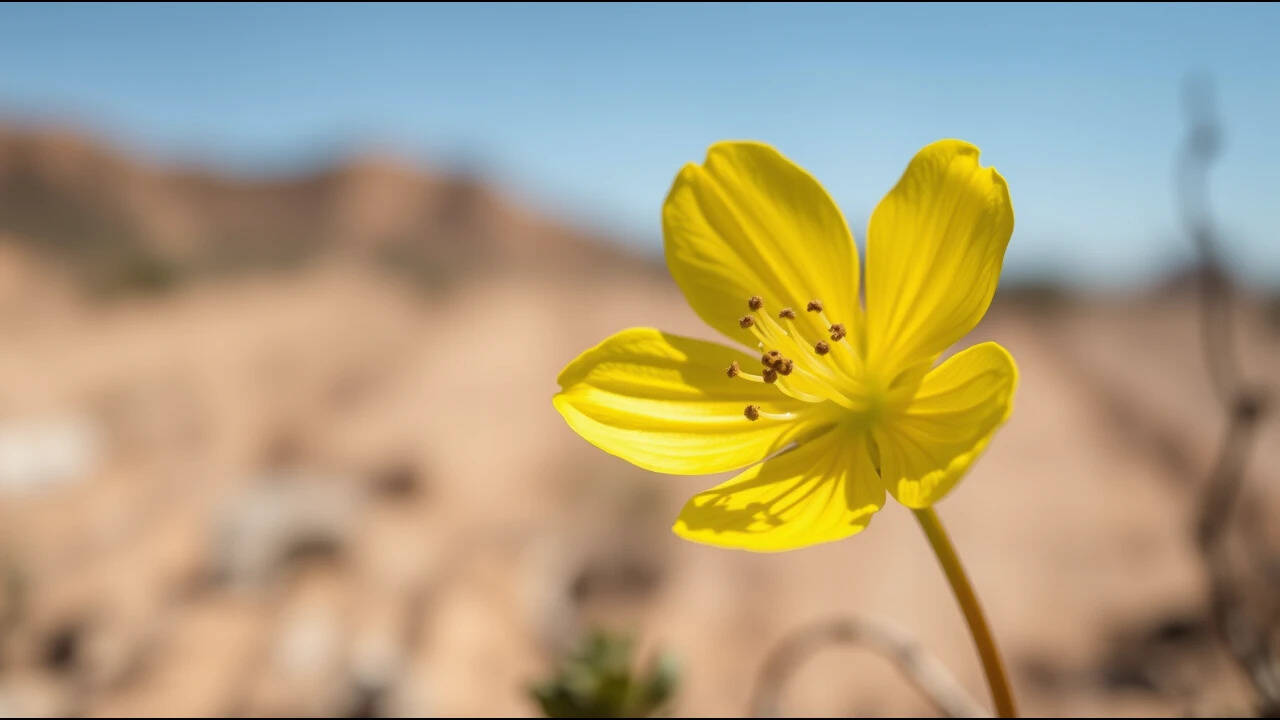
Botanists spent nearly seven decades assuming a tiny yellow wildflower had vanished from the earth forever. They were wrong.
In the rugged hills of eastern Contra Costa County, professional plant hunters recently tracked down a population of the caper-fruited Tropidocarpum. Nobody had laid eyes on this native California species since 1957. That is sixty-eight years of radio silence.
If you think this is just another nice nature story about a pretty bloom, you're missing the bigger picture. This rediscovery proves that local ecosystems still hold wild secrets, provided you know where to look and how to interpret the landscape. Let's break down how a plant goes missing for generations and what its return actually tells us about modern conservation.
The Hunt That Took Decades
Most major botanical finds happen by pure accident. Someone goes for a casual hike, spots something weird, and calls a university. This find played out completely differently.
Heath Bartosh of Nomad Ecology and Spencer Adams didn't stumble onto the site while looking for a lunch spot. Working on behalf of the East Contra Costa County Habitat Conservancy, they executed a deliberate, targeted search. They targeted specific ridgetops in the Vasco Hills Regional Preserve based on a breadcrumb trail from a smaller sighting on nearby private land back in 2023.
Finding an annual plant requires brutal persistence. These plants don't pop up every single year. Seeds can sit dormant in the soil through dry cycles, waiting for the exact right combination of rain and temperature. If you survey a hillside during the wrong season, you'll see dirt and weeds, assuming nothing is there. Abigail Fateman, executive director of the conservancy, noted that tracking down this population demanded precise timing and repeated field surveys.
Why Did It Disappear in the First Place?
Back in 1888, University of California, Berkeley professor Edward Lee Greene first documented the caper-fruited Tropidocarpum. Back then, it grew abundantly across the low alkaline valley lands skirting the San Joaquin River.
So what happened?
Non-native plant species arrived in California grasslands en masse during the late 19th century. These invasive grasses aggressively outcompeted native flora for water and nutrients. They basically elbowed the original plant communities out of their historical homes.
Right now, the California Native Plant Society lists the species under status 1B.1. That means it is severely rare, threatened, or endangered both within the state and beyond. Even with this brand-new discovery on protected land, fewer than twenty individual plants make up each of the only two known populations remaining in the entire East Bay region.
Protecting What's Left
Finding the plants is only half the battle. Keeping them alive requires active management.
The Vasco Hills Regional Preserve sits inside a massive 14,000-acre protected area managed jointly by the East Bay Regional Park District and the East Contra Costa County Habitat Conservancy. Park District General Manager Sabrina Landreth points out that this cooperative approach allows agencies to shield sensitive species while still letting people use the land for recreation.
Conservationists are turning this specific site into a high-priority monitoring zone. Because annual plants are so fragile and prone to shifting numbers year over year, dropping our guard means the species could easily slip back into obscurity.
Get out into your local green spaces and pay attention to native restoration efforts happening right in your backyard.