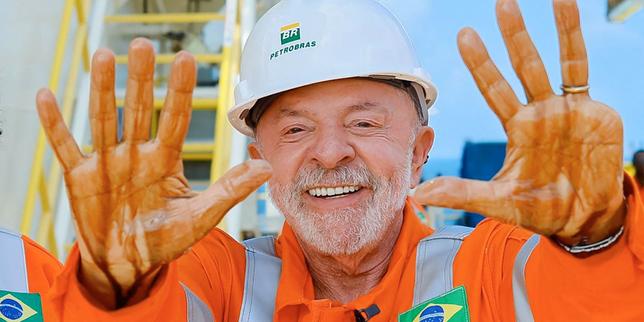
You’ve likely seen the images by now. President Luiz Inacio Lula da Silva, standing on a drilling platform off the coast of Amapá, holding up his oil-stained hands. He’s calling this latest discovery a "passport to the future." For a leader who campaigned on protecting the rainforest, this move feels like a gut punch to environmentalists. But if you look past the headlines, you start to see the messy, high-stakes math Lula is actually doing.
The discovery by the state-run giant Petrobras in the "Equatorial Margin" isn't just about finding black gold. It's about a nation that refuses to choose between its economic survival and its global reputation. Discover more on a related topic: this related article.
The logic behind the gamble
Why would a president who hosted a climate summit and talks openly about the urgency of a green transition lean so hard into fossil fuels? Honestly, it comes down to sovereignty. Brazil is the ninth-largest oil producer on the planet. For Lula, the ability to fund his country’s development—not through foreign debt, but through its own natural resources—is non-negotiable.
He isn't pretending to be a climate saint in a vacuum. He’s essentially arguing that Brazil needs the capital from these reserves to pay for the transition he’s promised. He’s betting that if he can control the extraction process, he can direct the profits toward renewable infrastructure. It’s a classic, if risky, bridge-building strategy. He’s essentially saying: "We can’t stop the car, so we’re going to fuel it with our own gas until we can replace the engine." Additional analysis by TIME explores comparable perspectives on this issue.
The reality of the drill site
The drilling location is 175 kilometers off the coast of the Amazon region. It’s a sensitive area, and the local communities—rightfully—are scared. The indigenous groups who live along the rivers leading into the Atlantic have watched these promises of "progress" before. They know that a spill in these wetlands isn't just a PR nightmare; it’s an ecological death sentence that doesn't get "cleaned up" in any meaningful way.
Critics like Suely Araujo from the Climate Observatory haven't backed down. They point out that the environmental licensing process was essentially treated as a hurdle to be jumped, not a safeguard to be respected. The government claims it’s safe. The scientists on the ground are much less certain.
What happens next
Right now, Petrobras is in the middle of a 15 to 20-day phase to figure out just how big this reservoir actually is. This is the crucial part. Finding "signs of oil" is a long way from a commercially viable field. If they find that this is a massive, easily accessible supply, the political pressure on Lula will shift from "why are you doing this?" to "how do you make sure you don't destroy the coast while you do it?"
If you're watching this story, don't focus on the rhetoric. Focus on the money. Watch for how the state budget in 2027 accounts for these potential revenues. Watch to see if Petrobras actually implements the world-class spill-response technology they’ve promised, or if it stays as a bullet point in a PowerPoint presentation.
Brazil is trying to have it both ways. They want to be the world's green leader at the UN podium and an energy powerhouse at the local port. It’s a narrow path, and frankly, it’s getting more crowded every day.
The reality is that we’re moving into a time where national interest often beats global idealism, no matter who is in charge. Lula knows that. He’s betting that in five or ten years, the global community will care less about how he funded his country's rise and more about whether he actually managed to pull it off. Whether that’s a "passport to the future" or a ticket to a deeper crisis, we’re about to find out.
The drill bit is already turning. There’s no hitting the pause button now.
Pétrole au large de l'Amazonie
This video provides a firsthand look at President Lula's visit to the offshore platform and outlines the controversy surrounding the exploration.