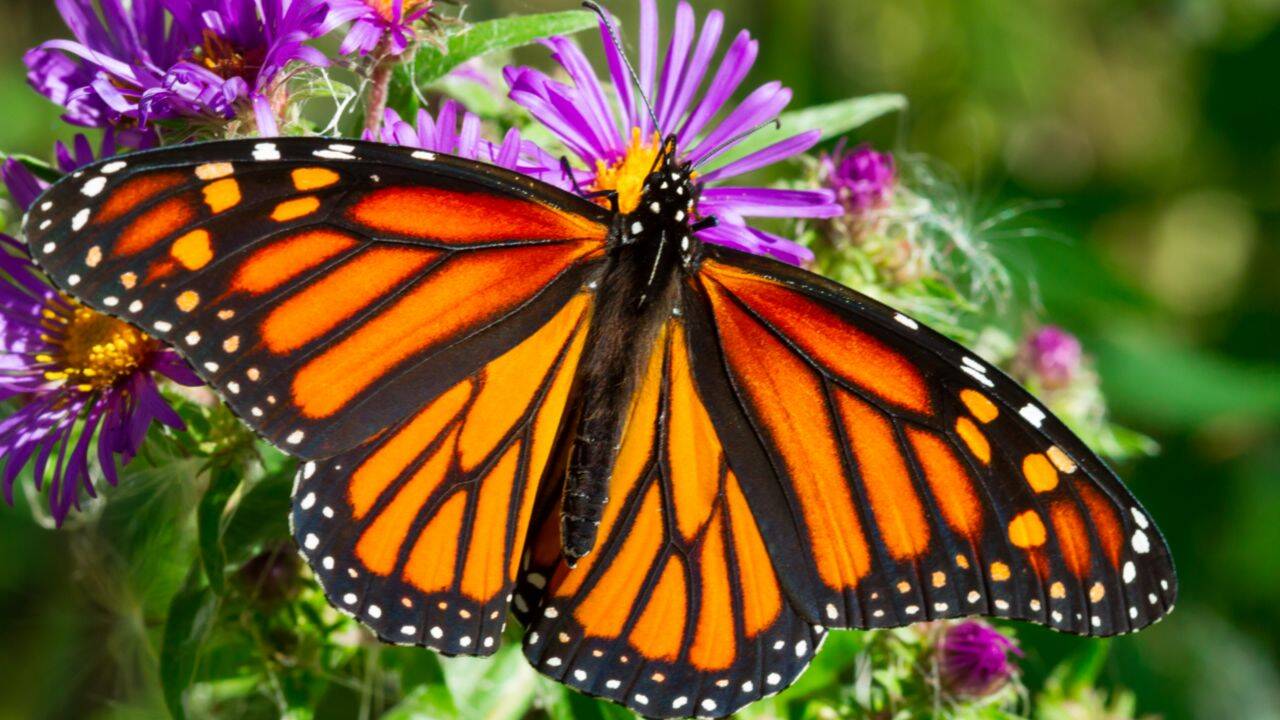
A tiny monarch butterfly named Lulu, tagged with ID WR087-LULU and carrying a Bluetooth radio tag weighing roughly as much as a grain of rice, flew more than 600 miles from Idaho to Ellwood Mesa near Santa Barbara, California. Anyone with a smartphone can now track tagged monarchs through the Project Monarch app alongside automated Motus towers.
That short summary captures the headline, sure. Yet the real story behind Lulu's autumn flight isn't just about a clever gadget strapped to a half-gram insect. It's about what happens when western monarch numbers sink so low that individual butterflies become recognizable characters on a coastal map, and how a Bluetooth ping off a California oil platform can rewrite what scientists thought they knew about route choices.
How a Grain-of-Rice Tag Tracked a 600-Mile Flight
For decades, tracking a monarch meant hoping someone spotted a tiny paper sticker on a wing and reported it by hand. Most tagged butterflies disappeared into the void. A butterfly weighs around half a gram at most, so any transmitter had to be feather-light or it would drag the insect down before migration even began.
Enter ultralight Bluetooth telemetry tags supplied by research firm Althouse and Meade and integrated into the broader Project Monarch network developed with Cellular Tracking Technologies. Instead of relying solely on human eyes with binoculars, these tags broadcast signals that nearby smartphones running the free Project Monarch app—as well as Motus receiving stations—can pick up and relay.
According to Adopt a Monarch notes by Dr. David James and reporting from Goleta's Monarch Press, Lulu was released near Mountain Home, Idaho (with tagging linked to Grand View / Wings Rising in coverage), covering roughly 600 to 625 miles over about 38 to 39 days before arriving around Ellwood in late October 2026. Along the way, detections sketched a winding path across the Sierra Nevada and down toward the central and south coast, including a surprising ping offshore near Platform Harmony before turning up near Sandpiper and Ellwood.
Even more telling is what happened to Lulu's sister, Mary Alice, released from the same Idaho area eleven days earlier. Mary Alice headed roughly 500 miles southwest to Newark in the Bay Area and began breeding rather than settling into a coastal overwintering grove. Two sisters from the same starting line took completely different strategies in the same autumn. That contrast alone shows why individual tracking matters so much more than guesswork.
Why a Single Butterfly Matters at Ellwood Mesa
Historically, Ellwood Mesa in Goleta has hosted tens of thousands of overwintering monarchs—up to 50,000 in peak years. Over recent seasons, counts have fallen dramatically, with surveys recording only handfuls or low dozens at Ellwood at times, and broader western monarch estimates down roughly 95 percent since the 1980s. Habitat loss, pesticide exposure, shifting weather extremes, and winter storms all press on a fragile population, while the U.S. Fish and Wildlife Service has moved toward federal "Threatened" protection.
When a grove holds closer to a few dozen monarchs than tens of thousands, a single tracked individual isn't a drop in a bucket. It's a vital data point.
Biologists like Charis van der Heide have pointed out that western monarch numbers aren't locked into a single static line—after steep lows like 2020, the population has shown it can rebound sharply when conditions align, or stay dangerously thin if pressures stack up. That uncertainty is part of the trustworthiness equation in conservation science: we know the long-term trend is steep and alarming, yet year-to-year swings still surprise researchers.
On November 12, 2026, crews at Ellwood fitted ten more butterflies with lightweight tags as part of Ellwood Friends' ongoing collaboration with Althouse and Meade, pairing telemetry with grove counts and habitat surveys. To help fund gear and field work, Ellwood Friends even offered naming rights for a $1,000 donation, producing names like Toad, Ellie Wood, Penny, Maxine, Fifi LeMoque, and Frau. Honestly, naming a butterfly feels a little bittersweet when you realize how few are left to name.
What People Get Wrong About Tracking Monarchs With Your Phone
A lot of folks hear "Bluetooth tracker on a butterfly" and picture real-time GPS pinpointing every second like a food delivery driver. It doesn't work like that.
- It's proximity detection, not satellite GPS: Your phone doesn't pull a live satellite feed from across the continent. It scans for nearby Bluetooth tag signals when you're in range and uploads detections to the project database.
- No app user means no ping: In remote stretches of desert, mountain passes, or open ocean, a butterfly can go days without passing a phone running the app or a Motus tower. Gaps in the track are normal, not a broken tag.
- One tracked flight isn't a universal rule: Lulu's route—crossing mountain country, hitting the coast, pinging near an offshore platform, and landing near Ellwood—shows one successful path, not the only way western monarchs travel.
I've watched plenty of citizen-science apps fizzle out because people open them once on the couch, see nothing nearby, and delete them. That's a classic mistake. A Bluetooth scanner only works when you actually have it running outdoors along migration corridors, coastal bluffs, parks, or gardens where monarchs pause to sip nectar.
Practical Next Steps If You Want to Follow or Help
If you want to go beyond reading about Lulu and actually contribute useful observations, keep it simple and realistic.
- Download the Project Monarch app and set up Bluetooth: Install the free app on iOS or Android, create an account, check that the current season is selected, and grant Bluetooth and location permissions so detections can log properly.
- Scan intentionally during walks: Turn on scanning when you walk coastal trails, parks, or blooming gardens in fall or spring—and keep an eye on your battery, since continuous Bluetooth scanning drains power faster than normal browsing.
- Support local habitat and science groups: If you're near Santa Barbara or Goleta, check Ellwood Friends or city overwintering counts, or plant native, pesticide-free nectar flowers and milkweed appropriate for your region rather than planting tropical milkweed where it can disrupt winter cycles.
- Watch the bigger picture with patience: Don't judge monarch recovery from a single headline flight or a single low survey count. Track seasonal trends over years, and share accurate sightings through established research networks so field biologists get clean data.