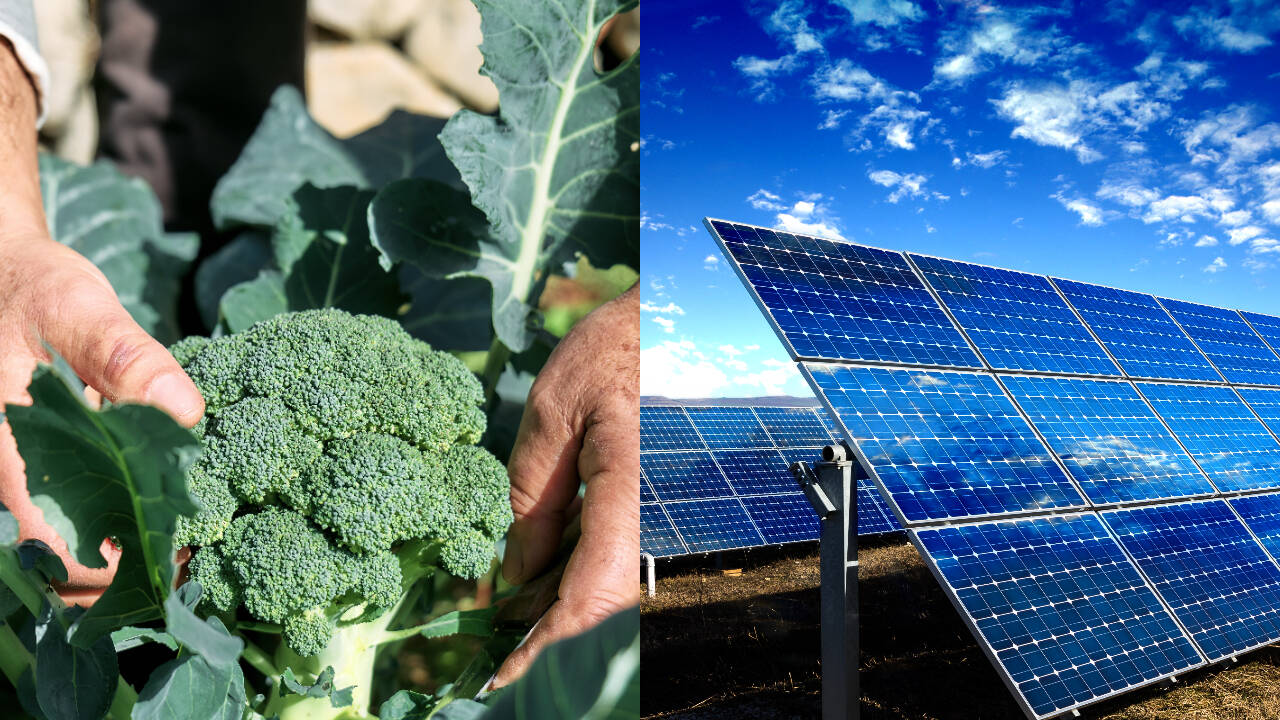
What happens when you stop treating sunlight as a zero-sum game between crops and electronics? You get a Swedish agricultural experiment that might just change how we feed the world while keeping the lights on. Researchers at Mälardalen University in Västerås recently placed semi-transparent magenta solar panels directly above rows of broccoli, and the results shatter conventional assumptions about modern agrivoltaics.
Let's look past the glossy headlines. Standard solar arrays block the sky, robbing crops of crucial photons. Traditional farming claims every square inch of sunlight for photosynthesis. This Swedish trial tried a different route by filtering the light spectrum, feeding specific red and blue wavelengths to the broccoli underneath while harvesting the rest of the incoming solar energy.
The broccoli didn't just survive this neon roof; it thrived in an unexpected way.
The Efficiency Surprise
If you tell a grower that their crop used sunlight four and a half times more efficiently, they'll expect a miracle harvest or mutant vegetables. That is not what happened here, and understanding the nuance matters.
Underneath those magenta filters, the broccoli plants demonstrated an astonishing leap in photosynthetic efficiency. They squeezed every ounce of usable energy out of a heavily restricted light diet. When harvest time rolled around, the final size and total yield matched standard open-air crops.
There's no free lunch in plant biology, though. The trade-off came in the form of a calendar. Those panel-shaded broccoli heads required roughly twenty-five extra days to reach full maturity compared to plants soaking in unfiltered Scandinavian summer sun.
Cracking the Agrivoltaics Equation
Agrivoltaics isn't a new concept, but it's usually plagued by compromise. Farmers either lose crop yield because panels cast too much shade, or they space panels out too widely and lose solar energy generation capacity.
The Swedish team's approach points toward a more surgical solution. By tuning the transparency and colour of the photovoltaic materials, researchers can split the light spectrum with high precision. Broccoli happens to respond well to adjusted red and blue ratios, but other crops have entirely different nutritional and light requirements.
Imagine running an irrigation pump, powering greenhouse heaters, or feeding electricity straight back into the local grid using the exact photons your cabbage or berries don't need. That dual-income model is what makes energy-sharing farmland so appealing on paper.
The Real-World Hurdles Nobody Mentions
Before you run out to tint your greenhouse pink, let's talk about why you won't see these panels on every commercial farm next season.
First, the cost and availability of specialized coloured panels remain experimental. You can't just buy magenta photovoltaic glass off the shelf at your local hardware store. Manufacturing custom wavelength-filtering panels at scale is expensive, and margins in agriculture are already razor-thin.
Second, that twenty-five-day delay in maturity is a massive deal for commercial growers working on strict crop rotation schedules. If your field is tied up for an extra month, you lose your slot for the next seasonal planting. In high-stakes commercial agriculture, time equals cash. A slower growth cycle can wipe out the financial benefits of the electricity generated overhead.
Third, climate variability changes the math entirely. A setup that works during a bright summer in Västerås might fail miserably under cloudy skies in the Pacific Northwest or intense heatwaves in the Mediterranean.
Where This Tech Actually Fits
Massive commercial corn or wheat fields won't be covered in magenta panels anytime soon. The economics simply don't make sense yet.
Instead, look toward controlled urban environments, community gardens, and high-value greenhouse operations. Greenhouses already manage light, temperature, and humidity artificially. Swapping standard glass or opaque shading nets for specialized energy-harvesting panels could turn a greenhouse from a net energy consumer into a localized power station.
Researchers are already expanding testing to include red and blue panels on other crop varieties. The ultimate goal isn't a universal purple canopy for every vegetable on earth. It's about matching specific plant biology with tailored solar technology.
If you're watching this space, stop looking for instant revolutions. Agrivoltaics will evolve one crop trial at a time, balancing the slow science of botany against the rapid demands of the renewable energy grid.
Evaluate your own growing or land-use strategies by keeping an eye on pilot projects rather than commercial promises. Test small patches if you run a private greenhouse, and wait for standardized, affordable wavelength panels before committing acreage to experimental shading.