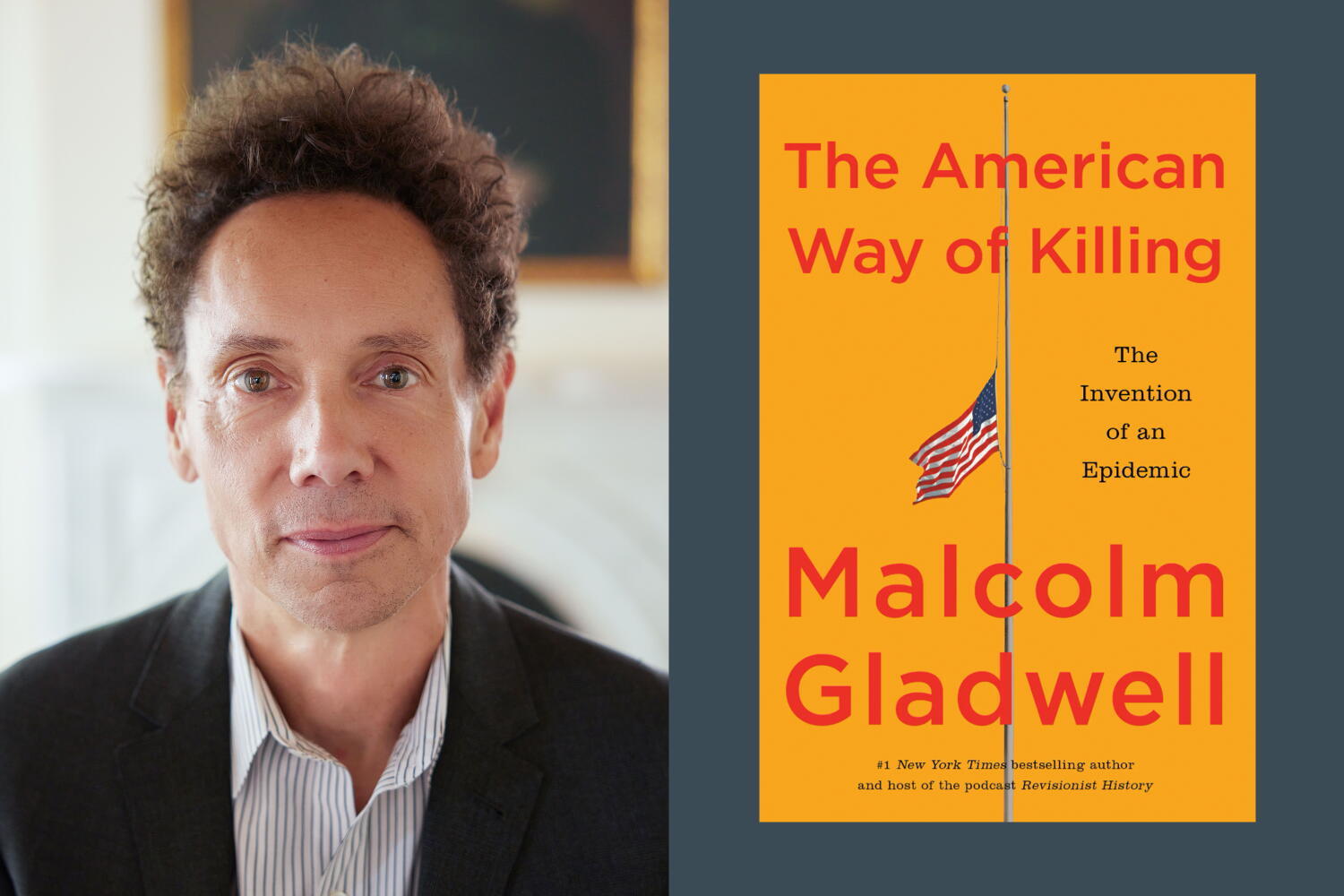
Malcolm Gladwell wants you to rethink how you view violence. He usually does. His career is built on taking a widely accepted cultural narrative, flipping it upside down, and presenting a neat little package that makes you feel smart for having listened. But his latest book project tackles something far heavier than parking spaces or success metrics. It tackles the history of how humans kill each other, specifically focusing on the American way of war, civil conflict, and gun violence.
Spoiler alert: his conclusions don't hold up under actual scrutiny. Recently making news recently: Why Anne Carson Winning The Nobel Prize Changes How We Read Poetry.
If you came here wondering if Gladwell finally cracked the code on America's unique obsession with firearms and mass casualties, the short answer is no. He didn't. Instead, he relied on his signature stylistic trickery. He smoothed over jagged historical realities to fit a tidy, provocative thesis.
Let's look at what's actually happening here. Additional information regarding the matter are covered by Associated Press.
The mechanical shift in lethal force
Gladwell likes to talk about technological shifts. You remember how he explained the invention of the repeating rifle or aerial bombing campaigns in previous essays. He loves the mechanics of things.
When examining modern gun violence, he tends to treat firearms like upgrades in a video game. Better tech equals different outcomes. But that misses the human element entirely. The leap from a musket to an AR-15 isn't just a matter of engineering progress. It's a fundamental change in the social distance between the shooter and the victim.
Think about historical combat. Early battlefield engagements required physical stamina, eye contact, and a massive amount of collective adrenaline. You could see the face of the person you were fighting. Modern gun violence strips that away. It turns human destruction into a point-and-click interface.
Gladwell treats this evolution as an inevitable quirk of human ingenuity. That's a mistake. The lethality of American gun violence isn't a byproduct of neutral invention. It's the product of specific choices made by manufacturers, lobbyists, and lawmakers who decided that maximum market saturation mattered more than public safety.
The myth of cultural inevitability
One of the most frustrating parts of Gladwell's approach is his fatalism. He frames historical atrocities and contemporary crime rates as cultural inevitabilities. He suggests that America has a distinct "way of killing" baked into its foundational DNA, rooted in frontier myths and rugged individualism.
That narrative sounds deeply intellectual. It also lets everyone off the hook.
If gun violence is just who we are, then nobody has to fix it. We can just nod knowingly at a dinner party and talk about cultural trajectories. But gun violence rates fluctuate wildly depending on policy, economics, and community investment. Look at any major city that implemented targeted violence intervention programs. The numbers change when the variables change.
Culture doesn't pull a trigger. Policy decisions do. When you deregulate firearm purchases, dismantle mental health infrastructure, and flood local communities with cheap handguns, people die. It's not a mystery born from a tragic national soul. It's cause and effect.
Why narrative polish hides the mess
We love storytellers because they make a chaotic world feel organized. Gladwell is a master of this craft. He takes complex criminological data, wraps it in an engaging anecdote about a 20th-century aviation disaster or a mid-century military experiment, and ties it up with a bow.
Real life doesn't work that way.
Real public health data is messy. It's filled with contradictory studies, incomplete local reporting, and variables that refuse to fit into a neat essay format. When you gloss over those contradictions to make a bold claim about how we've been looking at gun violence all wrong, you aren't doing investigative work. You're performing magic.
You want to understand why America deals with extraordinary rates of firearm mortality? Stop looking for secret psychological triggers or hidden systemic ironies. Look at the sheer volume of weapons in circulation. Look at the lack of universal background checks. Look at the legal protections granted to gun manufacturers.
The answers are boring. They require legislative fights, local organizing, and tedious bureaucratic reforms. They don't make for a catchy podcast episode or a bestseller list topper. But they save lives.
What you can do right now
If you are tired of listening to cultural commentators intellectualize a public health crisis, stop consuming hot takes and start looking at grassroots action.
Support community violence interruption groups that treat shootings like an infectious disease, stopping the spread block by block.
Push your local representatives to enact safe storage laws that prevent minors and unauthorized users from accessing firearms at home.
Demand transparency from local police departments and health agencies regarding firearm tracing data.
Stop waiting for a famous author to give you a comforting perspective on tragedy. The reality of gun violence isn't misunderstood. It's just ignored because fixing it requires actual work.