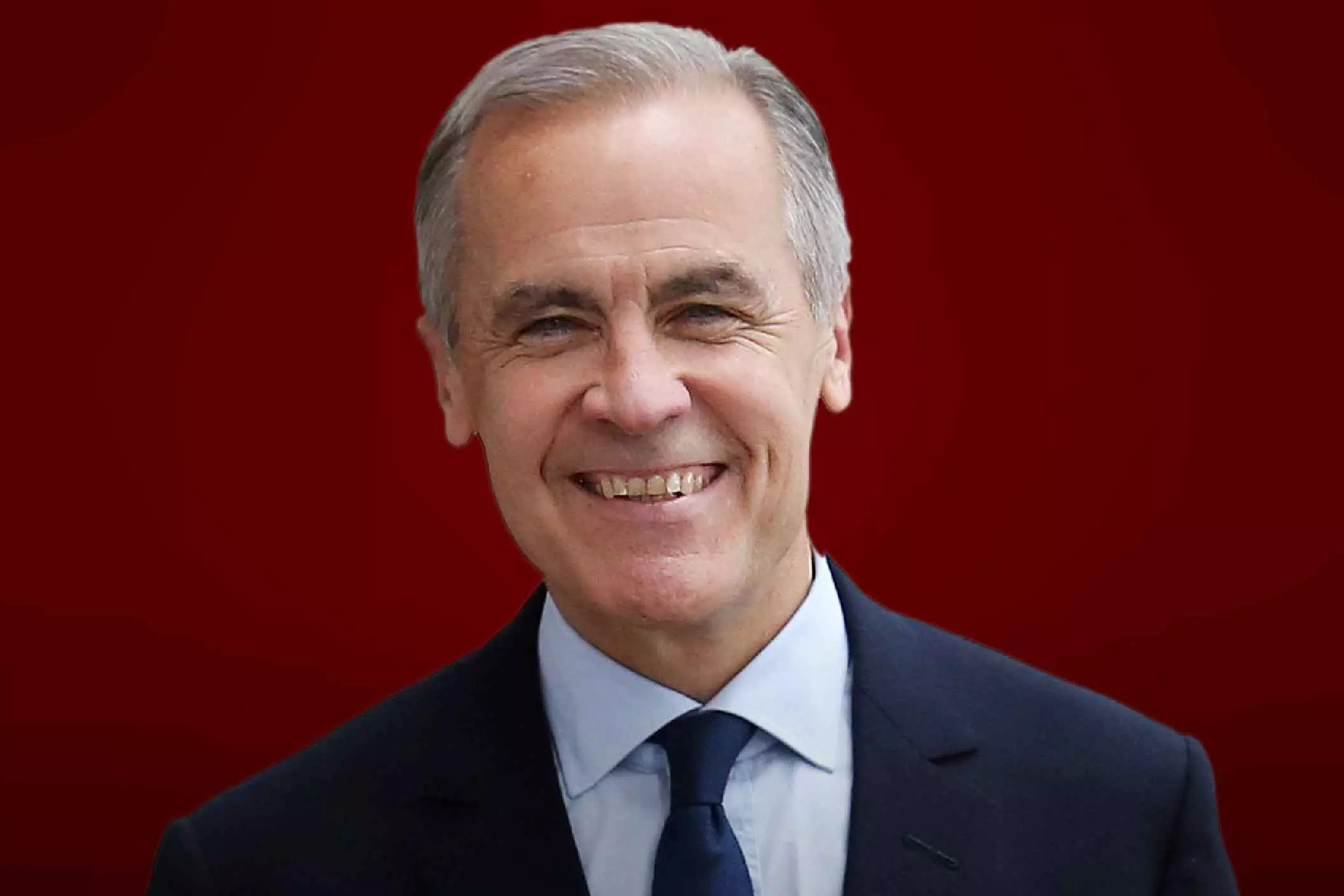
Central banking used to be boring. Men in grey suits sat behind mahogany desks, adjusted interest rates by a quarter point, and spoke in code that only Wall Street traders pretended to understand. Then came Mark Carney. He didn't just manage the Bank of Canada and the Bank of England through historic crises; he turned central banking into an arena for climate activism, geopolitical strategy, and public moralizing. You might love his vision for sustainable capitalism, or you might think unelected bureaucrats shouldn't dictate which industries live or die. Either way, his footprint on the modern global economy is impossible to ignore. Let's break down how a Goldman Sachs investment banker from the Northwest Territories ended up rewriting the rulebook for international finance, and what his career reveals about where money and power collide today.
Early Life And The Rise Through Wall Street
To understand how this central banker operates, you have to look past the press releases and examine his formative years. Born in Fort Smith, Northwest Territories, in 1965, he grew up moving across Canada before heading to Harvard University to study economics. After finishing his undergraduate degree, he earned a doctorate from Oxford. But he didn't immediately join a government ministry or an academic faculty. Instead, he took the plunge into private enterprise at Goldman Sachs.
Spending over a decade at Goldman, he worked in London, Tokyo, New York, and Toronto. He wasn't just pushing paper. He specialized in sovereign risk, debt restructuring, and emerging markets. When the 1998 Russian financial crisis sent shockwaves through global markets, he was right in the thick of it. That private sector baptism by fire taught him something crucial: theoretical economic models fall apart the second panic sets in. Markets aren't driven by rational actors; they're driven by human fear and greed.
That background gave him a distinct edge when Canada faced its own financial reckoning in the late 1990s and early 2000s. He jumped from Wall Street to the Canadian Department of Finance, serving as senior associate deputy minister. During this stint, he helped oversee the controversial decision by the federal government to sell off its gold reserves—a move that looked eccentric at the time, but proved remarkably prescient given gold's wild price swings in subsequent years. He also managed Canada's federal debt during a period of intense fiscal consolidation.
The Canadian Banking Shield
When he took over as Governor of the Bank of Canada in February 2008, the world was on the brink of an economic cliff. Subprime mortgages in the United States were about to detonate, dragging the global financial system down with them. Canada's banking sector survived the 2008 crash better than almost any other G7 nation.
Sure, Canadian banks benefited from conservative lending practices, strict regulatory oversight by the Office of the Superintendent of Financial Institutions, and a lack of toxic subprime products. But the central bank's swift response mattered too. Under his watch, the Bank of Canada slashed interest rates to historic lows and introduced extraordinary liquidity facilities to keep credit flowing when commercial banks froze up. He didn't hesitate to use unconventional monetary policy long before quantitative easing became a household term.
Critics argued that keeping rates low for too long inflated the Canadian housing bubble, sowing the seeds for the affordability crisis plaguing Toronto and Vancouver today. That's a fair critique. Every monetary intervention creates downstream distortions. When you flood the system with cheap money to save it from immediate collapse, you often create chronic asset inflation down the road. He made a calculated trade-off. He chose to prevent a systemic banking meltdown today, accepting that the collateral damage would require careful management tomorrow.
Crossing The Atlantic To Lead The Bank Of England
By late 2012, his reputation as a crisis manager caught the attention of the British government. The United Kingdom was still reeling from the Brexit vote shockwaves, dealing with sluggish post-financial crisis growth, and struggling with a banking sector that felt bloated and fragile. George Osborne, then Chancellor of the Exchequer, made a bold, unorthodox move. He hired a Canadian to run the Bank of England—the first time a non-Briton held the post since the institution's founding in 1694.
The British press had a field day. Headlines dubbed him "The Un-indicator" or painted him as an out-of-touch technocrat. Yet, he walked into Threadneedle Street with a clear mandate: modernize the bank, repair the credit plumbing, and drag the institution into the twenty-first century.
Forward Guidance And Communication As A Weapon
One of his signature innovations in London was the widespread deployment of "forward guidance." Traditional central bankers guarded their intentions like state secrets. They believed ambiguity kept markets on their toes. He flipped that philosophy on its head. He argued that telling markets exactly what the bank planned to do—and under what economic conditions those plans would change—reduced volatility and gave businesses the confidence to invest.
Of course, forward guidance is a double-edged sword. If economic conditions shift rapidly, the central bank risks looking foolish or untrustworthy when it has to backtrack. During his tenure, sudden inflation spikes and currency fluctuations occasionally tripped up his communication strategy. Markets tested his resolve, and economic forecasters frequently accused the bank of sending mixed signals.
Despite the turbulence, his tenure at the Bank of England redefined the scope of a central banker's job. He pushed financial institutions to model the physical and transitional risks of climate change, warning that entire sectors faced catastrophic write-downs if they ignored the net-zero transition. His famous 2015 speech on the "tragedy of the horizon" argued that the catastrophic impacts of climate change will be felt far beyond the traditional timeline of financial risk assessment, leaving markets blind until it's too late. This intervention transformed him from a traditional monetary technocrat into a global thought leader on sustainable finance.
The Legacy Of Mark Carney And Sustainable Capitalism
We can't talk about modern environmental economics without addressing the shifting role of institutional capital. After stepping down from the Bank of England in 2020, he didn't retire to a quiet golf course. He doubled down on his climate agenda, taking roles as the United Nations Special Envoy for Climate Action and Finance, and later becoming vice chair at Brookfield Asset Management, where he oversees transition investing.
This phase of his career has sparked intense debate. Supporters view him as the ultimate pragmatic insider, convincing Wall Street giants and massive pension funds that sustainability equals profitability. If you can redirect trillions of dollars from fossil fuels to renewables by proving that green assets yield better long-term risk-adjusted returns, you achieve what decades of protests couldn't.
Detractors, however, view this as greenwashing on a grand scale. Some critics from the political right accuse him of pushing a woke corporate agenda, starving traditional energy sectors of capital and driving up consumer energy costs. On the flip side, climate activists argue that working within the existing financial architecture is inherently insufficient, claiming that market-driven transition mechanisms are too slow to prevent ecological collapse.
Navigating these opposing criticisms requires a thick skin. He has consistently argued that capitalism needs to be saved from itself by internalizing externalities like carbon emissions. Whether you find that philosophy inspiring or naive depends entirely on your view of corporate power.
What Modern Finance Can Learn From His Playbook
If you're studying how modern institutions handle shocks, his career offers a masterclass in institutional agility. First, communication isn't secondary; it's primary. A central bank's most powerful tool isn't the overnight rate. It's credibility. When people trust the institution's competence and transparency, markets stabilize faster.
Second, ignoring structural shifts is a recipe for irrelevance. Whether dealing with digital currencies, demographic aging, or climate change, financial leaders who pretend the world isn't changing will eventually get crushed by it. He anticipated these disruptions long before they became mainstream talking points on financial news networks.
At the same time, we have to acknowledge the limits of technocracy. Relying on unelected officials to solve complex social and environmental crises can erode democratic accountability. When central banks start steering credit toward favored industries, they cross the line from neutral monetary arbiters into industrial planners. That shift carries profound political consequences that we're still wrestling with today.
Practical Steps For Navigating Economic Uncertainty
You don't need to manage a sovereign debt portfolio to apply lessons from this era of financial history to your own life and business. Economic volatility is the new normal, and pretending stability is guaranteed will leave you exposed. Here is how you can position yourself wisely in a shifting macroeconomic landscape.
- Stress-test your personal or corporate balance sheet. Just as central banks force commercial banks to run stress tests against severe shocks, look at your own finances. If interest rates stay higher for longer, or if inflation proves sticky, how does your cash flow hold up? Eliminate high-interest variable debt before conditions tighten further.
- Diversify against systemic transitions. The global economy is undergoing a massive structural shift toward decarbonization and automation. Don't build your career or your investment portfolio around dying legacy models. Look for resilience across multiple sectors rather than chasing short-term hype cycles.
- Focus on liquidity and agility. In a crisis, cash and flexibility are king. Illiquid assets tied up in complex structures can trap you when markets turn volatile. Maintain an emergency buffer that lets you weather sudden supply chain shocks or job market disruptions without panicking.
- Evaluate risk through a long-term horizon. Short-term thinking creates blind spots. Whether you're buying a home, launching a startup, or allocating retirement savings, factor in environmental, regulatory, and technological shifts that will play out over the next decade, not just the next quarter.
Mastering the rules of modern finance means accepting that the ground beneath our feet is constantly moving. The leaders who survive aren't the ones who pretend change isn't happening; they're the ones smart enough to steer through the storm.