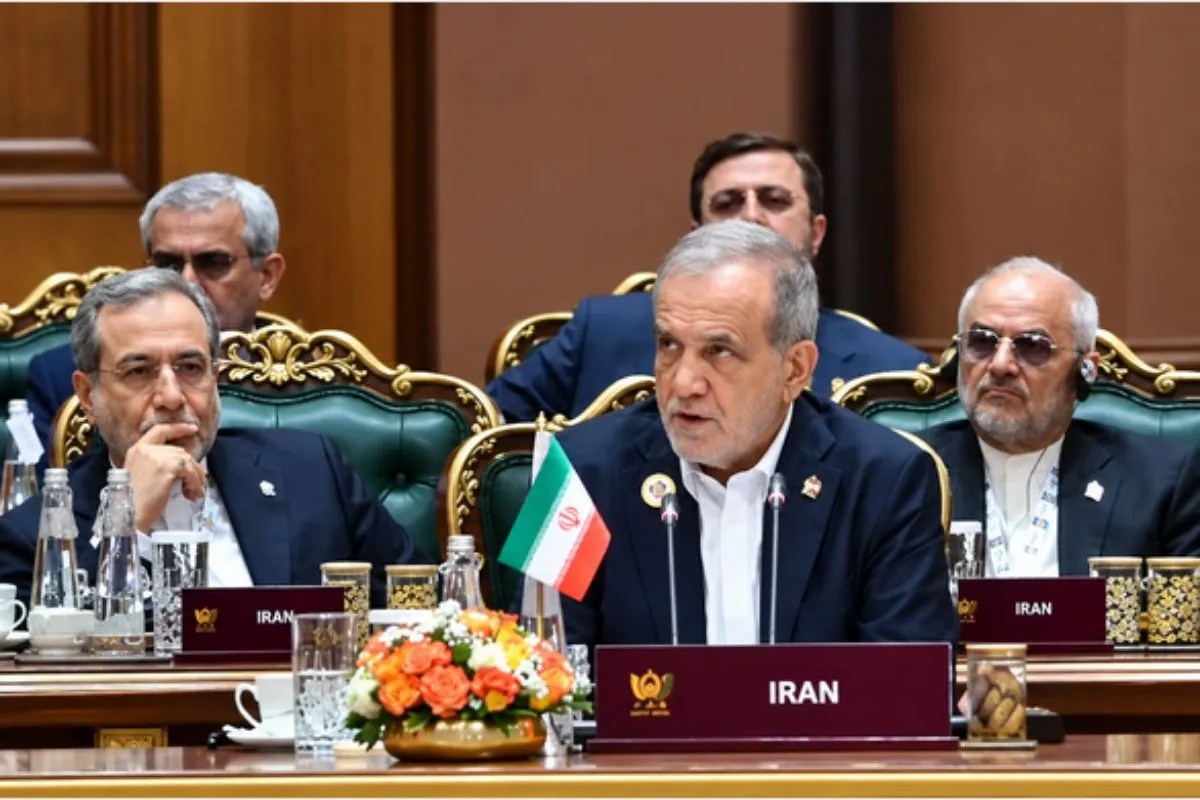
Global diplomacy usually sounds like a broken record of pleasantries and empty handshakes. But every once in a while, a leader steps up to the microphone and actually says what everyone is whispering behind closed doors. Iranian President Masoud Pezeshkian just did that on a major international stage, and most mainstream analysis completely missed the real underlying point.
If you look closely at what happened during the BRICS summit, Pezeshkian wasn't just tossing standard diplomatic talking points into the air. He drew a hard line against something terrifyingly normal in modern geopolitics: the creeping acceptance of military strikes on civilian infrastructure and peaceful nuclear facilities.
Let's cut through the noise. What is the actual message here, and why should anyone outside of Tehran or diplomatic circles care?
The Dangerous Normalization of Modern Warfare
We are watching a slow, horrifying shift in how the world handles armed conflict. Ten years ago, attacking core civilian utilities, energy grids, or nuclear installations was treated as an extreme escalation. Today? It gets a quick headline, a brief social media outcry, and the world moves on by lunchtime.
Pezeshkian called this out directly. He argued that sustainable security cannot exist under a double-standard model where safety belongs exclusively to a chosen few while everyone else is left exposed. When military strikes on peaceful nuclear sites and civilian zones become routine, the entire baseline of international safety collapses.
If attacks on critical civilian infrastructure become normalized, no nation is truly safe. That's not hyperbole; that's basic geopolitical reality.
The Proposed Economic Shield
Pezeshkian didn't just complain about security. He brought a concrete financial counter-strategy to the table. He proposed creating a joint BRICS re-insurance company backed by an initial capital of 10 billion dollars.
Why does this matter? Because Western-dominated financial institutions often freeze out nations facing heavy sanctions or geopolitical pressure, making it nearly impossible to secure major energy and infrastructure projects. By building independent economic safety nets, BRICS nations are trying to insulate themselves from unilateral sanctions and external economic coercion.
It's a direct pushback against an economic system that leaves developing or targeted nations financially strangled. Whether this 10-billion-dollar pool gets off the ground or stalls in bureaucratic committee rooms is another story. But the intent is clear: building parallel financial infrastructure to bypass traditional choke points.
Where Palestine Fits Into the Equation
You can't talk about Iran's foreign policy stance without looking at the broader regional picture. Pezeshkian made it clear that the Palestinian issue and the right to self-determination remain the ultimate litmus test for global governance.
According to Tehran's perspective, international law loses all credibility when it selectively applies to some conflicts while ignoring others. Global institutions either stand up for universal rules, or they become completely irrelevant.
What Comes Next for BRICS
The real test for an expanding bloc like BRICS isn't how many summits it hosts or how many leaders show up for group photos. It's whether member states can actually form a unified economic and security block that alters global power dynamics.
Right now, countries like India, China, Brazil, South Africa, and newer members are walking a tightrope. They want economic multipolarity without getting dragged into direct proxy confrontations. Pezeshkian's push forces these nations to decide how far they are willing to go in challenging the existing global status quo.
The warning has been issued. Ignoring it will cost far more than diplomatic comfort.