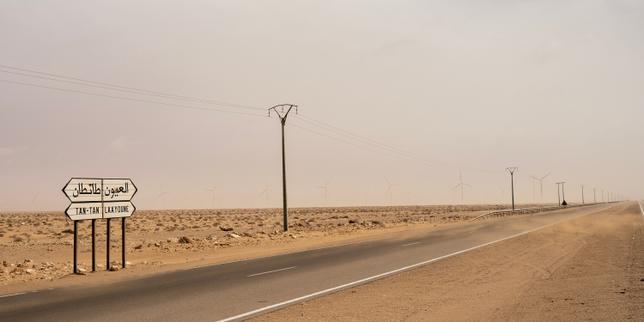
Geopolitics rarely features highway asphalt as its primary medium. Yet Rabat found a way to turn a 1,055-kilometer ribbon of concrete running deep into the southern territories into an unmistakable diplomatic signal. When the Moroccan government officially confirmed that the massive infrastructure project linking Tiznit to Dakhla would bear the name of the American leader, it wasn't just a nod to past diplomatic favors. It was a calculated move designed to anchor international recognition of Moroccan sovereignty directly into the desert geography.
If you look at how major infrastructure projects shape regional stability in North Africa, you'll notice they rarely serve purely commercial purposes. This mega-roadway, stretching all the way to the Atlantic coast of the Sahara, represents years of heavy investment intended to bind the southern provinces closer to the economic engine of the north. By naming this vital corridor after the American president who recognized Rabat's territorial claims back in late 2020, Moroccan diplomacy keeps its most critical international ally front and center.
The Strategy Behind the Asphalt
Building a thousand-kilometer road across rugged terrain costs roughly 850 million euros, but the strategic return on investment dwarfs the construction bill. For decades, Rabat has pursued a twin track of economic development and diplomatic positioning in the region. The highway project, paired with upcoming developments like the massive Atlantic port at Dakhla, aims to transform a historically isolated coastline into a bustling commercial hub connecting North Africa to West Africa.
When Donald Trump took to social media to express gratitude to King Mohammed VI for the honor and declared his intention to travel the route himself, the message resonated far beyond Washington. It signaled to regional rivals, notably the Algeria-backed Polisario Front, that Morocco's territorial integration is marching forward with concrete permanence. Asphalt doesn't negotiate, and concrete doesn't draft resolutions. It simply stays put.
What International Observers Miss
Most mainstream commentary frames this naming gesture as a simple act of diplomatic flattery or transactional politics. That perspective misses the deeper reality on the ground. Morocco isn't just sending a thank-you note to a foreign leader; the state is actively reshaping the daily economic reality of the southern territories. Thousands of local jobs, improved logistics for fisheries and agriculture, and faster transit times change the calculus for anyone living and working in cities like Laayoune and Dakhla.
When people living in the region can drive north on a modern highway in a fraction of the time it used to take, the physical distance shrinks, and so does the psychological barrier of isolation. Infrastructure creates facts on the ground that outlive changing political administrations in foreign capitals.
The Broader Diplomatic Gamble
Tying domestic mega-projects to foreign figures carries inherent risks. Administrations change, and political alliances shift with every electoral cycle in Washington. Yet Rabat is betting that locking in high-profile recognition through tangible infrastructure creates a permanent baseline that future governments will find difficult to ignore.
As the international community watches upcoming votes and debates at the United Nations Security Council, this desert highway stands as a physical manifestation of Rabat's refusal to compromise on its territorial ambitions. Whether you view it as a brilliant masterstroke of sovereign branding or a high-stakes gamble on international favor, one thing is certain. The road is built, the name is set in stone, and the landscape of the Sahara has changed for good.