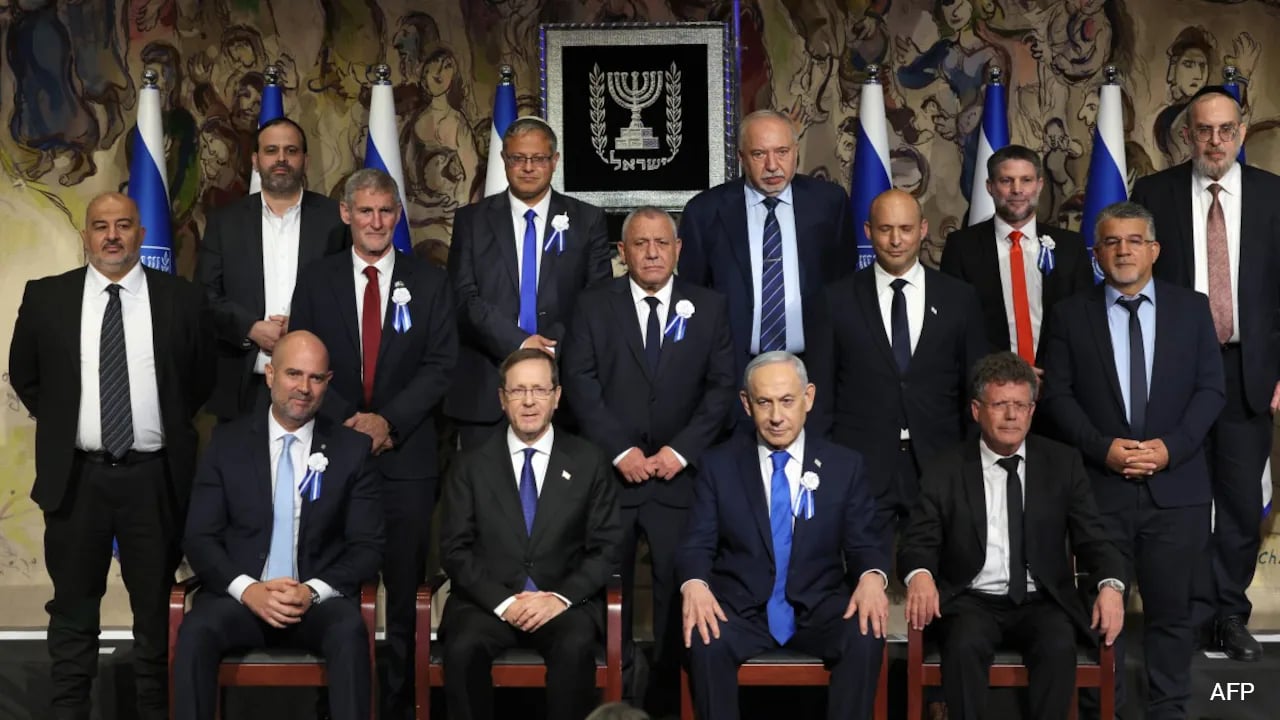
Four hours in a Herzliya hotel room. Zero breakthrough.
If you were hoping Sunday's round of negotiations between Benjamin Netanyahu's Likud and Gadi Eisenkot's Yashar party would finally break Israel's post-election gridlock, you're out of luck. The two sides walked out without a deal, leaving the Knesset right where it started—caught in a messy tug-of-war that leaves nobody with a clean 61-seat majority. Honestly, watching Israeli coalition arithmetic right now feels like trying to solve a Rubik's cube while someone keeps twisting the sides in the dark.
Here is the bottom line up front: Eisenkot has the mandate from President Isaac Herzog to build the next government, with a December 6 deadline on the clock (plus a possible 14-day extension). Yet his Zionist opposition bloc only holds 48 of the Knesset's 120 seats, Netanyahu's coalition sits at 53 after losing its majority, and Arab parties hold 19 seats. Every math equation requires somebody to swallow a bitter pill they swore they wouldn't touch during the campaign.
Why Israel's Government Deadlock Keeps Dragging On
Most surface-level headlines treat a stalled meeting like a simple breakdown in goodwill. That misses how Israeli proportional representation actually works when voters split the board down the middle.
In the October 27 election, voter turnout hit 77.7%, the highest mark in over two decades. People showed up in huge numbers because they felt the stakes were existential. Yet instead of delivering a decisive mandate, the vote produced a three-way squeeze. Netanyahu lost his governing majority. Eisenkot gathered backing from 67 lawmakers for the nomination nod from Herzog, which sounds like a slam dunk on paper until you look closely at who those numbers actually include and what each faction refuses to do.
Think about it like a dinner party where four guests all want to eat, two refuse to sit at the same table, and the host is allergic to half the menu. Even when delegations from Likud and Yashar sit down for four hours near Tel Aviv to hash out "substantive issues," deep ideological red lines get in the way of quick compromises.
The Red Lines Nobody Wants to Cross
Let's look at the contradictions pulling this standoff apart:
- Likud pushes for national unity while drawing hard lines: Netanyahu has repeatedly pitched a national unity government, arguing Israel faces historic security pressures and regional conflict involving Iran. At the same time, Likud has set policy conditions and rejected bringing Arab parties into a coalition.
- Eisenkot tries to bridge camps without surrendering leadership: As former IDF chief of staff leading Yashar, Eisenkot has framed his effort around broad responsibility and a potential emergency or unity track if talks stall. Still, he isn't signing up to serve under a Netanyahu-led cabinet.
- Partner vetoes shrink the room to maneuver: Right-wing figure Avigdor Liberman has pushed back against relying on Arab parties and favors pulling in ultra-Orthodox factions instead. Meanwhile, Naftali Bennett's B'Yachad party holds 12 seats and has signaled he won't join a Netanyahu government without his bloc allies, pushing for Eisenkot to lead or take the first spot in any rotation.
Notice how every single move creates a counter-move? If Eisenkot leans toward Arab lawmakers for a minority arrangement, right-wing allies balk. If he talks unity with Likud, anti-Netanyahu voters and partners question the bargain.
What Most Commentators Miss About Coalition Bargaining
When people read that talks ended without a deal, they often assume the process has hit a dead end. In Israeli politics, public stalemate and quiet horse-trading often happen side by side.
A joint statement saying two sides discussed substantive issues and plan a follow-up meeting isn't just diplomatic throat-clearing. In coalition building, leaders test leverage in public so they don't look weak before concessions happen behind closed doors. Netanyahu wants to stay relevant and shape any unity or emergency framework rather than get sidelined completely. Eisenkot wants to prove he can assemble a functioning majority before his initial mandate window runs out.
There's also a common misconception that a mandate from the president guarantees a prime ministership. It doesn't. Herzog's nod gives Eisenkot the first shot and a ticking clock—until December 6, with a possible two-week extension—to turn recommendations into a signed coalition agreement that can actually pass a Knesset vote. History in Israel shows plenty of candidates get the first mandate and still face nail-biting final hours.
For a clear breakdown of the post-election math and bargaining hurdles, analysis from The Times of Israel and reporting from RTHK trace how the post-October standoff has unfolded.
Practical Ways to Track What Happens Next
If you're following this story closely—whether for policy research, regional analysis, or just trying to make sense of the headlines—don't get whipped around by every single leak.
- Watch the calendar, not just the press statements. Keep December 6 circled on your calendar as the first major deadline for Eisenkot's mandate, and watch whether a 14-day extension becomes necessary.
- Track who blinks on past campaign promises. The real turning point won't be a polite joint communiqué; it'll be a faction publicly bending on a red line involving Arab parties, ultra-Orthodox parties, or rotation terms.
- Separate unity rhetoric from cabinet math. Calling for unity sounds great in a speech, yet portfolios, policy guidelines, and prime ministerial order still decide whether 61 lawmakers actually vote yes.
(If you'd like to keep tabs on discussions like this across visits, signing in to a Google Account makes it easy to save your chat history and pick right back up later.)
For a visual look at the political standoff around the coalition talks, watch Netanyahu, Eisenkot parties end talks without deal on forming Israel govt. This video highlights the ongoing coalition gridlock and power struggle between Netanyahu and Eisenkot following the election.