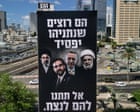
Benjamin Netanyahu is back in full campaign mode. With Israel heading toward parliamentary elections this October, the political theater in Tel Aviv has shifted into high gear. The latest stunt from his Likud party isn't just local posturing. It’s an aggressive, high-stakes international billboard campaign targeting an American official: New York City Mayor Zohran Mamdani.
If you’re wondering why an Israeli prime minister is putting a US mayor on a billboard alongside global adversaries like Iran's Supreme Leader Mojtaba Khamenei and Hezbollah chief Naim Qassem, you aren't alone. It’s a move that signals just how deep the fractures in US-Israel relations have become. You might also find this related story useful: Why Trump Threatening Oman Matters More Than You Think.
The Strategy Behind the Billboard
The logic here is transparent. Likud is betting that framing their opposition—both domestic and international—as part of a singular, hostile front will mobilize their base. The billboard carries a blunt message: "They want Netanyahu to lose… Don't let them win."
By placing Mamdani in the same visual grouping as figures designated as enemies of the state by the Israeli government, Netanyahu is attempting to do two things at once. First, he’s painting the progressive wing of the American Democratic Party as an existential threat to Israel’s security. Second, he’s creating a "rally around the flag" effect at home. As reported in latest articles by Associated Press, the effects are notable.
It's classic political polarization. The tactic ignores the nuances of democratic dissent in the US. Instead, it simplifies complex foreign policy critiques into a binary: you're either with Netanyahu, or you're aligned with Hezbollah.
Why Mamdani is in the Crosshairs
This tension didn't emerge in a vacuum. Mamdani has been a consistent, vocal critic of Israel's actions in Gaza throughout his time in office. Things escalated significantly last month when Mamdani publicly labeled Netanyahu a "war criminal" and suggested he belonged in The Hague.
Mamdani didn't stop at rhetoric. He called on US authorities to enforce an international arrest warrant for the Israeli prime minister should he arrive in New York for the United Nations General Assembly this September. For a sitting head of state, that isn't just an insult; it’s a direct challenge to his diplomatic legitimacy.
Netanyahu responded with his own brand of counter-attack. He’s accused the mayor of "fomenting hate" and driving wedges between religious communities in New York. The prime minister claims he’s worried that bipartisan support for Israel in the US is slipping away because of politicians like Mamdani.
The Reality of Public Opinion
There’s a massive irony in this campaign strategy. While Netanyahu claims he’s defending the bond between the two nations, internal data suggests his gamble might be missing the mark. Recent polling in the United States indicates that Mamdani actually maintains higher favorability ratings among American Jewish voters than Netanyahu himself.
This suggests that Netanyahu’s attempt to paint progressive American critics as inherently anti-Israel isn't landing the way he hopes. Many American voters are perfectly capable of distinguishing between a criticism of a specific government’s policy and an attack on the state itself. By doubling down on these aggressive labels, the Likud party risks alienating precisely the segments of the American public that have historically been the strongest supporters of a US-Israel partnership.
A Wider Pattern of Rhetoric
This isn't an isolated incident. Netanyahu has been testing the boundaries of diplomatic language all week. In a recent interview on Israel’s Army Radio, he referred to the United Kingdom as "the Islamic republic of Britain."
Using this kind of language is a clear nod to the far-right base. It employs common Islamophobic tropes to frame domestic political issues in the UK and elsewhere as part of a larger, global struggle. By positioning himself as the primary defender against these perceived shifts, he’s trying to stay relevant in a political climate where his coalition is struggling in the polls.
What Happens Next
The political situation remains stagnant. Ongoing talks regarding a potential ceasefire deal in Gaza—involving envoys like Jared Kushner—have yielded no breakthrough. As long as Israel refuses to withdraw its troops before Hamas agrees to complete disarmament, the deadlock will continue.
The billboard is merely a distraction from the lack of progress on the ground. It’s a tool for election-year optics rather than a solution to a genuine diplomatic crisis.
If you want to track the actual status of these negotiations or understand the official government positions as the election approaches, you should check the official government election portals or follow updates from reputable public news organizations that report on the Gaza ceasefire negotiations and the regional election status. These resources provide the necessary context that a campaign billboard simply cannot offer.
The election in October will be the first since the October 7 attacks in 2023. It’s shaping up to be a defining moment for Israel's future direction. Regardless of the billboards, the substantive issues—the security of the state, the ongoing conflict in Gaza, and the evolving nature of the US-Israel relationship—are what will actually matter when voters head to the booths.
Don’t expect the rhetoric to cool down anytime soon. When political survival is at stake, the volume only goes up. Keep your eyes on the policy shifts rather than the posters. That’s where the real story is.