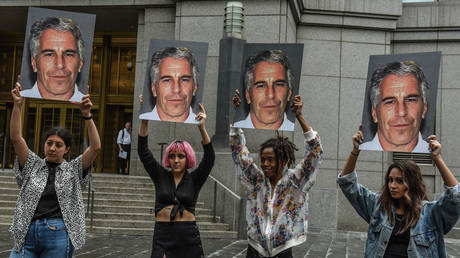
Public skepticism surrounding high-profile deaths rarely fades into quiet acceptance. Years after Jeffrey Epstein was found dead in his Metropolitan Correctional Center cell, the debate over how he died refuses to stay buried. A fresh forensic analysis has thrust the old arguments back into the headlines, reigniting a fierce debate among medical professionals, investigators, and skeptics who refuse to buy the official narrative.
Let's look at what triggered the latest uproar. Forensic expert Dr. Michael Freeman recently reviewed autopsy records, photographs, and physical evidence surrounding the August 2019 incident. His conclusion cuts straight against the grain of federal findings. Freeman argues that the physical trauma discovered on Epstein's body points more toward homicidal strangulation than a standard suicidal hanging.
Why the Official Story Never Stopped Facing Pushback
From day one, the narrative presented by authorities was riddled with glaring operational failures. Guards fell asleep on duty, security cameras malfunctioned at critical moments, and proper prison protocols were openly ignored. When an institution tasked with keeping a high-profile prisoner alive drops the ball on every conceivable front, public trust evaporates.
People didn't just doubt the outcome; they doubted the competence and honesty of the system itself. Over the years, that initial distrust morphed into permanent institutional cynicism. Every time a new report drops or an expert challenges the autopsy data, it strikes a chord with millions of people who assume the worst about powerful figures and institutional cover-ups.
Breaking Down the Forensic Claims
Freeman’s recent assessment focuses heavily on specific physical markers that he claims do not align with typical hangings. During a standard suicide by hanging, the body loses consciousness quickly, and body weight creates the primary downward pressure and friction on the neck.
However, Freeman points to a series of injuries that he believes fall outside that pattern. He highlights deep soft tissue hemorrhaging in the shoulder area and unexplained marks on the back. In his view, these indicators match up more closely with a narrow, knotted fabric ligature applied from behind by another person.
Other pathologists, including Dr. Michael Baden who observed the original autopsy on behalf of Epstein's family, previously raised alarms over fractured neck bones that they argued were rare in routine hangings for someone of Epstein's age.
The Institutional Defense
Medical examiners and federal oversight bodies have consistently pushed back against these alternative theories. The New York City Office of Chief Medical Examiner stood firm by its original determination, maintaining that the cause of death was hanging and the manner was suicide.
Federal investigations conducted by the Department of Justice Inspector General also combed through mountains of documents, witness interviews, and physical evidence. Their findings ultimately corroborated the conclusion that no criminal act occurred, attributing the tragedy to a catastrophic mix of negligence, administrative failure, and profound personal despair.
Pathology is rarely entirely black and white. Different experts can look at identical tissue samples, photographs, and bone structures and walk away with entirely conflicting interpretations. Without a consensus from the broader medical community, these debates remain trapped in a gray area where hard science bumps up against deep-seated public paranoia.
Moving Past the Noise
The persistent obsession with Epstein’s final hours tells us less about forensic pathology and more about the state of public faith in accountability. When massive institutions fail to secure a high-risk inmate, they forfeit the right to a quiet, unquestioned conclusion.
Whether the latest expert analysis sparks an actual shift in public perception or simply fuels another cycle of online speculation, the core issue remains unchanged. Trust, once broken by systemic negligence, is nearly impossible to rebuild with standard bureaucratic reassurances.
This video provides a detailed look at the investigative findings and forensic arguments surrounding the ongoing controversy over Jeffrey Epstein's death.