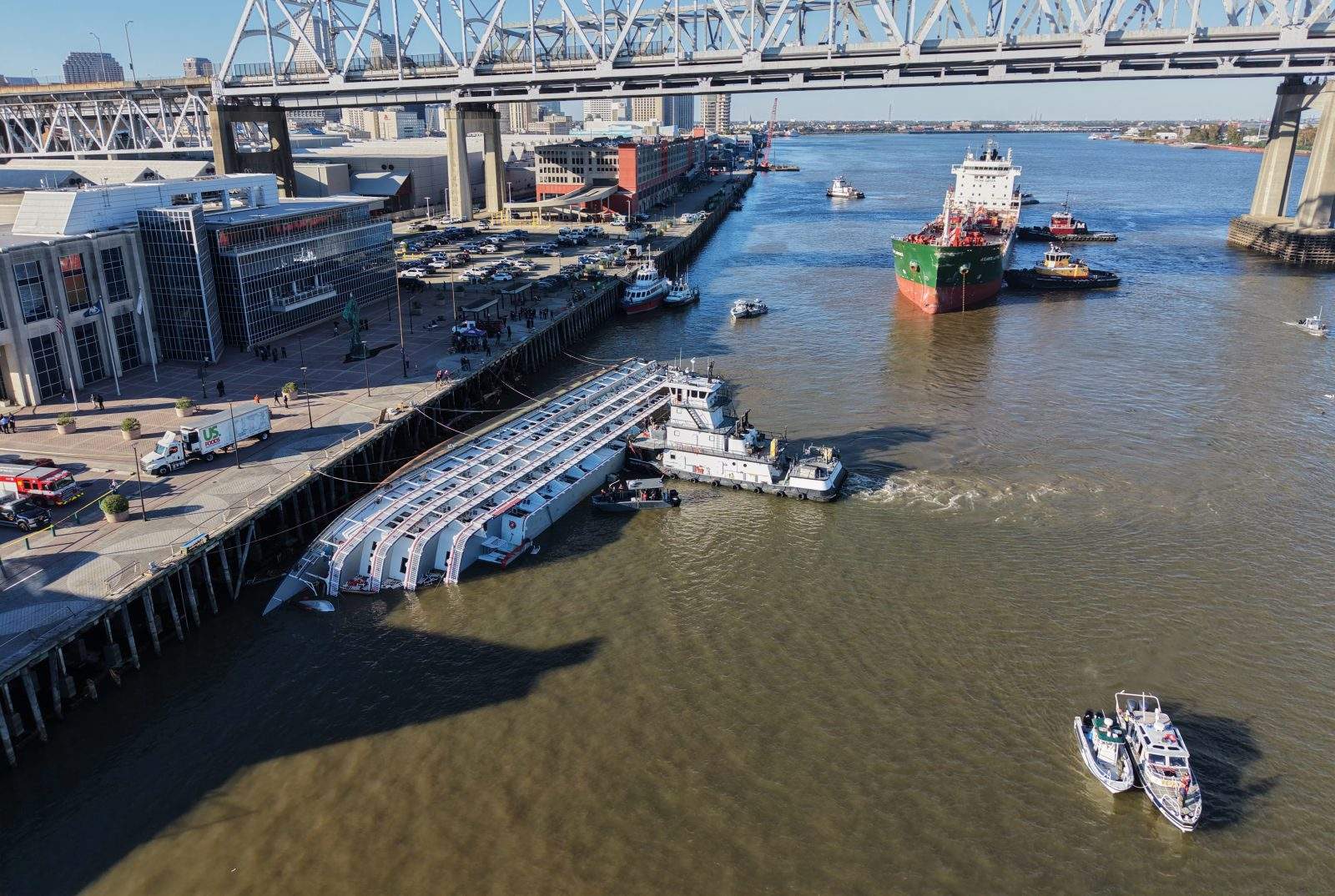
When a massive asphalt tanker lost its steering and plowed straight into a docked river cruise vessel on the Mississippi River, local authorities didn't wait around for paperwork.
The Port of New Orleans filed a federal lawsuit late Friday, barely hours after the Atlantic Asphalt smashed into American Cruise Lines' American Heritage paddlewheeler. The goal wasn't just about collecting a quick check. It was about securing an immediate federal warrant to take control of the ship before it slipped away downriver. If you found value in this piece, you should read: this related article.
Inside the Rapid Legal Maneuver
Maritime law moves at its own peculiar speed, but port officials acted with unusual aggression. The Board of Commissioners of the Port of New Orleans pegged initial terminal damage at roughly $1 million, triggering an emergency legal filing in federal court.
By locking down the tanker through a court-ordered warrant, the port ensured that the vessel's owners—tied to Nave Shipping SA and ultimately backed by the China State Shipbuilding Corporation conglomerate—couldn't simply sail out of jurisdiction while liability was still being argued. It's a textbook play in maritime logistics: freeze the asset, secure the evidence, and force the responsible parties to the negotiating table. For another angle on this development, check out the latest coverage from Reuters.
The Chaos on the Water
The crash itself turned a routine Friday afternoon into a frantic rescue operation. The American Heritage was wrapping up an eight-day cruise along the river when the 160-meter tanker slammed into it.
Witnesses described the sound of grinding steel echoing across the waterfront like a war movie. Within minutes, the paddlewheeler began listing heavily before rolling onto its side against the terminal.
Quick thinking by crew members and passengers who scrambled to put on life vests averted a catastrophic loss of life. Harbor police chiefs later credited those life jackets with keeping people afloat as they drifted in the current, waiting for tugboat operators and local police to pull them from the water. Out of nearly 200 people on board, dozens were sent to local hospitals with non-critical injuries, though a handful remained admitted as investigations ramped up.
Unanswered Questions About the Steering Failure
Investigators from the National Transportation Safety Board and the U.S. Coast Guard descended on New Orleans to figure out how a routine transit turned into a disaster.
Initial assessments point to a sudden loss of steering aboard the Atlantic Asphalt, which sails under a Marshall Islands flag and specializes in hauling heavy bitumen and asphalt products. But mechanical failure is only part of the puzzle. Authorities now face the complex task of clearing the wreckage, extracting roughly 16,000 gallons of fuel still sitting on the capsized cruise ship, and managing restricted traffic lanes on one of America's busiest commercial waterways.
The legal battle over the seized tanker is only the opening salvo in what will be months of complex litigation.