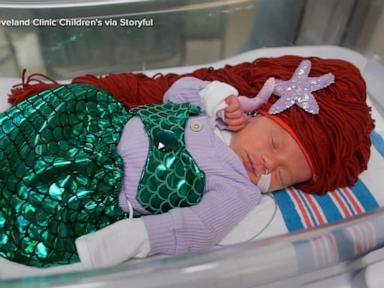
Beeping monitors and sterile lights don't usually scream festive cheer. Yet, every October, neonatal intensive care units across the country transform into miniature costume parties. Nurses stay up late crafting tiny felt superhero capes, miniature coffee cups, and miniature princess gowns for infants who fit in the palm of a hand.
It looks like a cute photo op for social media. But if you talk to parents who have spent weeks or months living inside a hospital room, you realize it is much deeper than that. It is about reclaiming parenthood when everything feels entirely out of your control. If you found value in this article, you should read: this related article.
The Reality Behind the Tiny Costumes
Having a child in the neonatal intensive care unit strips away the milestones most families take for granted. You don't take your newborn straight home from the hospital. You don't get to dress them up in a pumpkin sleeper and show them off to the neighbors. Instead, you wash your hands obsessively, navigate a maze of wires, and celebrate tiny victories like gaining ten grams or breathing unassisted for an hour.
Hospitals like Tallahassee Memorial HealthCare and Advocate Children's Hospital have turned Halloween into an intentional ritual. Night-shift nurses spend their off-hours cutting soft felt and designing layered outfits that drape safely over isolettes and around medical equipment. For another angle on this development, refer to the latest update from The Spruce.
Why go to that trouble? Because morale matters. When you are staring at an incubator for twelve hours a day, fear becomes your default state. Seeing your child dressed as a tiny Batman or a Starbucks frappuccino breaks the clinical gloom. It reminds parents that their baby is a person, not just a patient chart.
How Nurses Engineer Safety First
You can't just throw a cheap polyester costume on a premature infant. Medical teams design these outfits with strict safety boundaries.
- Material Selection: Nurses avoid itchy fabrics or anything that sheds fibers. Soft felt and cotton dominate the crafting room because they won't irritate fragile skin or disrupt sensitive respiratory tracts.
- Equipment Clearance: Wires, IV lines, and nasal cannula tubes take precedence. Costumes are meticulously measured and placed on top of blankets or modified so they never interfere with monitoring equipment.
- Infection Control: Hospitals enforce strict protocols. Items must be easily sanitized or made fresh for single-patient use to protect immune systems that are still learning to fight.
Nurses often mock up the designs on miniature mannequins first. They take pride in getting the details right. It is an act of profound empathy during exhausting hospital shifts.
The Psychological Shift for Exhausted Parents
Psychologists who study family-centered care in hospitals point out that trauma isolation is a massive hurdle for NICU families. Friends and extended family members can't visit freely. The outside world keeps spinning while your life pauses in a high-tech bubble.
When a nurse hands a mother a tiny cowboy hat or a crocheted Wizard of Oz outfit, it normalizes the experience. It offers a bridge back to normal life. Parents get their first real chance to laugh, take proud pictures, and share a joyful milestone instead of a scary medical update.
Those photos become anchors of hope. Years later, families look back at those pictures and remember that even in the scariest season of their lives, community and compassion showed up in the form of a felt superhero cape.
Stop viewing these hospital traditions as superficial gimmicks. They are vital lifelines of joy. They prove that humanity can thrive under the brightest hospital lights.