You can't fight a deadly waterborne bacteria with empty pipes and a bombed-out infrastructure. Right now, northeastern Nigeria is proving this brutal reality. A massive cholera outbreak in Borno State has already killed 74 people and infected over 7,800 others in just over a month.
If you think this is just another seasonal health spike, you're missing the real story. This crisis is the direct result of a 17-year extremist insurgency colliding with a complete failure of basic sanitation.
When a region has been torn apart by conflict for nearly two decades, a preventable disease like cholera transforms from a minor risk into a weapon of mass destruction. Here is what is actually happening on the ground in Maiduguri and across Borno, and why the current containment efforts are losing the race against time.
The Brutal Numbers Behind the Borno Crisis
Let's look at the actual data provided by the Borno State Ministry of Health and the medical charity Médecins Sans Frontières (MSF). The outbreak began on May 1, 2026. By June 7, the numbers exploded:
- 7,850 suspected cholera cases recorded in just five weeks.
- 74 confirmed deaths across both medical facilities and local communities.
- 14 out of 27 Local Government Areas (LGAs) actively reporting infections.
- 50 separate wards dealing with active transmission.
This isn't a slow burn. It's a wildfire. MSF facilities alone have treated 7,439 of these patients. That means their teams are handling an average of 230 new admissions every single day.
On June 5, 2026, the crisis hit a terrifying peak when more than 500 patients with acute watery diarrhea were admitted in a single 24-hour period. That is the highest single-day admission record since the response started, and it has completely overwhelmed local healthcare capacity.
The Toxic Intersection of Insurgency and Infrastructure
To understand why Borno State is uniquely vulnerable, you have to look past the medical definition of cholera. Yes, it's a waterborne disease caused by the Vibrio cholerae bacteria. It thrives where clean water is scarce and open defecation is common.
But the real driver here is the long-running Boko Haram insurgency.
Years of violent conflict have forced millions of people out of their ancestral villages and into overcrowded, poorly managed displacement camps or packed urban slums in Maiduguri. When you cram thousands of traumatized people into tight spaces without functioning plumbing, you create a perfect playground for bacteria.
The numbers from national data show a grim picture. Only 14% of Nigeria's population of over 200 million people have access to safely managed drinking water. In Borno State, that percentage drops significantly lower.
Clean water pipelines have been destroyed by conflict. In remote areas, health workers can't even travel to deliver chlorine tablets or check water wells because the roads are plagued by insurgent ambushes.
When local transmission happens in these isolated pockets, health authorities don't find out until it's already too late. By the time a case is identified, the water source is contaminated, and dozens more are sick.
What It Feels Like inside the Treatment Centers
This isn't an abstract policy problem. It's a visceral, exhausting medical emergency.
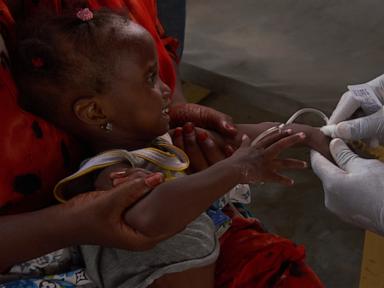
Patients are arriving at the MSF-run Cholera Treatment Centre in the Ngarannam area of Maiduguri after traveling long distances on bad roads, completely drained of fluids. Cholera causes severe, nonstop vomiting and diarrhea. It dehydrates the human body so rapidly that a healthy adult can die within hours if left untreated.
Take the case of Aisha Ibrahim, a local resident admitted to the Maiduguri facility. She spent four days hooked up to intravenous fluids to stop the severe dehydration. Her vomiting stopped, and doctors discharged her. But the moment she went back home to the same contaminated environment, the severe diarrhea returned. She had to be rushed right back to the emergency center.
Her story highlights the futility of medical treatment without environmental intervention. You can pump a patient full of clean IV fluids, but if they go home and drink from the exact same well that made them sick in the first place, the cycle repeats.
The Hidden Failure of Local Containment
The immediate response from international aid groups has been aggressive, but they're swimming upstream. MSF had to rapidly expand its bed capacity in Maiduguri from 121 beds to 271 beds just to keep up with the daily arrivals. They've also set up a smaller 20-bed unit in Dalori to catch cases early.
But local health workers will tell you that the real issue is a lack of boots on the ground. Jessie Kurnurkar, an MSF project coordinator, noted that there are simply fewer aid partners operating in the region compared to previous years. Funding fatigue, bureaucratic hurdles, and security threats have driven many non-governmental organizations away from Borno.
Without enough teams to handle community outreach, hygiene promotion, and water chlorination, containment is failing. People are still practicing open defecation because they don't have toilets. They're still drinking contaminated water because they don't have firewood to boil it or tablets to treat it.
What Must Happen Right Now to Stop the Deaths
Stopping a cholera outbreak doesn't require a medical miracle. It requires basic, aggressive logistics. If the government and international partners want to prevent these 74 deaths from turning into 740, they need to shift from a reactive treatment model to an active prevention model.
1. Blanket Oral Cholera Vaccinations
Treating sick people keeps them alive, but it doesn't stop the spread. The Borno State Ministry of Health is currently planning a vaccination campaign. This needs to be deployed immediately, prioritizing the 14 heavily hit local government areas. The oral vaccine provides rapid protection and can break the chain of transmission even in chaotic environments.
2. Massive Water Chlorination at the Source
Instead of waiting for people to bring contaminated water home, response teams must secure the water points. This means dumping chlorine into community wells, distributing household water treatment kits directly to displacement camps, and fixing broken water trucks that supply Maiduguri's outskirts.
3. Rapid Deployment of Rehydration Corners
Many people die simply because they can't travel the long distance to the main treatment center in Maiduguri fast enough. Setting up small, localized Oral Rehydration Points in every affected ward allows families to get basic salt-and-sugar solutions into patients within the first hour of illness, buying them time to reach a hospital.
The clock is ticking for Borno State. With the rainy season progressing, the risk of floodwaters spreading sewage into drinking sources rises every day. If clean water infrastructure isn't prioritized alongside medical aid, the region will keep fighting a losing battle against a completely preventable disease.
Borno State Cholera Outbreak Medical Update This video report provides direct updates and footage from health officials at the Public Health Emergency Operations Centre in Maiduguri regarding the mounting death toll and active containment struggles.