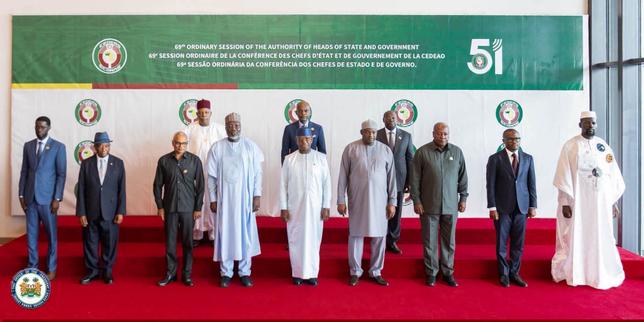
Africa is about to redraw the global energy map, and it is doing so right under the nose of traditional European suppliers. The long-debated Nigeria-Morocco African Atlantic Gas Pipeline just took a massive leap toward reality. During the ECOWAS summit in Freetown, Sierra Leone, West African leaders formally signed the Intergovernmental Agreement. This is not just another diplomatic photo op. It changes the entire geopolitical calculus of the Atlantic coast.
If you think this is just about moving gas from point A to point B, you are missing the bigger picture. This project represents a massive shift in how African nations cooperate and how Europe will secure its energy future in the coming decades. It is a direct challenge to existing regional dynamics and a massive bet on collective industrialization.
Let's look at what actually happened in Freetown and why this mega-project is suddenly moving faster than anyone expected.
The Freetown Breakthrough and What Just Happened
For years, critics dismissed the Atlantic pipeline as a pipe dream. They called it too long, too expensive, and politically impossible. The signing in Sierra Leone changes that narrative completely. By locking in the Economic Community of West African States, the initiative transitions from a bilateral project between Rabat and Abuja into an institutional reality backed by an entire bloc.
The numbers behind this project are staggering. We are talking about a 6,800-kilometer hybrid offshore and onshore pipeline. It carries an estimated price tag of 25 billion dollars. The pipeline aims to transport up to 30 billion cubic meters of natural gas every single year.
The distribution plan is highly strategic. Half of that volume, around 15 billion cubic meters, will head directly to Morocco and onward into the European grid via existing connections like the Maghreb-Europe pipeline. The remaining 15 billion cubic meters will supply the domestic markets of the transit countries. This detail matters immensely. It gives every nation along the path a direct, vested interest in ensuring the project succeeds.
The institutional framework is also taking clear shape. The project company will set up its headquarters in Casablanca. Meanwhile, the regulatory body, the Pipeline Higher Authority, will be based in Abuja. This balance keeps the two primary anchors heavily invested while integrating the broader West African region. A separate, upcoming ceremony will bring Mauritania into the fold, adding the final piece to the coastal puzzle.
Mapping the Mega Project Across Thirteen Countries
To understand the sheer scale of this infrastructure, you have to look at the map. The line will snake through 13 countries along the West African coast. It starts in the gas-rich delta of Nigeria and moves upward, connecting Benin, Togo, Ghana, Ivory Coast, Liberia, Sierra Leone, Guinea, Guinea-Bissau, Gambia, Senegal, and Mauritania, before terminating in Morocco.
This path serves two distinct purposes. First, it connects the major economic hubs of West Africa. Countries like Ghana and Ivory Coast already have growing industrial sectors that are desperate for steady, affordable power. Second, it links up with the newly discovered offshore gas fields in Senegal and Mauritania. Instead of operating in isolation, these fields can feed into a unified system, creating a highly integrated regional gas market.
Building a project of this scale requires a phased approach. The planners are not trying to lay 6,800 kilometers of pipe all at once. They are focusing on standalone segments that can operate independently and generate revenue early. For instance, connecting the existing infrastructure between Nigeria and Ghana upward into Ivory Coast is a logical early step. The northern sections connecting Mauritania's fields to Morocco can also develop concurrently. This modular approach mitigates risk and makes the project far more attractive to international financiers who hate all-or-nothing bets.
The Algerian Rivalry and the Battle for European Markets
You cannot talk about the Nigeria-Morocco pipeline without talking about Algeria. The geopolitical rivalry between Rabat and Algiers colors almost every major infrastructure project in North Africa. Algeria has long pushed its own competing project, the Trans-Saharan Gas Pipeline. That route aims to take Nigerian gas straight through Niger and Algeria directly into Europe.
On paper, the Algerian route looks shorter and cheaper. It covers a much smaller geographic distance. But it suffers from a massive flaw, which is security. The Trans-Saharan path must cut directly through the Sahel region, an area plagued by deep political instability, insurgencies, and volatile governance. International investors look at the Sahel and see extreme risk.
The Atlantic route chosen by Morocco and Nigeria takes a different approach. By going largely offshore along the coast, it bypasses the security nightmares of the interior. It trades a shorter land route for a longer, safer marine path. This choice makes it far more viable in the eyes of European buyers who prioritize security of supply above almost everything else. Europe wants to diversify away from unstable dependencies. A stable, multi-nation coastal pipeline backed by ECOWAS presents a highly attractive long-term alternative.
The Massive Financial and Technical Hurdles Ahead
Let's be realistic. Signing an agreement in Freetown is a huge win, but it does not mean the digging starts tomorrow. The road ahead is filled with complex challenges. Raising 25 billion dollars in the current global economic climate is no small feat. While the state-owned oil companies, Morocco's ONHYM and Nigeria's NNPC, are driving the initiative, they cannot fund this alone. They need massive injections of private capital, sovereign wealth funds, and multilateral development bank loans.
The technical challenges are equally intense. Engineering a pipeline that runs hundreds of kilometers underwater along a volatile ocean floor requires precision. Marine currents, varying depths, and environmental protections add layers of difficulty to the construction schedule. Each of the 13 transit nations will also need to harmonize their regulatory frameworks, customs laws, and environmental impact assessments. A single bureaucratic bottleneck in one country could delay the entire timeline.
There is also the question of domestic gas allocation. Nigeria has massive reserves, but it also has a history of domestic supply deficits due to infrastructure neglect and local conflict. The government in Abuja must prove it can reliably extract and export these volumes while meeting its own internal power generation needs. The success of the pipeline hinges on long-term stability at the source.
Practical Next Steps for Investors and Regional Energy Sectors
The signing of the Intergovernmental Agreement moves the project into the critical pre-construction phase. If you are an investor, energy analyst, or business operating in West Africa, you need to watch the next specific milestones very closely.
First, look for the formal establishment of the project company in Casablanca. The structure of this entity will reveal exactly how much equity each country is putting up and what kind of governance model they are using to manage disputes.
Second, watch the Final Investment Decision. This is the true point of no return. Once the engineering designs transition into hard financial commitments from international syndicates, the construction timelines will become concrete. Commercial gas flows are realistically projected around 2031 for the initial phases, meaning smart companies are already positioning themselves to build secondary distribution networks, gas-to-power plants, and industrial processing zones along the planned route.
The era of viewing African nations solely as raw material exporters is coming to an end. This pipeline proves that the continent is ready to build trans-continental infrastructure that serves its own economic interests first, while simultaneously stepping up to solve Europe's long-term energy anxieties. Keep your eyes on the Atlantic coast. The real work is just beginning.