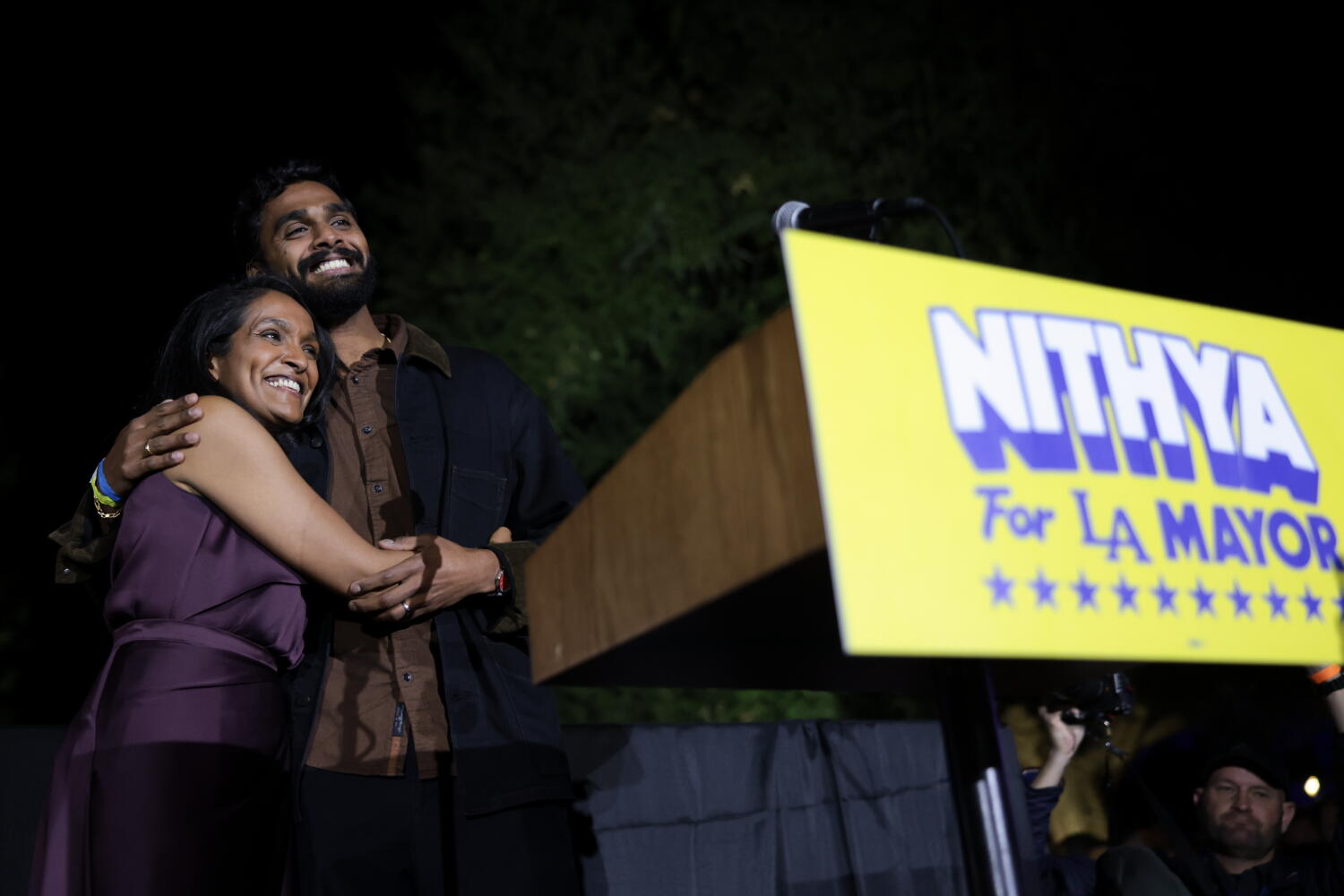
Los Angeles politics is experiencing a seismic shift. As election night returns trickle through, political analysts are pointing to a clear mathematical trend: challenger Nithya Raman is positioned to pull ahead of incumbent Mayor Karen Bass as remaining late votes are tabulated.
If you've been following local updates, this tight contest isn't just about personalities. It's a referendum on the direction of America's second-largest city. Late-arriving ballots in Los Angeles routinely skew younger and lean progressive, exactly where Raman's campaign found its strongest pulse. With roughly a third of the ballots still waiting for processing, the math favors the challenger.
The Anatomy of a Tight Mayoral Race
Incumbent Karen Bass started election night with a narrow initial advantage, capitalizing on traditional mail-in formats and established voter bases. But as subsequent batches of votes cleared, Raman steadily chipped away at the deficit before slipping into the lead.
This pattern mirrors previous municipal showdowns where late-counted provisional and mail-in ballots dramatically reshaped early election-night outcomes. Analysts looking at demographic breakdowns note that Raman's strategy of mobilizing urban renters and progressive voters is paying off precisely when it matters most.
The campaign environment itself was brutal. Bass leaned heavily on her extensive institutional resume and decades in federal and local politics, arguing that stability and experience matter most for a sprawling metropolis of nearly four million residents. Raman countered with a message centered on structural change, tackling housing costs head-on, and addressing the lingering discontent over local governance—particularly in the wake of the devastating 2025 Palisades Fire, which severely tested municipal emergency responses.
Why Late Votes Favor the Challenger
In Los Angeles county elections, late-arriving ballots have distinct characteristics. Voters who drop off ballots at the last minute or rely on provisional voting mechanisms tend to be younger, live in denser urban neighborhoods, and participate less reliably in early voting windows.
Raman’s digital-forward campaign playbook capitalized on this dynamic. High-visibility engagement strategies—ranging from bicycle-centric community events to viral social clips—humanized her platform and resonated deeply with demographics that felt alienated by traditional machine politics.
When you examine the precinct data from the primary and early general tallies, Raman consistently overperformed in high-density districts suffering from severe rent burdens and housing scarcity. These voters are fiercely motivated by municipal policy shifts, and their ballots are precisely what's filling the uncounted pool.
What This Means for the Future of Los Angeles
A potential victory for Raman carries profound implications far beyond city hall. It signals a growing appetite for progressive municipal leadership across major urban centers, aligning Los Angeles with a broader national wave of urban political shifts.
For residents, the immediate future brings a tense waiting period as election officials methodically process every remaining envelope. Regardless of the final certification, the razor-thin margin proves that the status quo no longer holds an unshakeable grip on local politics. The city is demanding a different kind of accountability, and the late-arriving ballots are delivering that message loud and clear.