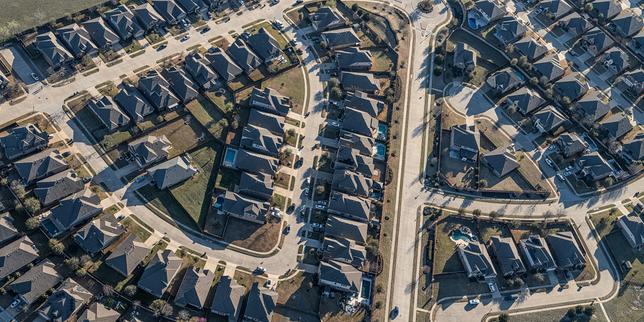
Drive an hour north of downtown Dallas, and you will notice that the pastures and historic farmland are vanishing. In their place stand endless grids of master-planned subdivisions, newly paved multi-lane roads, and rows of identical single-family homes popping up almost overnight. Towns like Celina and Prosper are rewriting the rules of American suburban expansion. When a community explodes from roughly 8,000 residents to upwards of 80,000 in a single decade, it creates an entirely unique set of municipal growing pains, economic booms, and infrastructure challenges.
If you are trying to understand why hundreds of thousands of people are ditching coastal states for North Texas, you have to look beyond simple tax incentives. The Dallas-Fort Worth metroplex is experiencing a staggering demographic shift. According to the North Central Texas Council of Governments, the broader regional population has blown past 8.5 million residents and shows no signs of slowing down. People keep arriving from California, the Northeast, and Central Texas, driven by relative job abundance, lower corporate tax burdens, and the eternal American promise of affordable square footage.
The Mechanics of Hypergrowth Suburbs
Building a city from the ground up requires a massive mobilization of capital and public-private cooperation. Developers don't just buy a plot of land and put up houses; they construct entire ecosystems. Master-planned communities in Collin and Denton counties are built with pre-zoned commercial strips, artificial lakes, community pools, and dedicated school district expansion sites baked into the master blueprint from day one.
The sheer speed of this transformation creates bizarre local anomalies. You will find brand-new high school stadiums that cost tens of millions of dollars sitting right next to two-lane country roads that haven't been widened yet. City councils in towns like Celina find themselves approving thousands of new home lots in a single evening, constantly scrambling to upgrade water treatment plants, expand police forces, and build electrical substations before the grid screams for mercy.
Why Infrastructure Can't Keep Up
The biggest friction point in northern Dallas suburbs isn't a lack of land or builder enthusiasm; it is the physical limitation of concrete and steel. Road construction takes years, but subdivisions go up in months. Traffic bottlenecks on arteries like the Dallas North Tollway are becoming a daily headache for commuters who moved out to the country for peace and quiet, only to find themselves stuck in rush-hour queues that rival Los Angeles or Atlanta.
Local school districts are facing a completely different kind of stress test. When student populations double or triple every few years, bond elections become high-stakes political battles. School boards have to build new campuses back-to-back, hiring teachers by the hundreds while managing skyrocketing land acquisition costs. Property taxes, which Texas relies on heavily to fund local services and schools, are a constant flashpoint for residents who love their new homes but hate seeing their tax bills climb alongside surging property valuations.
The Real Cost of the Texas Dream
Living the master-planned lifestyle comes with strict rules. Homeowners associations wield immense power here, dictating everything from roof shingle colors to how many days your trash cans can stay on the curb. For many buyers moving out of cramped urban apartments, the trade-off is worth it. You get a four-bedroom house with a back patio, top-tier community amenities, and a safe neighborhood for the kids.
Yet, the long-term sustainability of this model remains an open question. Water rights in North Texas are heavily scrutinized, and the scorching summer heatwaves put immense strain on energy grids. Paving over thousands of acres of blackland prairie also alters local drainage and flood patterns, forcing cities to invest heavily in massive detention ponds and stormwater management systems.
Growth in the American sunbelt is not slowing down. The expansion north of Dallas offers a front-row seat to how modern cities handle exponential momentum. If you are planning to buy property, invest in local commercial real estate, or simply understand where the future American workforce is settling, keep your eyes on Collin County. The bulldozers aren't stopping anytime soon.