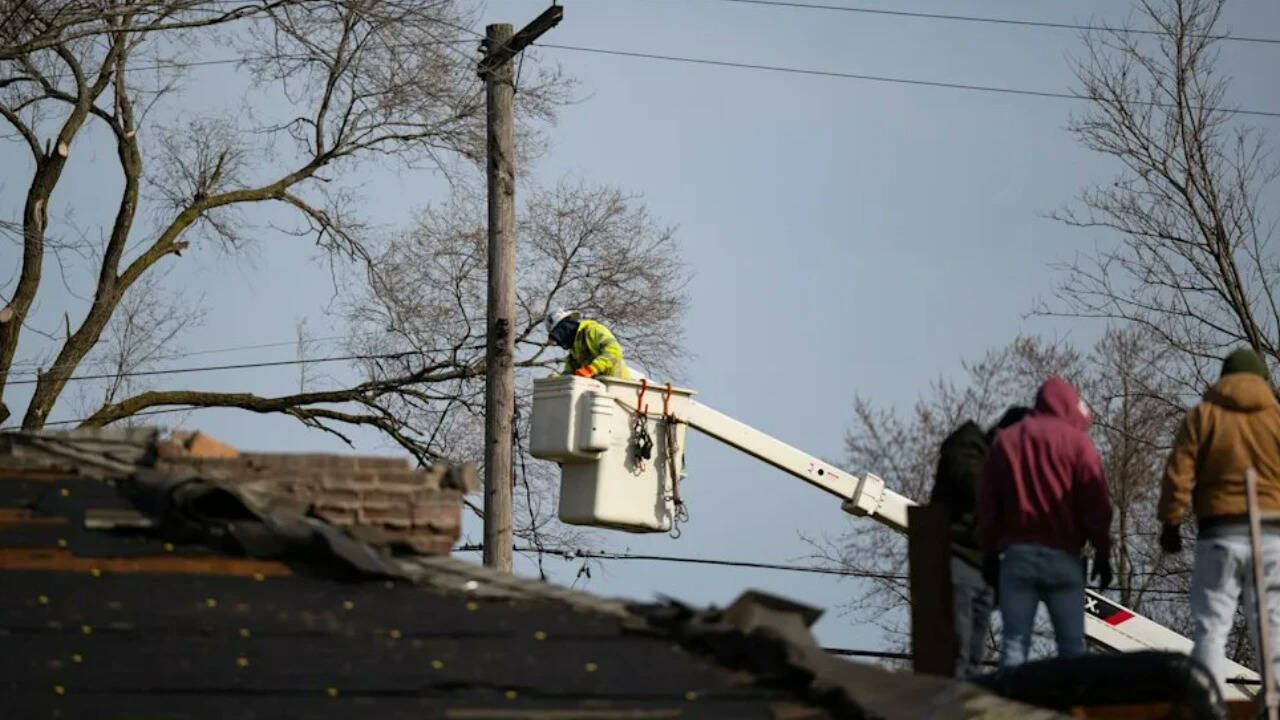
You wake up, reach for the light switch, and nothing happens. For 75,000 people in northwest Indiana, this isn't just a momentary annoyance. It's been their reality for over a week. Following the severe weather event that tore through the region on August 11, the scale of infrastructure damage is massive. We aren't talking about a few fallen branches. We're looking at a complete rebuild of significant parts of the electrical grid.
Utility companies like NIPSCO are calling this the most widespread outage in their history. When you hear that winds reached 159 kilometers per hour near the Gary/Chicago International Airport, you start to understand the sheer force involved. The National Weather Service confirmed that a derecho—a long-lived, high-wind thunderstorm system—ripped through the area, accompanied by at least five tornadoes. This wasn't just a storm; it was an structural assault.
The Reality of Waiting for Power
If you're one of the thousands still waiting, the frustration is understandable. I’ve seen enough power restoration efforts to know that residents are often left in the dark—literally and figuratively—about when things will return to normal. Officials in Gary, for instance, are pointing toward August 25 for full restoration. That’s nearly two weeks without reliable electricity.
Think about the implications. You lose your food, you lose your air conditioning, and if you have medical needs like refrigerated insulin, you’re suddenly in a high-stakes race against time. Some residents are spending $75 a day just to keep a generator running. That adds up fast. It turns an inconvenient blackout into a significant financial burden.
Why Restoration is Taking So Long
The common question is: Why can’t they just flip a switch? It’s rarely that simple. In cities like Gary, hundreds of utility poles were snapped or damaged beyond repair. You can’t just patch these; you have to replace them. Each pole requires specialized equipment, skilled labor, and time to set correctly.
Utility companies are dealing with:
- Catastrophic structural failure: Hundreds of transmission and distribution poles down.
- Logistical nightmares: Moving heavy machinery and crews into damaged areas where roads may still be blocked or unsafe.
- Resource coordination: Managing hundreds of linemen working around the clock under extreme heat and pressure.
It’s easy to look for someone to blame, and some residents have expressed concerns about whether certain neighborhoods are receiving priority over others. Utility executives have pushed back on this, stating that restoration is dictated by the severity of the damage and grid design, not by location or demographics. Whether you believe that or not, the logistical reality of fixing a shattered grid remains the primary bottleneck.
What You Can Do Right Now
If you're stuck in this mess, don't just sit and wait. Be proactive.
- Monitor Official Sources: Stop relying solely on social media rumors. Keep tabs on NIPSCO’s official outage map and local emergency management updates. They are the only ones with the actual data on where crews are deployed.
- Prioritize Your Health: If you have medications that require refrigeration, contact your pharmacy or doctor immediately. Don't wait until your ice stash melts. Many hospitals or community centers have resources for emergency storage.
- Document Everything: If you’re throwing out hundreds of dollars of spoiled food or paying for fuel, keep receipts. While insurance claims can be a headache, having a paper trail is essential. Take photos of your freezer contents before tossing them.
- Manage Your Generator Safely: If you’re running a generator, never operate it inside or in an attached garage. Carbon monoxide poisoning is a very real, very deadly risk during power outages. Keep it outside, away from windows.
We have to face the fact that storms like these are becoming more intense. The infrastructure that worked twenty years ago is struggling to keep up with the weather patterns we see today. Once the lights come back on, the conversation in northwest Indiana needs to shift toward grid hardening. We can't keep doing this every time a storm rolls through.
For now, stay safe, keep your neighbors in the loop, and keep checking those official updates. The recovery process is slow, but it is happening.