Forty years of industrial wheat farming turns soil into a sterile machine. You pump chemicals, harvest the monoculture, and watch every native insect disappear. Then you stop. What happens next shocks people who think nature needs decades to heal.
At Halnaker Hill Farm near Chichester in West Sussex, 330 acres of exhausted arable land underwent a massive ecological reset after its final wheat harvest in 2024. Just two years later, field surveys recorded 5,290 individual butterflies across 28 distinct species. Nature didn't just crawl back. It sprinted.
Why Fast Ecological Recovery Surprises Biologists
Ecologists usually talk about habitat restoration in decades or generations. You plant saplings, wait for canopy closure, and cross your fingers. But insects operate on a different timeline. If you give them the right host plants, they show up immediately.
The 2026 surveys at Halnaker Hill weren't casual hobbyist counts. Butterfly expert Neil Hulme directed systematic monitoring across May, June, and July, backed by 127 additional site checks. They didn't just find common cabbage whites. They found high-value indicator species that prove the ecosystem is already stabilizing.
The Rare Arrivals That Proved the Restoration Worked
Numbers look good on a spreadsheet, but species identity tells the real story. Two notable butterflies turned up where nobody had ever recorded them before.
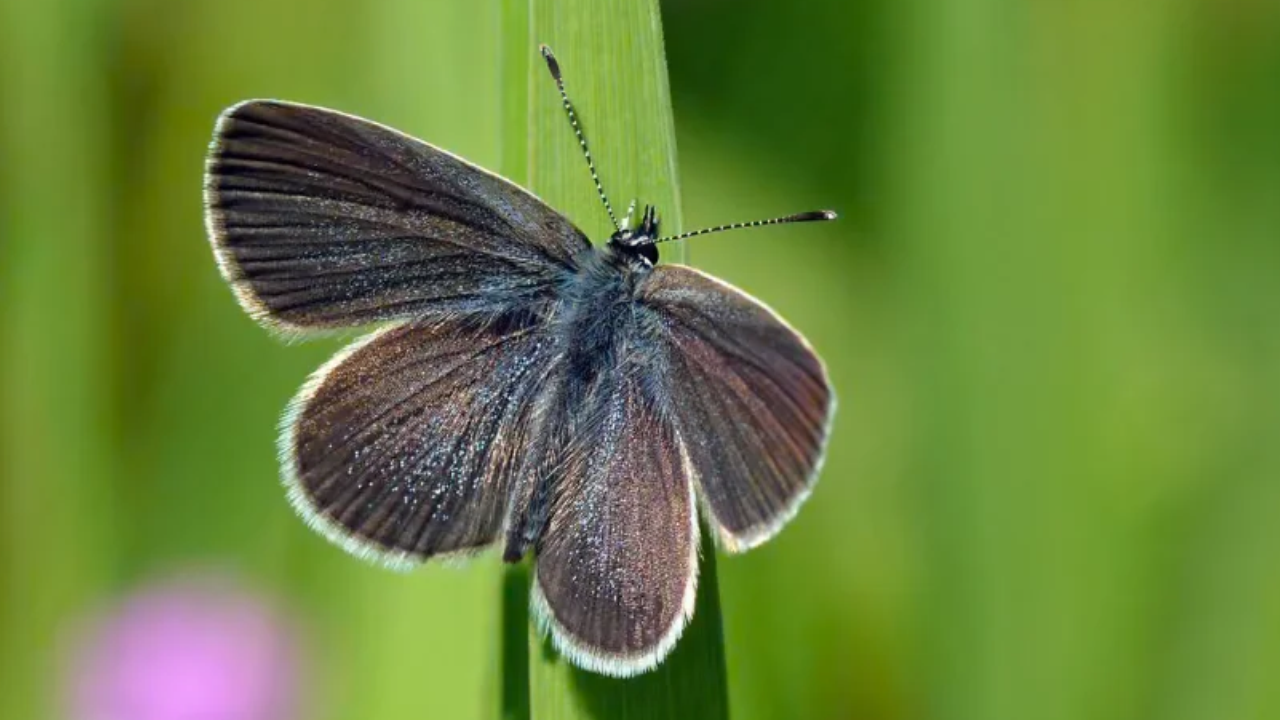
First came 85 small blues. This is the UK's smallest resident butterfly, barely bigger than a fingernail. They're picky. Their caterpillars refuse to eat anything except kidney vetch. No kidney vetch means no small blues. The fact that 85 of them arrived means the newly sown chalk grassland is already functioning.
Then came seven dingy skippers, alongside 547 small heath butterflies and eight sulphur pearl moths—a coastal specialist rarely spotted inland in southern Britain.
The Blueprint Behind the Transformation
You can't just walk away from a wheat field and expect a meadow to bloom. Arable soil is usually packed with residual agricultural nitrogen, which favors aggressive weeds over delicate wildflowers.
Halnaker Hill Natural Capital took a deliberate, heavy-lift approach to rewilding the 133-hectare site. They didn't leave it to chance. The project involved:
- Sowing specialist native wildflower seed mixes tailored for chalk soils.
- Planting roughly seven kilometers of brand-new hedgerows to create insect transit corridors.
- Excavating three new ponds to draw in dragonflies, amphibians, and wetland insects.
- Establishing 54 hectares of herbal leys—complex blends of deep-rooting grasses and herbs that rebuild soil microbes without chemical fertilizers.
- Introducing controlled livestock grazing on existing chalk grassland to keep coarse scrub from choking out low-growing flora.
This structural diversity changed the microclimates across the farm. Skylarks, corn buntings, and hobbies now hunt over fields that recently produced only animal feed or bread flour.
Can Private Markets Fund Wildlife Recovery?
Conservation usually relies on government grants or charity donations, but this project runs on a commercial model called biodiversity net gain. Under English planning rules, major developers must deliver at least a 10% increase in local biodiversity value. When they can't do it on-site, they buy registered off-site biodiversity units.
Halnaker Hill's restoration is projected to generate over 850 biodiversity net gain units. Critics rightly point out that offsetting biodiversity elsewhere can be abused if local habitats are destroyed for concrete. Still, the commercial mechanism pumps private capital directly into large-scale land healing. The financial incentive aligns with ecological results. If the wildlife doesn't return, the credits don't clear.
What Happens Next on the Farm
The work isn't finished just because the first wave of insects arrived. Ecologists are already planning the next phase. Discussions are underway to reintroduce the Duke of Burgundy butterfly, a heavily threatened species tied to scrubby woodland edges. They're also seeding wild pansies across the property to entice the Queen of Spain fritillary, a migratory butterfly expanding its range northward as southern European climates warm.
If a 40-year-old wheat farm can pivot into a breeding ground for thousands of rare insects in 24 months, it completely changes how we should view damaged agricultural land. Stop treating soil like a dead substrate for chemical inputs. Give the plants back to the bugs, and the ecosystem fixes itself faster than you think.