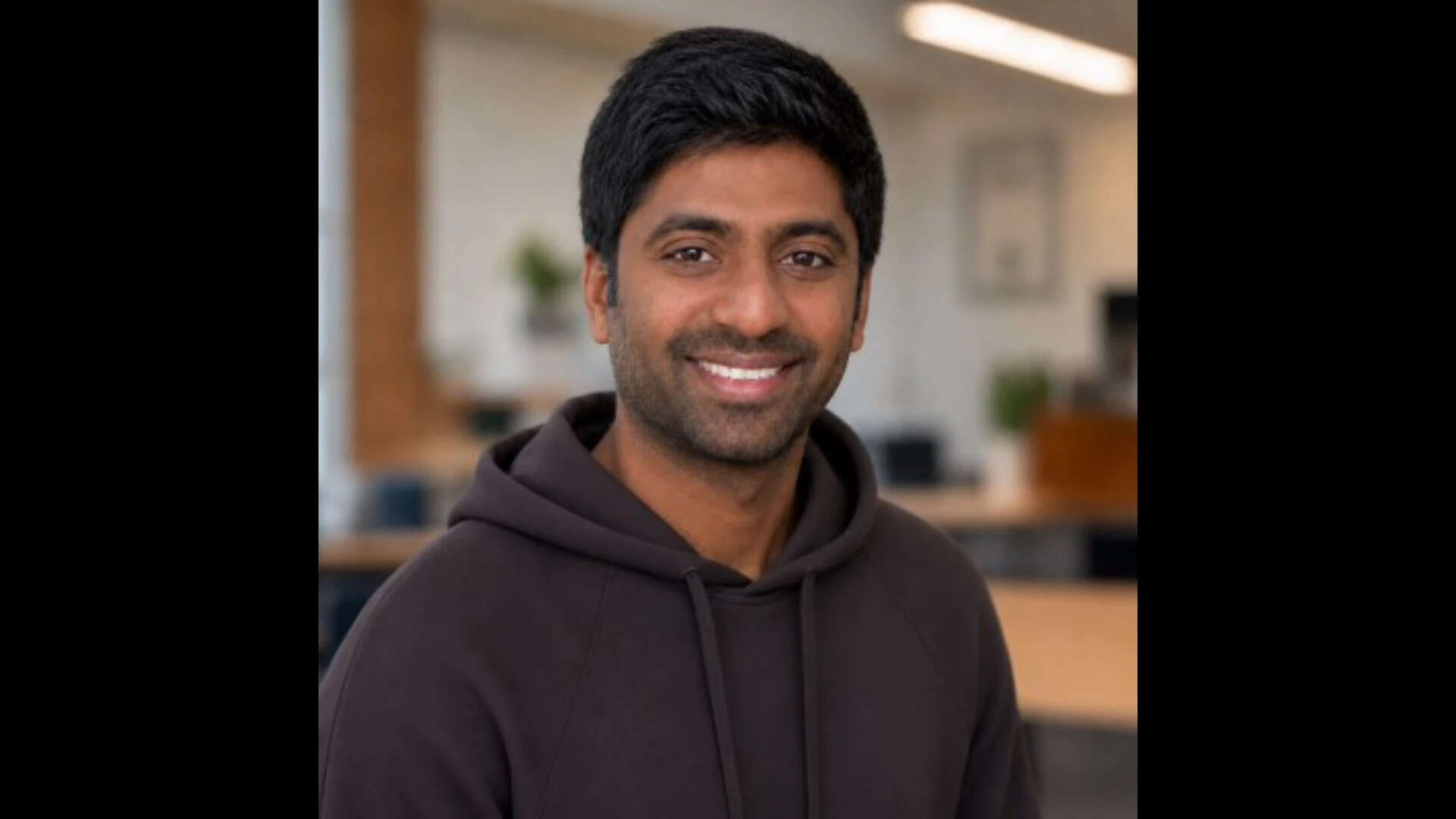
OpenAI just promoted Uday Ruddaraju to the newly minted role of CTO of Compute. If you follow the AI hype cycle, you might expect every top executive at a multi-billion dollar lab to be an Ivy League graduate or an elite AI researcher who spends their days tweaking neural network weights. But OpenAI didn't choose a theorist to run its hardware strategy. They picked a systems engineer who knows exactly what happens when you try to wire up hundreds of thousands of GPUs without melting the local power grid.
The move comes at a critical time. Building smarter models like GPT-5.6 isn't just about better algorithms anymore. It's a brutal, capital-intensive logistical race to secure data centers, electricity, and custom networking equipment. By putting Ruddaraju in charge of the entire compute footprint, OpenAI is acknowledging a simple truth: the company with the best infrastructure wins.
The Non-Traditional Path to the Top of Silicon Valley
Most tech stories out of India follow a predictable script. You graduate from an ultra-competitive Indian Institute of Technology (IIT), land a tech job in California, and climb the corporate ladder. Ruddaraju broke that script entirely. He earned his bachelor's degree in computer science from Chaitanya Bharathi Institute of Technology (CBIT) in Hyderabad.
It's an excellent school, but it lacks the immediate global brand recognition of the IIT network. He relied on raw execution instead of an elite pedigree. While still studying in Hyderabad, he secured an internship at Amazon Web Services, getting an early look at how massive cloud infrastructure functions at scale.
He later moved to the United States to complete a master's degree at the University of Minnesota Twin Cities. Instead of jumping straight into AI labs, he spent over five years at eBay, focusing on cloud platforms and modernizing legacy application systems. Then came a nearly six-year stint at Robinhood, where he worked his way up to Senior Director of Engineering and Head of Infrastructure.
At Robinhood, he managed the systems that handled millions of frantic retail investors during unprecedented market volatility. That kind of high-stakes, real-time scaling pressure creates a specific type of engineer. You learn to respect systems reliability because a single infrastructure failure means millions of dollars lost in seconds.
The Colossus Supercomputer and the Move to OpenAI
You can't talk about Ruddaraju without mentioning his time under Elon Musk. In 2024, he took the role of Head of Infrastructure Engineering at xAI and X. His primary mission was massive: building Colossus.
Colossus is a monstrous supercomputer packing more than 200,000 GPUs, designed specifically to train xAI's Grok models. Setting up a cluster that size in a matter of months is an engineering nightmare. It requires solving immense thermal issues, stabilizing power grids, and optimizing fiber optic networks so thousands of chips can talk to each other without latency bottlenecks. Ruddaraju managed that sprint, giving him a front-row seat to the outer limits of modern hardware scaling.
Then OpenAI poached him. In July 2025, he left Musk's camp to join Sam Altman's team as Head of Compute and Infrastructure. A year later, OpenAI elevated him to CTO of Compute. This rapid rise shows how desperate major AI players are for people who actually understand physical infrastructure execution.
What a CTO of Compute Actually Does
People often think running an AI company is all about writing elegant software code. The reality at the frontier level is much dirtier. Training a model like GPT-5.6 requires thousands of compute clusters running continuously for months at a time. If a single row of servers overheats or a switch drops packets, the entire training run can stall, costing millions of dollars a day.
In his new role, Ruddaraju isn't just looking at software optimizations. He noted that the roadmap spans civil, mechanical, and electrical engineering alongside traditional machine learning infrastructure.
Think about what it takes to build the world's largest compute footprint:
- You need civil engineers to clear land and design structures that can hold thousands of tons of high-density server racks.
- You need mechanical engineers to design liquid cooling loops that pull massive amounts of heat away from components without leaking.
- You need electrical engineers to negotiate gigawatt-scale power hookups with energy providers and build backup generator setups.
It's a complete stack optimization problem. You can't just throw more graphics cards at a cluster and expect it to run faster. You have to balance storage speeds, network topologies, and power limits simultaneously.
Why Infrastructure Strategy Rules the AI Industry
The easy gains in AI model development are gone. Optimization now happens at the hardware level. The companies that can scale their compute platforms efficiently will deliver faster inference times, cheaper API access, and more capable foundation models.
By appointing a dedicated CTO of Compute, OpenAI is signaling that infrastructure is no longer a backend support function. It's the central engine driving their product timeline. If your hardware stack fails, your research team sits idle.
For tech leaders and engineers watching this space, the lesson is clear. The value isn't just in the mathematical formulas behind AI models. The real defensibility lies in the physical, industrial capacity to run those models at a global scale.
If you want to build a career in the next phase of tech, don't overlook core systems engineering. Focus on distributed systems, high-performance networking, and hardware optimization. That is exactly where the hardest, most valuable problems are being solved right now.