Bulldozers don't care about memory. They see concrete, timber, and old brick as obstacles between a map and a blueprint.
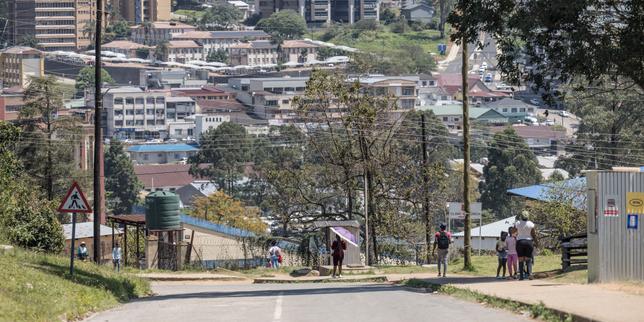
In Osh, Kyrgyzstan's second-largest city, that clash between speed and memory is playing out right on the streets. Officials have pushed an aggressive urban renewal drive across the city, promising new apartments, IT hubs, schools, roads, and even a waste-to-energy plant. A solar-equipped school built for 530 children went up in just 10 months. On paper, it looks like modernization finally arriving in the Fergana Valley.
On the ground, though, people who've lived through decades of upheaval are watching familiar walls come down again. When a city rebuilds fast without settling old grievances or honoring proper legal steps, new glass and asphalt can't paper over deep scars.
What Is Actually Happening in Osh Right Now
If you search for Osh right now, you'll see two stories colliding. One is a pitch for modern urban growth: residential blocks, expanded streets like Navoi Street, upgraded public spaces, and fresh investments around the city's historic core. Reports on projects in the area have pointed to large-scale housing plans, regional connectivity pushes, and international financing tied to infrastructure and economic growth, such as programs backed by the World Bank and the Asian Development Bank.
The other story is much messier. Residents along streets targeted for widening or clearance have spoken about partial demolitions, missing or delayed compensation, and sudden notices that left little room for negotiation. Some families whose homes were completely lost were offered flats in Ene-Say, roughly 10 kilometers outside Osh, or apartments within the city. Others say they were left living in half-demolished houses with no payout yet.
Rights advocates, including groups like Interbilim, have pointed out a basic legal gap: municipal authorities are expected to reach compensation agreements with homeowners first, or let disputes go through the courts, rather than bulldozing first and sorting out the fallout later. When people don't trust the process, every excavator looks like a threat rather than a sign of progress.
Why Old Wounds Hurt So Much in Southern Kyrgyzstan
You can't understand Osh's reaction to urban change without looking back. This isn't a city with a blank slate.
In June 1990, as Soviet power frayed and land and autonomy disputes boiled over, deadly inter-communal violence erupted in southern Kyrgyzstan between ethnic Kyrgyz and ethnic Uzbeks, leaving hundreds dead. Twenty years later, in 2010, violence flared again in Osh and Jalalabad. More than 400 people were killed, most of them ethnic Uzbeks, and thousands of homes and businesses were destroyed or burned.
Even before the post-Soviet crises, Soviet-era planning reshaped neighborhoods in ways locals still remember. For older residents whose families already lost homes in earlier waves of modernization or violence, seeing walls torn down again brings back trauma that never truly settled. Honestly, when a family loses a home once in a lifetime, it's a tragedy. When it happens across generations or multiple eras, trust in official promises gets razor-thin.
Watchdogs like Genocide Watch and organizations tracking minority rights and civic space, such as OHCHR and CIVICUS, have repeatedly warned that unresolved grievances around property, representation, and accountability keep ethnic and regional fault lines sensitive. You don't have to ignore the need for better roads or housing to admit that demolition without transparent compensation feeds resentment fast.
Sulaiman-Too and the Battle Over Sacred Heritage
At the center of Osh rises Sulaiman-Too, a rugged sacred mountain that anchors the city's identity and draws pilgrims and visitors across Central Asia. Some Muslims hold that making three pilgrimages to Sulaiman-Too carries the spiritual weight of one pilgrimage to Mecca, and the site carries deep historical and cultural significance, including ancient graves and museum spaces.
That sacred status makes every construction plan near the mountain a lightning rod. Former mayor Jenishbek Toktorboev pushed aggressive redevelopment moves—including street and market clearances that earned him harsh pushback—and tried to push projects near the mountain's buffer zone and cemetery areas before President Sadyr Japarov dismissed him in February 2026.
His successor, Mayor Janar Akaev, appointed in February 2026, kept the development push going while sparking fresh debate. By August 2026, proposals floated around a Swiss-style cable car to the summit and even questioning Sulaiman-Too's UNESCO World Heritage status, an idea the culture ministry rejected. Meanwhile, work began in late November 2026 on a reconstruction and renovation effort at the Sulaiman-Too complex, temporarily closing the Sulaiman-Too Museum and the Cave Museum while officials stated that restoration work would follow heritage rules.
Here's the catch with heritage and tourism: visitors come to Osh because it feels ancient, layered, and distinct. If you strip away historic fabric or alienate a UNESCO site to build generic tourist gimmicks, you risk killing the exact value you came to monetize.
What People Usually Miss About Osh Urban Renewal
A lot of coverage frames this as a simple tug-of-war between "progress" and "backwardness." That framing is lazy and wrong.
First, Osh genuinely needs better infrastructure. Growing cities need modern schools, reliable utilities, safer transit, and sensible housing options. Pretending nothing should change isn't realistic either.
Second, the real failure isn't building new things—it's how the rules get bent along the way. When compensation is murky, when partial demolitions leave families stranded in half-standing buildings, and when buffer zones or historic sites become bargaining chips, the city creates legal and social headaches that cost far more later.
Third, relocation isn't just about square footage. Moving a family 10 kilometers out to a place like Ene-Say might check a box on a housing spreadsheet, yet cut people off from workplaces, schools, family networks, and daily livelihoods. A flat far from your livelihood isn't an even trade.
How to Read News About Osh and Central Asia Smarter
If you're following Osh's transformation—whether as a researcher, investor, traveler, or policy watcher—don't stop at headline announcements or ribbon-cutting photos.
- Check who gets compensated and when: Look past total apartment counts and ask whether partial damage, business loss, and legal disputes are resolved before or after demolition.
- Watch heritage boundaries closely: Pay attention to disputes over UNESCO buffer zones, historic graves, and ministry approvals rather than assuming every announced idea will happen.
- Follow local and independent reporting: Cross-check state or municipal announcements against independent regional outlets, human rights monitors, and international development filings.
- Look at commute and livelihood impacts: Notice where relocated residents end up and how far they sit from markets, transit, and schools.
Real urban renewal isn't just pouring concrete faster. It's building a city people feel safe inside, legally and socially, long after the bulldozers leave.