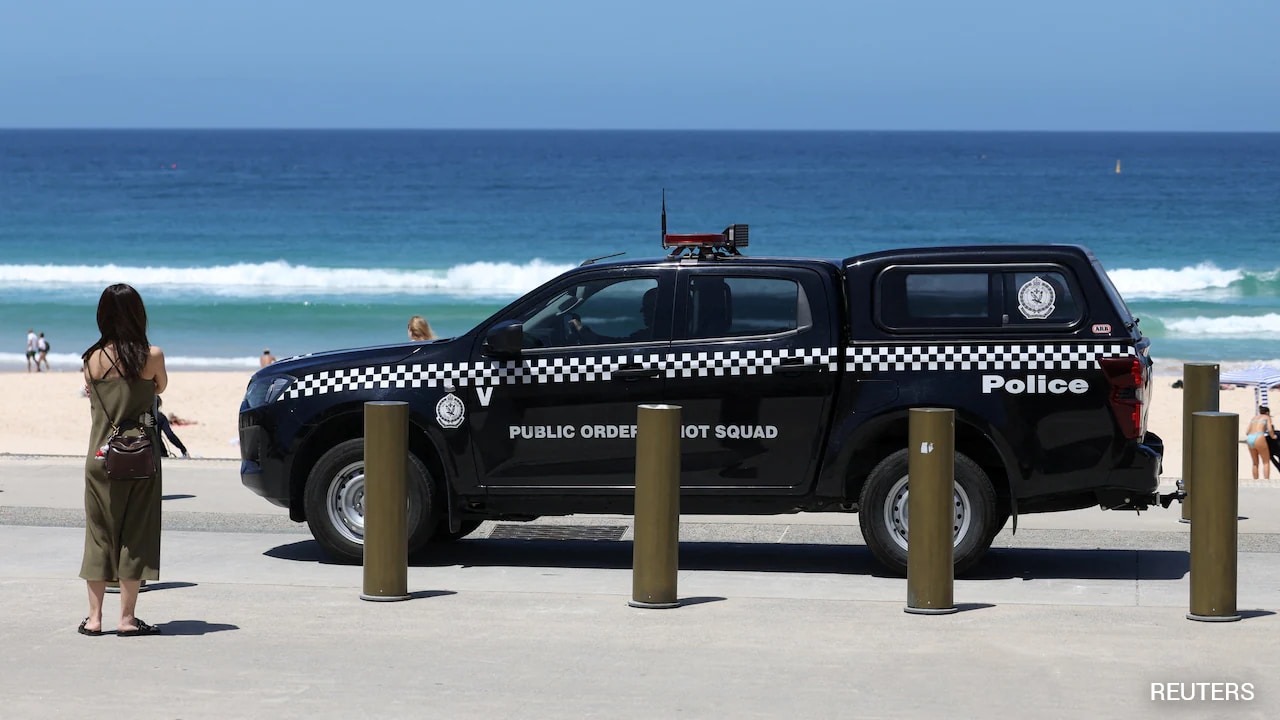
History has a cruel way of repeating itself for the survivors of humanity's darkest chapters. When 90-year-old Eva Geller passed away in a Sydney hospital, she took with her a living bridge to the Holocaust. But her death also marks a tragic milestone: she is now counted as the sixteenth victim of the horrific December 2025 terror attack at Bondi Beach.
If you followed the news out of Australia last year, you already know the grim outline. Two gunmen inspired by the Islamic State opened fire on a crowd gathered for a Hanukkah celebration at one of Sydney's most iconic coastal spots. Fifteen people died that day, ranging from children to grandparents. Roughly forty others sustained injuries. Geller was one of them.
She survived the Nazi genocide as a child fleeing Romania, only to find herself dodging bullets nearly a century later on a sunlit Australian beach.
The Long Road After the Shots Stopped
Most media reports back in December 2025 focused on the immediate body count and the chaos of Australia's deadliest mass shooting in decades. What happened next to the survivors rarely makes front-page news for long.
Geller spent the final year of her life largely bedridden. The physical toll of gunshot wounds on a nonagenarian body is catastrophic. Yet, those close to her noted flashes of her lifelong resilience. She managed to stand, walk a little, and even celebrate another birthday before complications from her injuries finally caught up with her in November 2026.
Her passing brings a fresh wave of grief to a community that has barely begun to heal. Prime Minister Anthony Albanese publicly acknowledged the ongoing trauma, noting that the delayed death reminds the nation that the devastation of that single afternoon continues to ripple outward.
Grappling with Rising Antisemitism
Geller's death arrives at a sensitive legal and political crossroads for Australia. The attack wasn't just a random act of extremist violence; it targeted a Jewish holiday gathering, exposing deep fissures regarding safety, community protection, and the alarming rise of antisemitism.
A government-backed inquiry into antisemitism, established in the immediate wake of the massacre, is scheduled to hand down its official findings on December 18. With Geller now recognized as the sixteenth fatality, the pressure on lawmakers to deliver concrete, enforceable strategies rather than empty rhetoric has never been higher.
Meanwhile, the legal proceedings crawl forward. One of the alleged gunmen, Sajid Akram, was shot dead by police at the scene. His son, Naveed Akram, survived his own gunshot wounds and faces fifteen counts of murder alongside terrorism-related charges. Every court appearance drags the horror back into the public eye, forcing survivors and victims' families to relive the terror.
What Geller Left Behind
We talk a lot about statistics in modern journalism. Numbers on a screen. Fifteen dead becomes sixteen dead.
Eva Geller’s life story demands that we look past the casualty count. She lived through a mechanized slaughter in Europe during World War II, built a life in Australia, and managed to reach age 90, only to be cut down by modern religious extremism on a beach.
Her funeral is set for next week in Sydney. As mourners gather to lay her to rest, the broader questions about how a Holocaust survivor could find such a violent end in a peaceful democracy remain raw and unanswered.