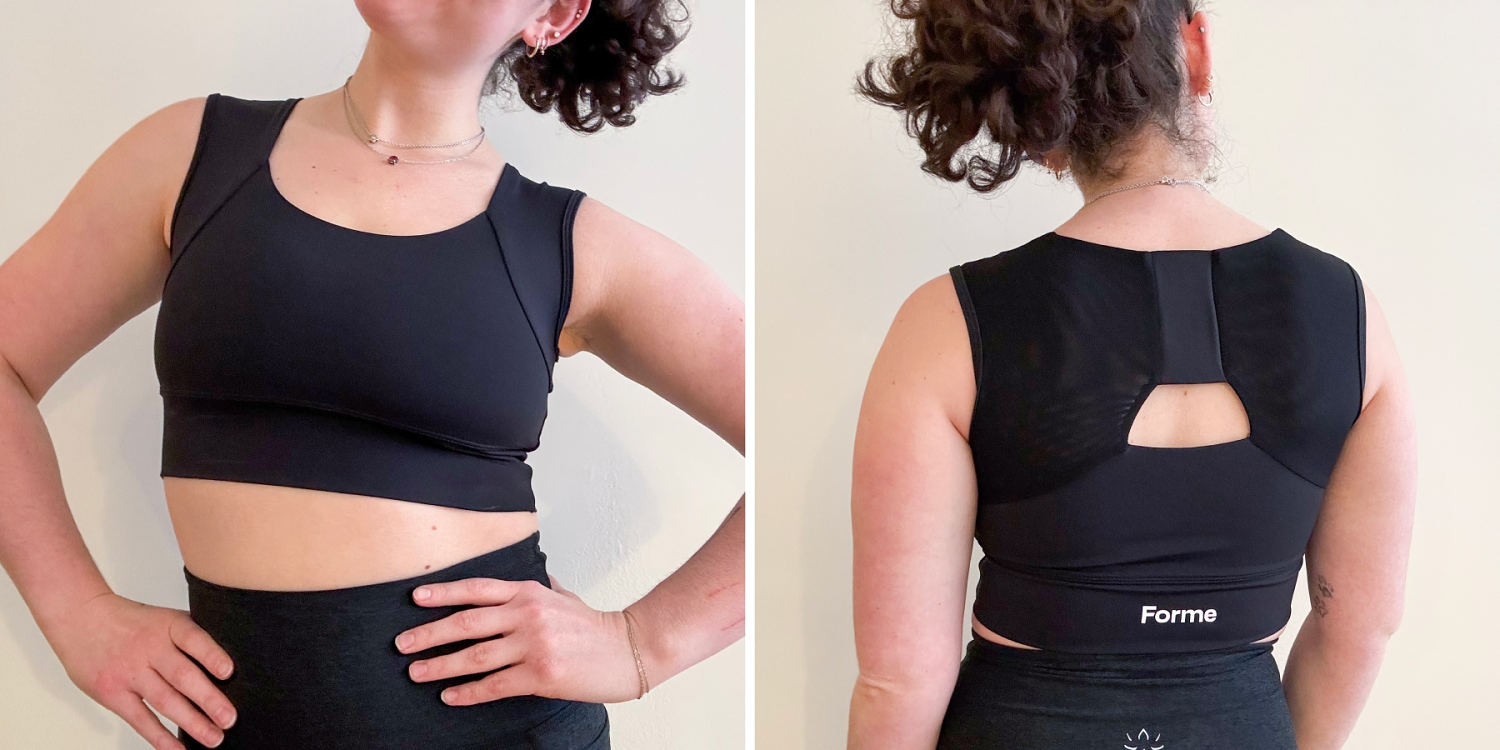
You have probably seen the ads clogging your social media feed. A sleek, high-end sports bra promises to fix your rounded shoulders, erase your chronic neck pain, and completely transform your spinal alignment. It sounds like magic. It costs a staggering $178.
The Forme Power Bra is the heavy hitter in the rapidly growing market of wearable posture correctors. Designed by an orthopedic surgeon, it looks like premium activewear but claims to function as a low-level medical device. It relies on a system of inner tension bands to pull your shoulders back and down, forcing you out of the standard computer hunch.
But let's answer the burning question immediately. Is this $178 investment going to cure your bad posture permanently?
No. It won't.
If you wear it, you will absolutely feel an immediate physical shift. Your shoulders pull back, your chest opens up, and you instantly stand a little taller. It feels great while it's on. The second you peel it off, your body resets right back to its default slouch. It acts as a temporary structural brace, not a magic eraser for years of desk-bound habits. Paying nearly $200 for a short-term reminder is a tough pill to swallow for most people.
Before you hand over your credit card, you need to understand how this garment actually interacts with your muscles, where the marketing overpromises, and what it takes to actually fix your alignment for good.
The Science of Proprioceptive Feedback
To understand why this bra behaves the way it does, you have to look past the standard compression fabric used in cheap sports bras. The interior of the garment houses multiple layers of varying tension fabrics. These panels are explicitly mapped out to target your upper back, specifically your rhomboids, traps, and scapular stabilizers.
It does not hold you in place like a rigid plastic medical brace. Instead, it uses a concept known as proprioceptive feedback.
Proprioception is your brain's internal map of where your limbs and joints are in space. When you slouch forward to stare at a smartphone or type on a laptop, your back muscles stretch out and essentially fall asleep. Your brain loses track of the fact that your shoulders are rolled up by your ears.
The inner bands of the garment create a continuous, elastic resistance against your skin. When your shoulders start to roll forward, the fabric stretches and creates tension. This tension serves as a tactile cue. Your nervous system registers the pull and prompts your own muscles to actively pull your shoulders back into proper alignment.
Physical therapists frequently use kinesiology tape for this exact purpose. The tape does not actually hold your body up. It simply alerts your brain the moment you deviate from a neutral spine. This bra attempts to replicate that exact sensory cue in an everyday wearable format.
Registration Versus Approval
The marketing material leans heavily on medical authority. You will often see the phrase FDA-registered thrown around in promotional copy. This sounds incredibly impressive to the average shopper, but it requires a bit of realistic unpacking.
An FDA registration is not the same thing as an FDA clearance or approval.
Registration simply means the manufacturer has listed their facility and product in the federal database so the government knows they exist. It does not mean the FDA has run rigorous clinical trials on the garment. It does not mean government scientists have verified that the garment cures back pain, reverses scoliosis, or permanently alters muscle memory.
Independent peer-reviewed studies on posture shirts and tension garments show highly mixed results. While some small-scale laboratory tests demonstrate that these garments improve scapular positioning while you wear them, larger scoping reviews indicate that long-term pain management through posture clothing lacks substantial scientific backing.
This does not mean the product is a scam. It just means you are buying a beautifully engineered compression garment, not a regulated medical treatment.
Realities of Wearing a High Tension Sports Bra
Living in this garment for eight hours a day reveals several realities that short product descriptions completely ignore. First, putting it on is an absolute workout in itself. Because of the multi-layered tension panels, the fabric has very little traditional give. You will find yourself wriggling, twisting, and pulling just to get it over your head and shoulders. If you are already dealing with severe shoulder mobility issues or acute rotator cuff pain, this initial struggle can be incredibly frustrating.
Once it is securely in place, the immediate sensation is surprisingly comfortable but undeniably tight. It forces an elegant posture. Your chest lifts, your core naturally braces, and your head stacks neatly over your shoulders.
However, that forced correction comes with a physical cost over extended periods.
Postural Fatigue Is Real
Many users assume that wearing a posture bra will make their back feel relaxed. The opposite often happens. Because your nervous system is constantly being nudged to engage muscles that are normally weak and elongated, those muscles have to work overtime. After a few hours of working at a desk, you will likely feel a distinct ache in your mid-back. This isn't injury pain; it's muscle fatigue. Your upper back is essentially doing a low-grade endurance workout all day long.
The Ribcage Restriction Trap
A major complaint from physical therapists regarding ultra-compressive posture bras centers on the breathing mechanism. To generate enough leverage to pull your shoulders back, the under-bust band has to anchor tightly against your ribcage. This intense restriction can severely limit your lateral rib expansion when you take a deep breath.
If you wear a highly restrictive band all day, your body may compensate by shifting to shallow chest breathing. This can paradoxically tighten your neck and scalene muscles, worsening the exact upper-body tension you bought the bra to fix.
Aesthetic Compromises
Let's talk about how it looks under actual clothing. The thick, full-coverage back panel and wide shoulder straps are fantastic for evenly distributing weight across your upper body. They prevent the digging and chafing common with thin, elastane straps.
But that massive amount of fabric means it will peek out of almost any shirt that isn't a crewneck t-shirt or a high-collared sweatshirt. Furthermore, the sheer compression required for posture correction tends to flatten the bust significantly. It gives a highly compressed silhouette rather than a naturally lifted shape, making it tough to transition from a workout directly into a casual evening outfit.
Deciding Between Power and Collagen Models
The brand offers a few distinct variations of their core technology, primarily splitting the lineup into the original Power Bra, the Power+ Bra, and the newer Collagen Power Bra. Navigating these options at a high price point requires knowing exactly what you are paying for.
The standard Power Bra focuses entirely on daily wearable alignment. The Power+ variation features slightly redesigned, wider armholes. This adjustment addresses one of the most common user complaints regarding the original design: intense chafing and digging directly in the armpit fold during repetitive upper-body movements. If you intend to use the garment for high-impact gym sessions, running, or dynamic mobility work, the Power+ is almost always the smarter choice.
The Collagen Power Bra takes a bizarre marketing detour into skincare. The fabric is infused with specialized fibers designed to feel smoother against the skin and manage moisture better. While the material does feel slightly softer than the standard nylon-polyester blend, do not buy it expecting actual dermatological miracles. Buy it simply if you have highly sensitive skin that reacts poorly to standard synthetic athletic fabrics.
Why High Support Sports Bras Give Similar Temporary Results
Here is a secret that athletic apparel brands prefer you do not consider: any high-end, high-impact encapsulation sports bra can provide a remarkably similar posture cue for a fraction of the price.
When you wear a heavy-duty sports bra designed for high-impact running, the compression through the upper back and the wide racerback structure inherently stabilizes your shoulder blades. It naturally limits your ability to round your shoulders excessively.
The primary difference is intentionality. The Forme bra uses specific angled internal panels to explicitly target the scapular retractor muscles. A standard running bra simply uses brute force compression across your entire chest and back to minimize bounce. The targeted feedback of the posture bra is undeniably more precise, but whether that precision is worth an extra $100 over a premium standard sports bra is highly debatable.
The Sizing Dilemma
Getting the right fit in this specific garment is notoriously difficult. Because it relies on alpha sizing (XS through 3XL) rather than traditional band and cup measurements, you are trying to fit a highly complex, non-stretchy structural piece onto a highly variable body shape.
If you possess a small ribcage but a larger bust, or a wide athletic back with a smaller bust, the standard size chart will likely fail you.
If you choose your standard t-shirt size, the bra will feel incredibly tight, borderline suffocating, during the first few wears. The brand itself actively recommends sizing up if you fall between standard measurements. They also suggest manually stretching the armholes with your hands 10 to 20 times before you ever attempt to put it on your body. The fact that a consumer has to manually break in a nearly $200 technical garment just to prevent skin rawing tells you everything you need to know about the intensity of the fit.
How to Move Beyond Wearable Braces
If you want to spend $178 on a premium, beautifully made workout bra that serves as a solid reminder to stop slouching at your desk, go right ahead. It works perfectly for that specific, limited scenario. But if you want to actually change your posture for the long haul so you can sit comfortably without throwing hundreds of dollars at specialized apparel, you must build the structural capacity within your own tissues.
Stop treating your apparel as an external skeleton. Start executing these practical shifts immediately.
Train Your Scapular Muscles 3 Times a Week
Your back slouches because your chest muscles are short and tight, while your upper back muscles are weak and overstretched. No bra will make those back muscles stronger. You need targeted resistance training.
Incorporate face pulls using a resistance band, prone Y-T-W raises on the floor, and seated cable rows into your weekly routine. Focus on the eccentric phase of the movement. Slow down. Feel your shoulder blades actively squeezing together and controlling the weight.
Open Your Thoracic Spine Daily
Poor posture is rarely just a shoulder issue; it is a thoracic spine immobility issue. If your mid-back is locked solid into a forward curve, your shoulders have no choice but to follow.
Spend five minutes every single evening rolling out your upper back on a firm foam roller. Pause on the tight spots, support your neck with your hands, and gently extend your upper spine backward over the roller. Keep your ribs pulled down so the movement comes from your upper back, not your lower lumbar spine.
Adjust Your Digital Environment Immediately
You cannot out-train or out-wear eight hours of terrible ergonomics. If your laptop sits flat on your desk, you are forcing your head to tilt forward, which instantly places up to 60 pounds of extra structural strain on your cervical spine.
Prop your monitor or laptop up on a stand so the top third of the screen sits directly at eye level. Drop your chair height or raise your desk so your elbows can rest comfortably at a 90-degree angle with your shoulders fully relaxed.
Implement a 30 Minute Movement Alarm
The human body thrives on motion, not static perfection. Even a perfectly straight posture will cause muscle ischemia and discomfort if held rigidly for hours on end.
Set a silent recurring alarm on your phone for every 30 minutes of computer work. When it goes off, stand up completely. Reach your arms toward the ceiling, open your chest, look left and right, and take three deep diaphragmatic breaths. This simple habit breaks the static holding pattern and resets your brain's spatial awareness far more effectively than any compression garment ever could. Use structural apparel as a temporary training wheel if you have the budget, but remember that true, pain-free alignment is earned through how you move, stretch, and strengthen your body every single day.