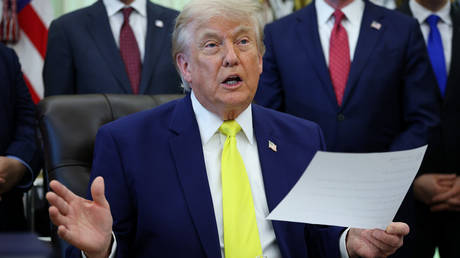
When the Department of Justice announced a sweeping crackdown on non-citizen voting in California, the headlines focused on the raw numbers. Twenty-eight green card holders charged. Raids executed by Homeland Security Investigations. But if you look closer at the charging documents, a much more complicated reality emerges. The real story isn't a massive conspiracy of foreign agents stealing American elections. It's about green card holders—many who have lived in the country for decades—getting caught in a legal trap during their naturalization applications.
Let's break down what's actually happening on the ground. Recently making headlines in this space: Why The White House And Elon Musk Are Catching Heat Over Starlink In Ukraine.
The Trap Inside the Citizenship Application Process
Applying for U.S. citizenship is a grueling endurance test. You need to hold a green card for at least three years (or five in most cases), answer intense background questions, clear fingerprinting, and pass tests on American history and English.
Here is where things go sideways. More insights on this are covered by Wikipedia.
Many permanent residents interact with state motor vehicle agencies to renew their driver's licenses. In busy offices, digital voter registration prompts can be confusing, ambiguous, or easily clicked through by accident. Millions of immigrants have mistakenly wound up on voter rolls simply because they didn't realize a routine license renewal checked a box to register.
Years later, when those same individuals apply for naturalization, they fill out federal forms that ask point-blank if they have ever registered to vote or cast a ballot. If they check "no" because they genuinely didn't know they were registered, federal prosecutors can view that mistake as a deliberate lie to secure citizenship.
The Steep Penalty Disparity
The legal jeopardy for these immigrants is staggering. Federal law treats illegal voting by a non-citizen as a misdemeanor carrying up to a year in prison. However, lying on a naturalization application or during an immigration interview is treated as a severe felony. It carries a prison sentence of up to a decade and triggers automatic deportation proceedings.
Take the case of Pamele Arbues Line, a 56-year-old immigrant from the Philippines. Federal agents arrested her immediately after her naturalization interview in San Diego. Court documents show she registered to vote five times and voted once, believing she derived citizenship through her mother decades ago when she was a teenager. When she discovered her true status at a Social Security office in June, she applied for citizenship immediately. Now, she faces up to ten years in prison.
Similarly, Amandeep Kaur, an Indian immigrant who has lived in the United States for eight years, is fighting charges after taking her written driving test in Hindi. Her husband explained that she received and returned a mail-in ballot in 2024 because they mistook the materials for basic registration updates. She now faces criminal exposure that threatens her entire livelihood and her family's future.
Examining the Scale Versus the Rhetoric
The Trump administration's broader push targets voter rolls to root out non-citizen voting ahead of midterms. Homeland Security officials reported that a nationwide initiative has yielded roughly 1,600 investigated voter fraud cases leading to about 160 arrests.
Election law experts point out that these figures represent a microscopic fraction of the more than 211 million active registered voters in the United States. Data consistently shows that non-citizen voting is vanishingly rare and doesn't swing elections. Yet, by redirecting federal resources toward these specific cases, the administration has fundamentally transformed how minor bureaucratic errors on voter forms are prosecuted.
Meanwhile, state officials in California have pushed back hard against federal claims. State leaders argue that the federal target lists are heavily inflated and that local election offices comply strictly with federal guidelines. Furthermore, once mail-in ballots are separated from their outer envelopes to protect privacy, verifying individual intent becomes exceptionally difficult.
Slower Approvals and Rising Fear
The chilling effect of these enforcement actions stretches far beyond the courtroom. Naturalization approvals have plummeted dramatically. Government data indicates that federal officials approved roughly 58,000 citizenship applications over a recent three-month window—less than a quarter of the approvals granted during the same period the previous year.
Eligible immigrants are increasingly hesitant to complete paperwork or submit applications, terrified that an inadvertent checkmark on a state driver's license form from five years ago could lead to felony charges rather than a welcoming ceremony.
If you are a permanent resident navigating the path to citizenship, double-check every past document involving motor vehicle registrations and voter rolls before submitting your N-400 application. Consult an experienced immigration attorney immediately if there is any ambiguity in your voting history.
Judge orders Trump Administration to pause DHS crackdown on non-citizens who may be voting
This video provides an overview of a judicial ruling that paused aspects of the Department of Homeland Security's controversial enforcement operations targeting non-citizen voters.
http://googleusercontent.com/youtube_content/1