The British government just took a massive swing at late-night teen scrolling. But if you think this means your sixteen-year-old is suddenly going to put down their phone at midnight and drift peacefully to sleep, I have some oceanfront property in Sheffield to sell you.
On July 14, 2026, Technology Secretary Liz Kendall unveiled the next phase of the UK’s war on big tech. It is a midnight-to-6am default block on social media apps for sixteen- and seventeen-year-olds. It sounds revolutionary on paper. No more late-night TikTok doomscrolling. No more Snapchat notifications pinging at 3am. Better sleep. Better mental health.
But there is a catch. A massive, glaring catch.
This curfew is entirely voluntary.
Older teens can override the block in just two clicks.
This is not a hard wall. It is a polite suggestion wrapped in a press release. It is a speed bump that any teenager with a pulse and basic motor skills can easily bypass. So why is the government doing this? What does it actually change? Let's unpack the reality behind the headlines and look at what this policy really means for families, tech companies, and the future of the internet.
How the Opt-Out Midnight Curfew Actually Works
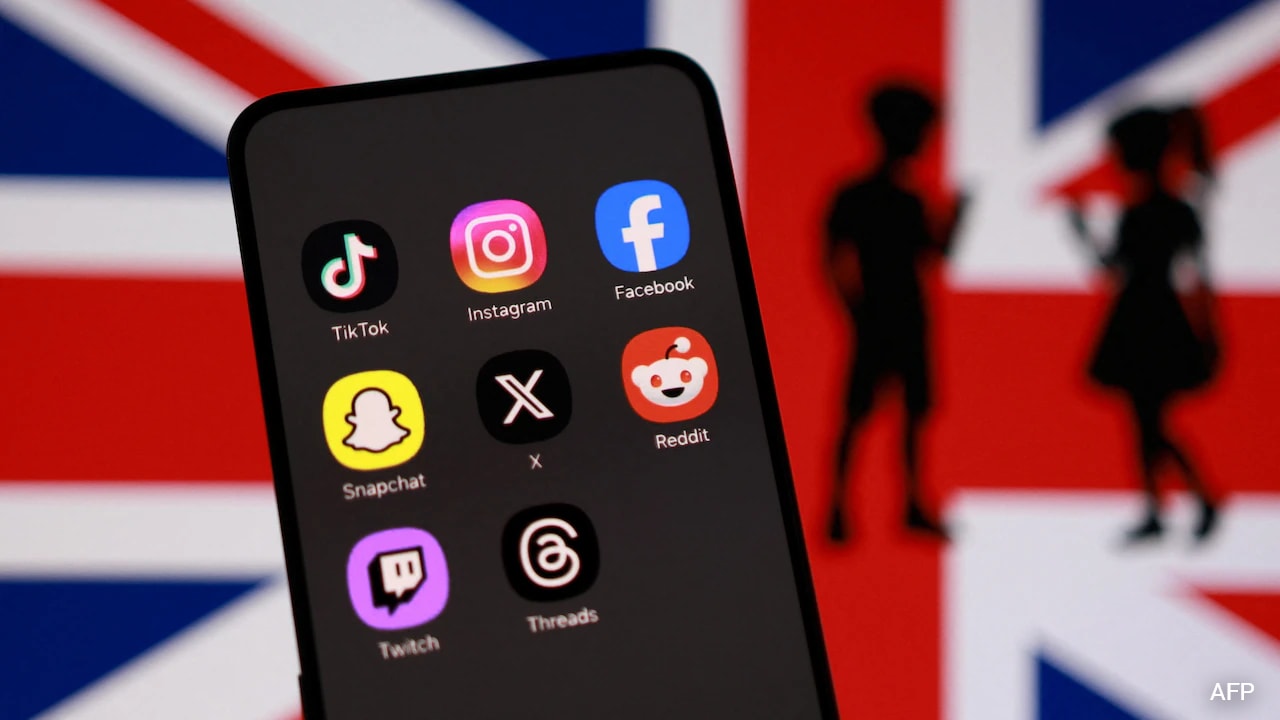
Let's get the mechanics out of the way. This policy is an extension of the broader under-16 social media ban announced by outgoing Prime Minister Keir Starmer's government back in June 2026. That under-16 ban is a hard line in the sand. It blocks platforms like Instagram, TikTok, Snapchat, Facebook, YouTube, and X from offering services to children under sixteen starting in Spring 2027.
The new rules target the transition age. The sixteen- and seventeen-year-olds.
Instead of banning them outright, the government is introducing default restrictions. From next spring, when a sixteen- or seventeen-year-old opens a major social media app past midnight, they will find it locked. The app will tell them it is bedtime.
But the user can go into their account settings and turn the restriction off. No parental permission needed. No government ID required. Just a simple toggle switch.
The government’s theory is based on choice architecture. It relies on the idea of defaults. Behavioral science tells us that most people stick with default settings because changing them requires effort. If you make the default setting "offline at midnight," a certain percentage of teens might shrug, close the app, and go to sleep.
The policy does not just target the clock. It also targets the features that keep kids hooked. Under the new rules, several highly addictive design elements will be switched off by default for older teens. These include:
- Autoplay videos that automatically cue up the next clip when one ends.
- Infinite scroll feeds that never let you reach the bottom of a page.
- Algorithmic recommendations designed to serve up highly personalized, addictive loops.
Just like the midnight curfew, teens can turn these features back on if they want. But by forcing tech companies to turn them off by default, the government hopes to create friction.
The Hidden Science of the Midnight Curfew
Is there any evidence this actually works? Surprisingly, yes. But not in the way the government is pitching it.
Back in May 2026, the Department for Science, Innovation and Technology (DSIT) commissioned a research company called Savanta to test different social media restrictions on teenagers. They tested three scenarios:
- Rationing use to 15 minutes a day.
- A hard curfew from 9pm to 7am.
- Complete deletion of social media apps.
The researchers found that overnight curfews were the absolute easiest restrictions for households to manage. When teens in the study were cut off from Snapchat, Instagram, TikTok, X, and Reddit overnight, the benefits were immediate and cumulative.
The teenagers went to bed earlier. They felt more rested. They reported better concentration during school hours and revision sessions. They even felt less overall stress. Within the households, parents reported more face-to-face conversations and shared family time.
But there was a dark side.
Many teenagers experienced genuine withdrawal symptoms. They reported feeling isolated, left out, and deeply anxious about missing out on group chats. Some parents compared the initial adjustment phase to a drug withdrawal, marked by intense irritability and mood swings.
Crucially, the Savanta study was done using a hard curfew. The teenagers in the trial could not just click a button to bypass the restriction. In the real-world policy, they can. That is where the entire concept starts to wobble.
Why Child Safety Advocates Are Calling Foul
The loophole is so massive that critics are not holding back. They are calling the policy a toothless public relations stunt.
Beeban Kidron, the founder of the 5Rights Foundation and a leading campaigner for children’s digital rights, was incredibly blunt about the announcement. She argued that a default curfew that can be switched off with two clicks is designed "for show and headlines, not for children." She pointed out that this is not the deep, systemic change that parents and experts have been begging for. Instead, it feels like a rushed policy cooked up in a government department to win a news cycle.
Laura Trott, the Conservative shadow education secretary, was equally dismissive, calling the proposal a "dog’s dinner." The political critique is obvious. If sixteen- and seventeen-year-olds are mature enough to make their own decisions, why impose a curfew? If they are vulnerable enough to need protection from addictive algorithms and sleep deprivation, why give them a bypass switch?
By trying to please everyone, the government has created a policy that satisfies no one.
We also have to talk about the political backdrop here. This announcement is one of the final acts of the Keir Starmer administration. The responsibility for actually hammering out the fine print of these regulations and enforcing them in Spring 2027 will fall to Andy Burnham. He is set to become prime minister after winning the Makerfield by-election. Burnham has historically been vocal about child safety, but he will inherit a regulatory framework that is incredibly messy.
What the Government Left Out of the Playbook
If you read the official announcements, there are some massive gaps in the strategy.
First, let's talk about messaging. The curfew does not apply to messaging apps like WhatsApp, Signal, or iMessage. It also does not apply to platforms like YouTube when used for educational purposes, or productivity suites like Google Classroom and Microsoft Teams.
While that makes sense logistically—kids need to do homework and message their parents—it ignores how teenagers actually communicate. If a teenager is blocked from TikTok at 12:30am, they do not just go to sleep. They open a WhatsApp group chat and talk to their friends there. The screen time remains. The blue light still keeps them awake. The sleep disruption continues.
Second, there is the question of Virtual Private Networks (VPNs). When the under-16 ban was announced in June, tech experts immediately pointed out that teenagers would just use VPNs to spoof their location. They could pretend to be in France or the United States, bypassing the UK bans entirely.
The government’s response to this is surprisingly laid back. They cited research showing that only 7% to 10% of children currently use a VPN specifically to bypass age verification. Based on this, they decided not to ban or restrict VPNs, claiming that doing so could harm broader digital freedom and free speech.
This is incredibly naive.
Teenagers are digital natives. If a sixteen-year-old wants to get on TikTok at 1am, and all it takes is downloading a free VPN app from the App Store, that 7% figure will skyrocket to 90% overnight. Kids teach each other how to bypass digital blocks faster than any government task force can write a report.
Third, the policy touches on AI chatbots but offers very little substance. The government announced that AI providers will have to build "regular breaks" into their platforms for users under eighteen. We do not know what those breaks look like, how long they will last, or how they will be enforced. Given how quickly generative AI is integrating into teenage life, this feels like an afterthought.
What You Can Actually Do to Protect Teen Sleep Tonight
If you are a parent, you cannot wait until Spring 2027 for a voluntary government curfew to solve your household's sleep crisis. You need strategies that work right now. Since the government's plan relies on defaults, you need to create your own, non-negotiable defaults at home.
Here is a practical, three-step playbook to reclaim the night from the algorithms.
1. Move the Charging Station Out of the Bedroom
This is the single most effective rule you can establish. Do not argue about screen time limits or try to monitor app usage. Just make it a rule that all devices—phones, tablets, smartwatches—must be plugged into a charging station in the kitchen or hallway by 10pm. If the phone is not physically next to the bed, the urge to reach for it at 2am disappears.
2. Use Router-Level Blocks
Do not rely on the apps to police themselves. Most modern home internet routers come with companion apps that allow you to pause internet access for specific devices at specific times. You can set a hard block on your teenager's phone and console from 11pm to 6am. This bypasses any device-level settings or VPNs because the Wi-Fi signal simply cuts out.
3. Replace the Phone with a Dedicated Alarm Clock
The number one excuse teenagers use for keeping their phone next to their bed is, "I need it for my alarm." Buy them a cheap, retro, analog alarm clock. It removes the excuse and keeps the bedroom a screen-free sanctuary.
The government's new curfew is a fascinating experiment in digital psychology, but it is not a magic wand. Relying on tech companies to implement voluntary switches for addictive products is a losing battle. The real boundary-setting still has to happen at home.