You think you're perfectly safe inside your house during a thunderstorm. You lock the doors, close the windows, boot up your PC or console, and settle in for a long gaming session while the rain pours outside. It feels like the ultimate cozy refuge.
It isn't.
In July 2026, a thirteen-year-old boy named Vlad Skuridin was doing exactly that inside his own home in Cypress, Texas, a suburb right outside Houston. He was sitting at his computer desk, completely focused on his game. He didn't expect a thing. Then, out of nowhere, a massive lightning bolt hit near his house, sent an intense electrical surge traveling directly through his home's wiring, and shocked him straight in the stomach.
He survived. It's a miracle he did. When the news broke that a US teen survives freak lightning strike while gaming in bedroom, the internet reacted with a mix of disbelief and sheer panic. Most gamers assume that a brick wall and a roof shield them from atmospheric electricity. They're wrong. Vlad's close call exposes a massive misunderstanding about indoor electrical grounding, home construction, and the hidden dangers lurking in your expensive gaming setup.
The Night a Gaming Session Turned Living Nightmare
The storm outside the Cypress home on that Tuesday evening seemed like any other typical Texas summer downpour. Vlad was relaxing in his bedroom off Cypress View Drive and Spring Cypress Road. His skin happened to be resting against a small metal component of his gaming desk.
Then the world exploded.
A deafening crack echoed through the house as lightning struck either a nearby tree or the home itself. The electricity didn't just dissipate into the ground outside. It found a path of least resistance. The current surged through the house's electrical infrastructure, leaped through the computer setup, and arched directly into Vlad's abdomen through that tiny piece of metal on his desk.
The shock literally threw him backward. He jumped out of his chair, screaming in pure panic. He later admitted to local reporters that he honestly thought he was going to die. He didn't think survival was possible in that split second.
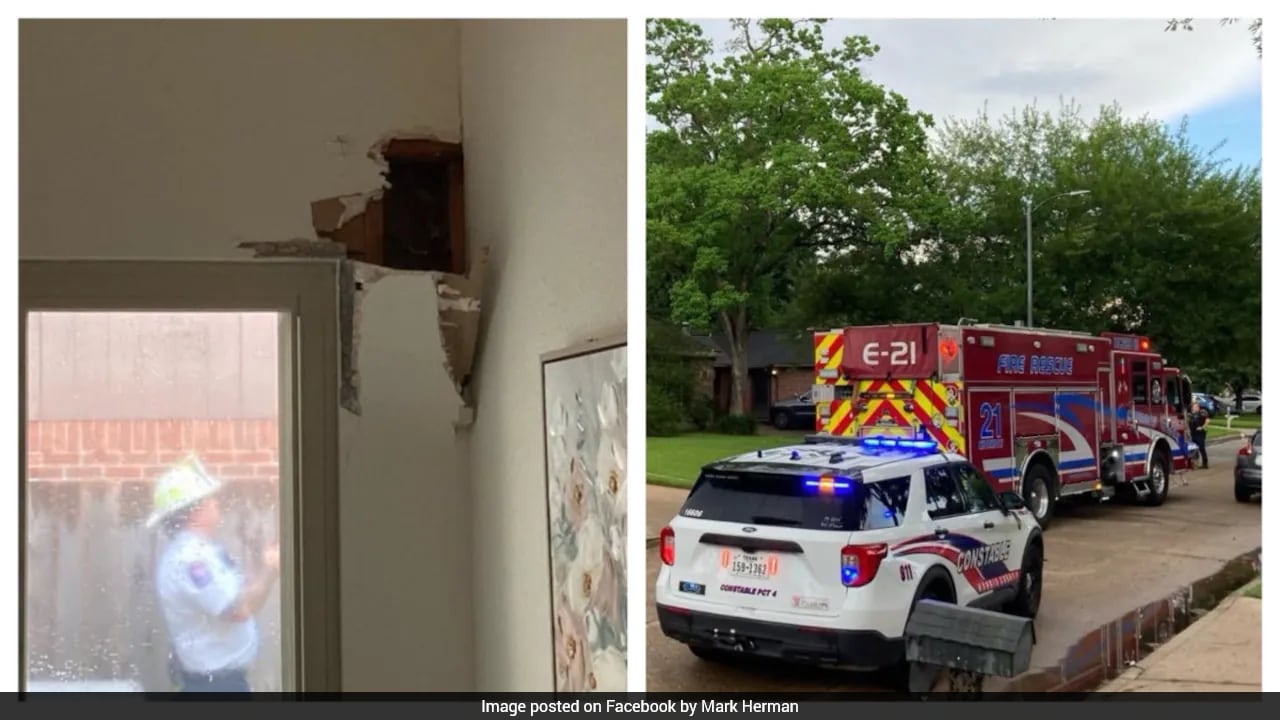
His dad immediately called 911. When the Cypress Creek Fire Department and Harris County Precinct 4 Constables arrived, they found a scene of chaotic damage. The electrical surge was so powerful it blew a hole right through the bedroom wall and ignited a fire in the attic. First responders checked Vlad over thoroughly. Unbelievably, he didn't require a trip to the hospital. He walked away with some dizziness and deep psychological shock, but he was alive.
The Brutal Physics of Indoor Lightning Paths
To understand why this happens, you have to discard the myth that your house acts like a perfect shield. Lightning possesses millions of volts of electricity. It constantly hunts for the absolute fastest route to the earth.
When a bolt strikes a residential home or a tree next to it, the energy spreads out. It seeks out conductors. Your house is filled with them. Copper wiring, internet cables, cable TV lines, and metal plumbing pipes are essentially superhighways for a lightning strike.
In Vlad's case, the current traveled through the home's active wiring system. It reached his computer, surged through the connected components, and used the metal frame of his desk to bridge the gap to his body. Because his skin touched the metal, he became part of the circuit.
Many people believe that standard home insulation protects them from these anomalies. It doesn't. If a surge is strong enough, the electricity will literally jump through the air or arc across non-conductive materials to find a path. The fire in the Skuridin attic proved exactly how much raw thermal and electrical energy was pumping through the walls.
Why Your Cheap Power Strip Won't Save You
Let's bust a dangerous myth right now. That twenty-dollar plastic surge protector you bought at a grocery store will not protect your life or your equipment from a direct or near-miss lightning strike.
Most consumer-grade surge protectors are designed to handle minor fluctuations from the local power grid. They use components called Metal Oxide Varistors to divert small spikes in voltage. They work fine if a transformer blows down the street. They are completely useless against a literal bolt from the sky.
A lightning bolt laughs at a standard power strip. The voltage is so high that it easily jumps across the tiny physical switches inside a surge protector. It melts the internal components instantly and continues down the cord into your power supply, your motherboard, and eventually your controllers or peripherals.
If you are holding a wired controller or touching a metal desk connected to a plugged-in rig, you are directly exposed. We have seen this before. Professional gamers have suffered severe hand burns after lightning traveled through their wired console controllers during live streams.
Real Steps to Keep Your Setup and Yourself Safe
You don't need to live in fear of summer storms, but you do need to stop being careless. Relying on luck is a terrible strategy when dealing with high-voltage atmospheric events.
Unplug Everything Before the Storm Arrives
This is the only foolproof method. If you hear thunder, save your game and shut down your system. Pull the physical plugs out of the wall outlet. Don't just turn off the power strip. Pull the plug.
Make sure you disconnect your ethernet cables too. Lightning frequently travels down external internet lines, fries the modem, runs up the ethernet cable, and destroys the network port on your motherboard. If the wire physically connects your PC to the outside world, pull it out.
Ditch the Wired Peripherals During Bad Weather
If you absolutely insist on gaming through a minor storm, you need to isolate your body from any physical connection to the wall. Use wireless controllers, wireless keyboards, and wireless mice.
Ensure your arms and legs aren't resting against metal desk frames, radiator pipes, or charging cables plugged into the wall. Vlad Skuridin was shocked because his bare skin made contact with a conductive metal point on his desk. Eliminate that contact point.
Invest in a Whole-House Surge Suppressor
If you want real hardware protection, you need to look beyond the power strip under your desk. Talk to a licensed electrician about installing a Type 1 or Type 2 whole-house surge protection device directly at your main electrical panel.
These heavy-duty devices are designed to intercept massive voltage spikes right at the breaker box before the current ever enters your bedroom walls. They still aren't guaranteed to stop a direct, catastrophic hit, but they offer a vastly superior line of defense compared to a cheap plastic strip.
A Gritty Reality Check for Gamers
Surviving an indoor lightning strike changes your perspective fast. Weeks after the incident, Vlad noted that the experience forced him to realize how quickly everything can end. It's a stark reminder that nature doesn't care about your rank in a video game or your expensive PC build.
The Harris County Precinct 4 Constable's Office issued a direct warning to the community following the accident. They explicitly told residents to avoid using corded electronics, plumbing, and electrical wiring during major thunderstorms. It sounds like old-fashioned advice your grandparents would give you. Turns out, they were completely right.
Stop assuming your room is an impenetrable fortress. When the sky starts cracking, unplug your rig, step away from the metal desk, and wait out the storm. Your save data will still be there when the skies clear.
Go check your desk setup right now. Look for any exposed metal frames that rest against your PC case or your wires. Ensure your body doesn't habitually touch those spots while you play. Move your setup away from external walls if possible. Take five minutes today to isolate your gaming area before the next storm system rolls into your town.