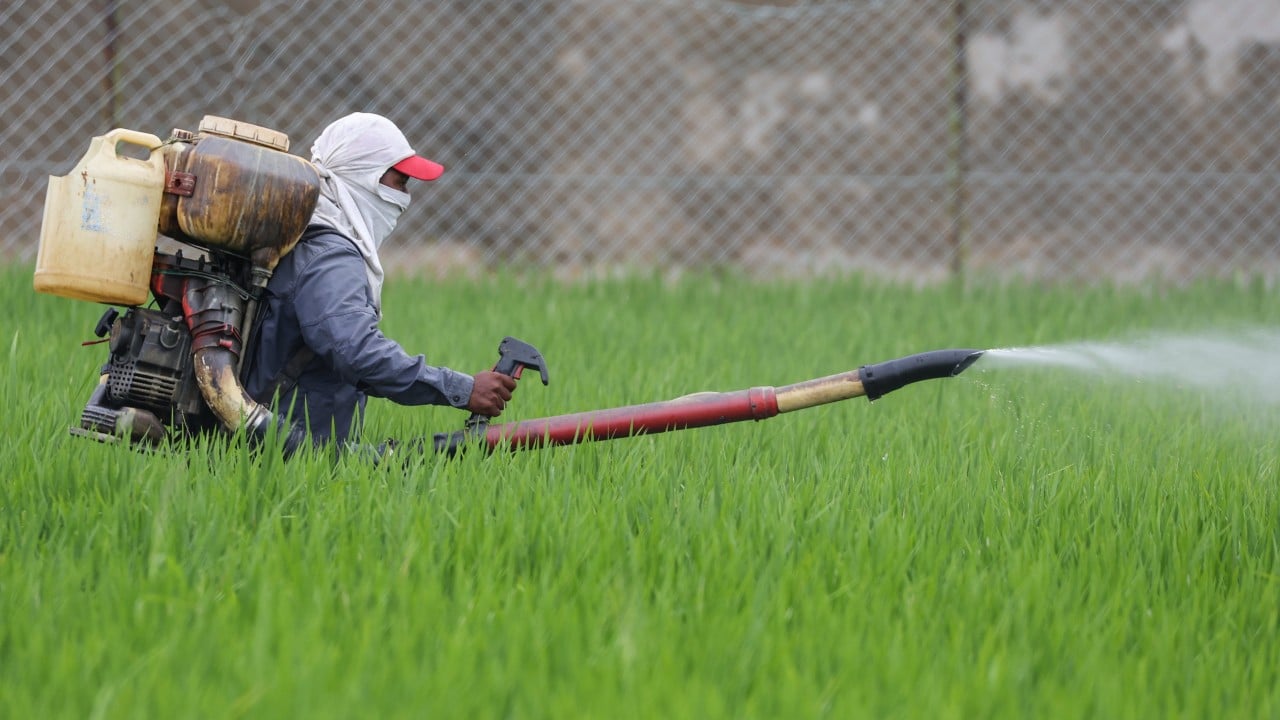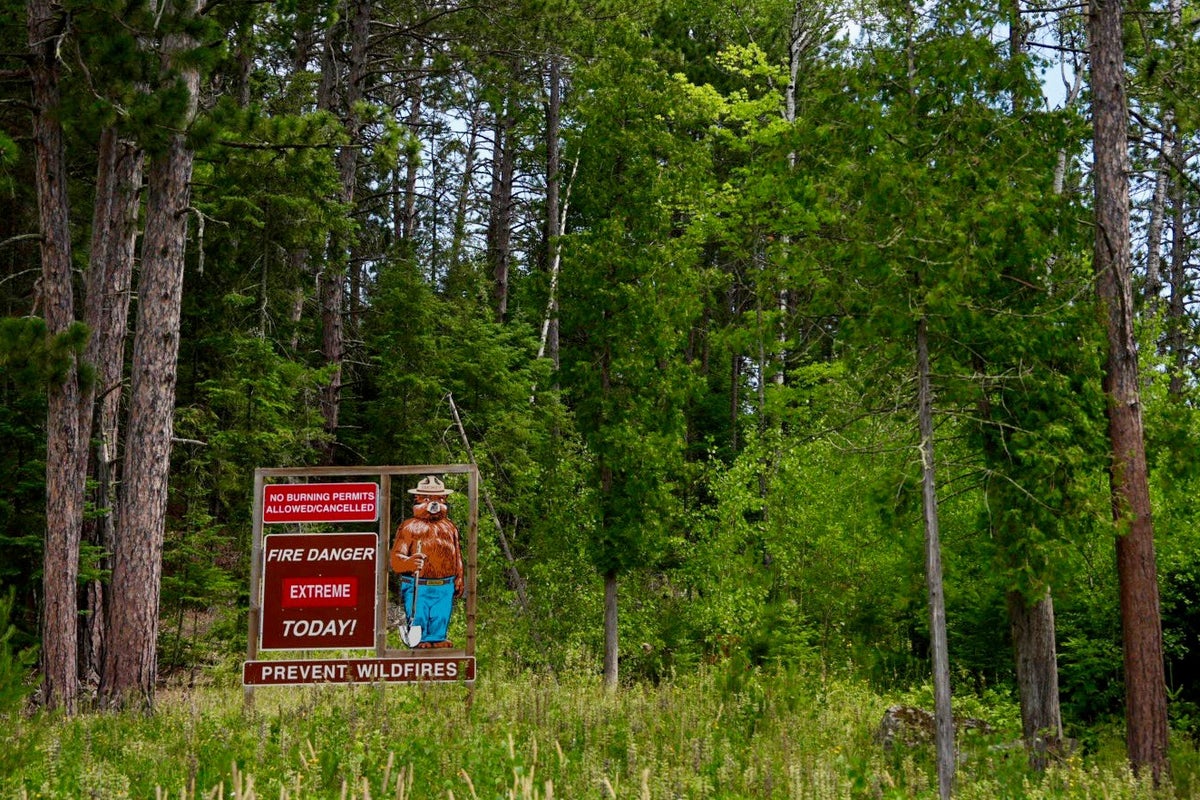
You look out the window, and the sky looks like a faded vintage photo. A strange, yellowish-bronze hue hangs over the trees. It is quiet. Maybe you smell a faint, campfire-like aroma, or maybe you don't smell anything at all.
You might think it is just a lazy, hazy summer day.
It isn't.
That haze is a toxic soup carried on high-altitude winds from hundreds of miles away. Right now, massive wildfires burning in Canada and northern Minnesota are dumping millions of tons of fine particulate matter directly into the lungs of unsuspecting Americans across the Midwest and Northeast. From the Twin Cities to Detroit, and all the way down to Washington, D.C., people are breathing in some of the most dangerous air on the planet.
Yet, most people are completely misjudging the danger.
We need to talk about what is actually happening in the atmosphere, why this "imported" pollution is far more dangerous than you think, and what you actually need to do to survive it.
The Illusion of Safety in the East
If you live in New York, Pennsylvania, or Michigan, you might feel disconnected from the flaming forests of Canada or the dry brush of northern Minnesota. You do not see the flames. You do not hear the sirens.
It feels like a distant problem.
That is a dangerous illusion.
The biggest misconception about wildfire smoke is that the danger is concentrated near the fire itself. Sure, if you are close to the flames, you face the immediate risk of being burned or choked out by thick, black smoke. But the long-range transport of smoke is what actually kills the most people.
When a forest burns, the intense heat lofts smoke high into the troposphere. Once there, powerful jet streams grab the plume and carry it over vast distances. As this smoke travels, it cools, sinks, and spreads out over thousands of square miles. By the time it reaches cities like Milwaukee, Detroit, or Boston, it has settled into the lower atmosphere where we live and breathe.
The numbers are staggering. Research shows that while the West Coast and Northwest experience the most active fires, about three-quarters of all smoke-related deaths and asthma emergency room visits in the United States occur in the East.
Why? Because that is where the people are.
A moderate smoke plume drifting over a sparsely populated mountain range in Idaho might not hurt many people. But when that same plume settles over the densely packed metropolitan areas of the Midwest and the Northeast, it exposes millions of lungs simultaneously. It is a simple numbers game, and right now, the Eastern half of the country is losing.
The Anatomy of PM2.5
To understand why this air is so toxic, we have to look at what you are actually inhaling.
Wildfire smoke is not just harmless wood ash. It is a chaotic mix of gases, hydrocarbons, and microscopic solid particles. The main culprit we care about is PM2.5, which refers to particulate matter that is 2.5 micrometers or smaller in diameter.
To put that in perspective, a single human hair is about 70 micrometers wide. You could fit nearly thirty PM2.5 particles across the width of a hair.
Because these particles are so ridiculously tiny, your body’s natural defense systems are useless against them. Your nasal passages and upper airway are great at filtering out large dust particles or pet dander. They cannot stop PM2.5.
These microscopic specks of soot slide right past your defenses, travel deep into your lungs, and lodge themselves in your alveoli—the tiny air sacs where oxygen enters your blood.
From there, they do not just sit around. They penetrate the blood-brain barrier and enter your bloodstream directly.
Once in your blood, PM2.5 triggers systemic inflammation. Your immune system sees these particles as foreign invaders and goes into overdrive. This response causes your blood vessels to constrict, raises your blood pressure, and forces your heart to work much harder.
It is why a spike in wildfire smoke is almost instantly followed by a surge in emergency room admissions for heart attacks, strokes, and acute asthma attacks.
Honestly, the term "smoke" is too gentle. It is chemical air pollution, plain and simple.
Why 2026 is Becoming a Perfect Storm
We are seeing a massive spike in these air quality emergencies, and it is not a fluke.
Dan Westervelt, an associate professor at Columbia University’s Climate School, points out that we are locked in a vicious cycle. A "perfect storm" of severe drought and intense heat has dried out the soil and vegetation across Canada and the northern U.S. This dry organic matter acts as a massive tinderbox, providing endless fuel for fires to ignite and burn longer.
Compounding this is the temperature. We are not just dealing with smoke; we are dealing with extreme heat.
When heavy smoke and extreme heat coincide, the health risks do not just add up—they multiply. Tyler Hasenstein, a meteorologist with the National Weather Service in Chanhassen, Minnesota, warned that these two factors hitting at the same time is a worst-case scenario for human health.
Think about it. When it is incredibly hot, your body cools itself by pumping more blood to your skin and sweating. This elevates your heart rate. If you are simultaneously breathing in air clogged with PM2.5, your cardiovascular system is taking a double hit. Your heart is working double-time to keep you cool while your blood is being flooded with inflammatory particles.
It is a recipe for disaster, especially for kids, the elderly, and anyone with a pre-existing heart or lung condition.
The Chemical Lie of Wildfire Smoke vs. Smog
Many people assume that because wildfire smoke comes from "natural" trees, it must be less harmful than the industrial smog pumping out of coal plants or car tailpipes.
This is dead wrong.
Recent atmospheric research suggests that wildfire smoke may actually be significantly more toxic than standard urban air pollution.
First, wildfires do not just burn trees anymore. As these blazes expand, they increasingly encroach on populated areas, burning down homes, cars, commercial warehouses, and plastic structures. When a house burns, it releases a cocktail of toxic chemicals, including heavy metals, plastics, flame retardants, and synthetic chemicals. All of that gets swept up into the smoke plume and carried straight into your neighborhood.
Second, the smoke changes chemically as it travels.
As a plume of smoke drifts over hundreds of miles, it is exposed to sunlight and atmospheric gases. This triggers a process called chemical aging. The organic compounds in the smoke oxidize, creating highly reactive oxygen species. By the time the smoke reaches the Midwest or the East Coast, it is chemically different—and potentially much more inflammatory to human tissue—than the fresh smoke at the source of the fire.
So, stop thinking of this as natural campfire smoke. It is an aged, highly reactive chemical aerosol.
How to Tell If You Are Actually in Danger
You cannot rely on your eyes or your nose to judge the safety of the air.
Sometimes, high-altitude smoke can create a dramatic, dark sky while leaving the ground-level air relatively clean. Other times, the sky might look like a slightly hazy blue, but ground-level PM2.5 concentrations are dangerously high.
You need hard data.
Get used to checking the Air Quality Index (AQI) daily, just like you check the temperature. The AQI is a standardized scale running from 0 to 500:
- 0 to 50: Green (Good). Go ahead and breathe deep.
- 51 to 100: Yellow (Moderate). Fine for most, but highly sensitive people should be careful.
- 101 to 150: Orange (Unhealthy for Sensitive Groups). Children, the elderly, and those with asthma or heart conditions should limit outdoor time.
- 151 to 200: Red (Unhealthy). Everyone should avoid prolonged outdoor exertion.
- 201 to 300: Purple (Very Unhealthy). Stay inside. Keep the windows closed.
- 301 to 500: Maroon (Hazardous). Emergency conditions. Avoid all outdoor physical activity.
If your local AQI is ticking up into the orange or red zones, you need to change your behavior immediately. Do not wait until you start coughing or feeling dizzy to take action. By then, the damage is already done.
Your Defense Manual: What Actually Works
When the AQI climbs, you cannot just hope for a cold front to blow the smoke away. You have to actively protect your indoor space and your lungs.
Here is what actually works, and what is just a waste of time.
1. Close the Windows and Recirculate
Your home is not a sealed vault. Smoke will find its way inside through cracks under doors and around windows. When a smoke event hits, shut every window and door tightly.
If you have central air conditioning, set it to Recirculate. If you leave it on the fresh-air intake setting, you are basically vacuuming the toxic outdoor air directly into your living room.
2. Run High-Quality Air Purifiers
Do not rely on cheap, basic dust filters. To clean wildfire smoke from your indoor air, you need a purifier equipped with a true HEPA filter. True HEPA filters are rated to capture 99.97% of particles down to 0.3 micrometers, which easily includes the dangerous PM2.5 particles.
If you are on a budget, you can build a highly effective DIY air purifier. Buy a standard box fan, tape a high-efficiency HVAC filter (MERV 13 or higher) to the back of it, and turn it on. It is incredibly cheap, and science shows it works almost as well as expensive commercial units.
3. Throw Away Your Cloth and Surgical Masks
If you have to go outside, do not wear a surgical mask or a cloth face covering. They are completely useless against PM2.5.
Surgical masks are designed to stop large droplets, not microscopic particles. The air—and the smoke—will simply flow around the loose edges of the mask.
To filter out wildfire smoke, you must wear a well-fitted N95 or KN95 respirator. It needs to form a tight, unbroken seal around your nose and mouth. If you can feel air escaping or entering through the edges when you breathe, it is not protecting you.
4. Stop the Vacuuming and Candle Burning
When the outdoor air is bad, you want to keep your indoor air as clean as possible.
Do not burn candles, use incense, or use gas stoves. Avoid vacuuming unless your vacuum has a sealed HEPA filter; standard vacuums will simply kick fine dust and settled particles back up into the air, making your indoor air quality even worse.
The Long Game
The orange skies we are seeing are not a temporary anomaly. They are our new reality.
As climate change continues to drive hotter, drier summers, the wildfire season will only grow longer and more destructive. We can no longer treat wildfire smoke as a West Coast problem.
It is a national health crisis, and it is happening right now in your backyard.
Protecting your lungs is not about panic. It is about practical, daily habits. Check the AQI, keep your filters clean, and keep an N95 mask in your car.
The air is changing. You need to change with it.