Imagine opening a birthday note five years after someone you love has died, hearing their actual laugh, and realizing they remembered the exact milestone you're hitting today.
That's the gut-level pull behind messages after death, and it's why a 17-year-old on Australia's Gold Coast built a platform called FromBeyond.co. Her name is Alice Footer, and her motivation wasn't some grand Silicon Valley thesis. She watched her grandmother Merrin talk about wanting to be remembered with laughter rather than sadness, and she worried her five-year-old sister Violet would grow up knowing Merrin mostly through secondhand stories instead of her real voice.
Honestly, when you read stories like Footer's, it's easy to get swept up in the novelty of a teenager coding a digital time capsule between jujitsu sessions and schoolwork. The competitor coverage focuses heavily on the human-interest spark—her UK trips, her interviews with older relatives, her shortlist nod at the 2026 Women in Digital Awards. That backstory is genuinely moving. Yet it skips the harder questions anyone considering posthumous messages actually faces once the initial emotion settles.
What happens when a scheduled email bounces twenty years later? Who verifies that someone has passed away without creating awkward bottlenecks or privacy headaches? And how does getting a birthday message from someone who's gone actually feel for a grieving family—comforting, unsettling, or a complicated mix of both?
Why Scheduled Messages After Death Feel Different From Old Photo Albums
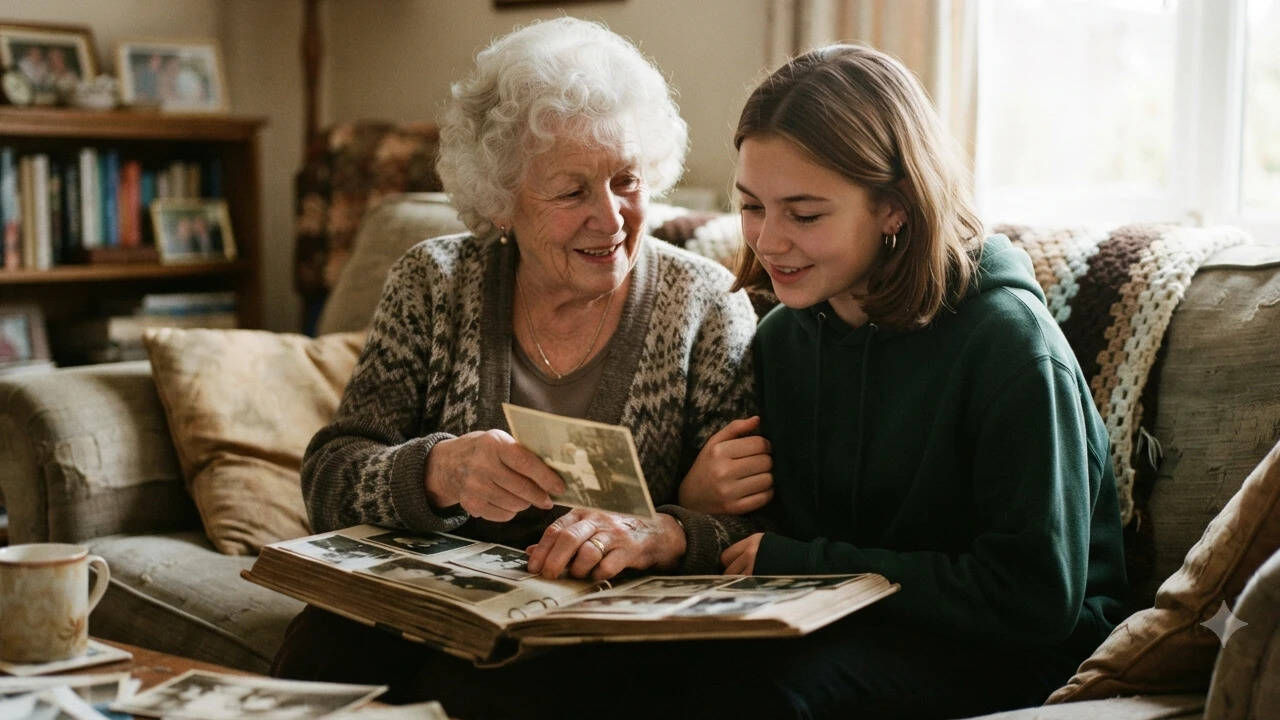
Most of us already have piles of photos, old voicemails, and boxes of cards sitting around. A photo album is passive. You open it when you're ready to look back.
Scheduled messages after death flip that dynamic. Instead of you going to the memory, the memory arrives on a specific date—a birthday, Christmas, a graduation, or a quiet Tuesday that happens to matter. Footer built FromBeyond.co specifically around date-triggered delivery because storing a video in a folder isn't the same as timing it to land when someone needs encouragement most.
Think about how personal that timing can be. A parent might record a pep talk for a child turning twenty-one, or a partner might schedule a note for an anniversary. In Alice Footer's own family, losing her step-grandfather Mervyn in June 2026 after recording a video with him showed how much a saved voice can mean to a grieving parent. Then losing her step-grandmother Monica in September 2026—after motor neurone disease had already taken Monica's ability to speak before the site launched—underscored a harsh reality. You can't always wait until later to record someone's voice.
Still, timing isn't magic. Grief doesn't follow a calendar. A Christmas greeting from someone who passed away can warm the room one year and catch someone completely off guard the next.
The Practical Blind Spots Behind Digital Legacy Tools
Building the website is only half the work. Keeping promises across decades is where digital legacy platforms live or die.
When I look at tools designed to send messages after death, a few real-world friction points stand out right away:
- Account survival and delivery drift: Email addresses change, domains expire, and people switch phones. A message scheduled for ten years out needs more than a static link; it needs clear recipient details and backup contact paths so it doesn't vanish into spam or dead servers.
- Trigger verification: How does a service know when a sender has died? Some platforms rely on trusted contacts or executors confirming the passing, while others use periodic check-ins. Every verification method balances security against speed—too rigid and loved ones wait in limbo, too loose and accidental triggers cause panic.
- Tech comfort across generations: Older relatives often have the richest stories and the sharpest memories of family history, yet they're sometimes the least eager to wrestle with clunky interfaces. Footer's choice to use straightforward layouts and larger text—and to test ideas with her grandfathers Stanley and Barry and Barry's retirement community—gets right to the heart of a usability problem plenty of founders ignore.
- Accompanying practical wishes: Footer's mother Kellie suggested pairing personal recordings with arrangements alongside a will. That's a smart angle emotionally, though it's worth being clear that a heartfelt video message isn't a legal substitute for formal estate documents.
Experts in grief and bereavement often note that continuing bonds with loved ones who have died can be deeply meaningful when paired with real-world support, though everyone processes loss differently. There's no universal rule that says a scheduled video helps every person in every season of grief. What works for one sibling might feel heavy for another.
What Older Storytellers Teach Us About Waiting
One of the most striking parts of Footer's reporting came from interviewing older adults, including her grandfather Stanley. Hearing people wish they'd asked their own parents more questions while they still had the chance hits close to home for almost everyone.
We tend to assume we have plenty of time. We'll ask about childhood jobs, immigration stories, first apartments, or how two people met "next holiday." Then illness moves faster than expected, or memory fades, or life gets noisy, and those questions go unasked.
You don't need a specialized platform just to start capturing stories. A phone voice memo after a Sunday dinner counts. A ten-minute video sitting on a porch counts. The format matters far less than actually hitting record before the moment passes.
Smart Next Steps If You Want to Preserve Family Stories
If you're thinking about leaving messages after death or recording family history before it slips away, keep things simple and grounded rather than overcomplicating day one.
- Start with one honest conversation this week. Pick one person—a parent, grandparent, aunt, or close friend—and ask two or three specific questions about their younger years, big turning points, or what they hope family members never forget.
- Record raw, unpolished moments. Don't wait for studio lighting or a script. A natural laugh, a pause while thinking, or a familiar phrase carries more presence than a rehearsed speech.
- Decide where files live and who can find them. Whether you use a dedicated legacy platform, cloud storage, or a physical drive kept with important papers, make sure someone trustworthy knows where the files are and how to access them.
- Separate sentimental notes from legal instructions. Keep personal letters, birthday wishes, and family stories clearly distinct from wills, medical directives, and financial paperwork so nothing gets confused later.
- Revisit your recordings once a year. Priorities shift as kids grow up and life changes; updating a message every year or two keeps it feeling current and real.
Start small today—record one real memory with someone you love before "someday" quietly becomes too late.