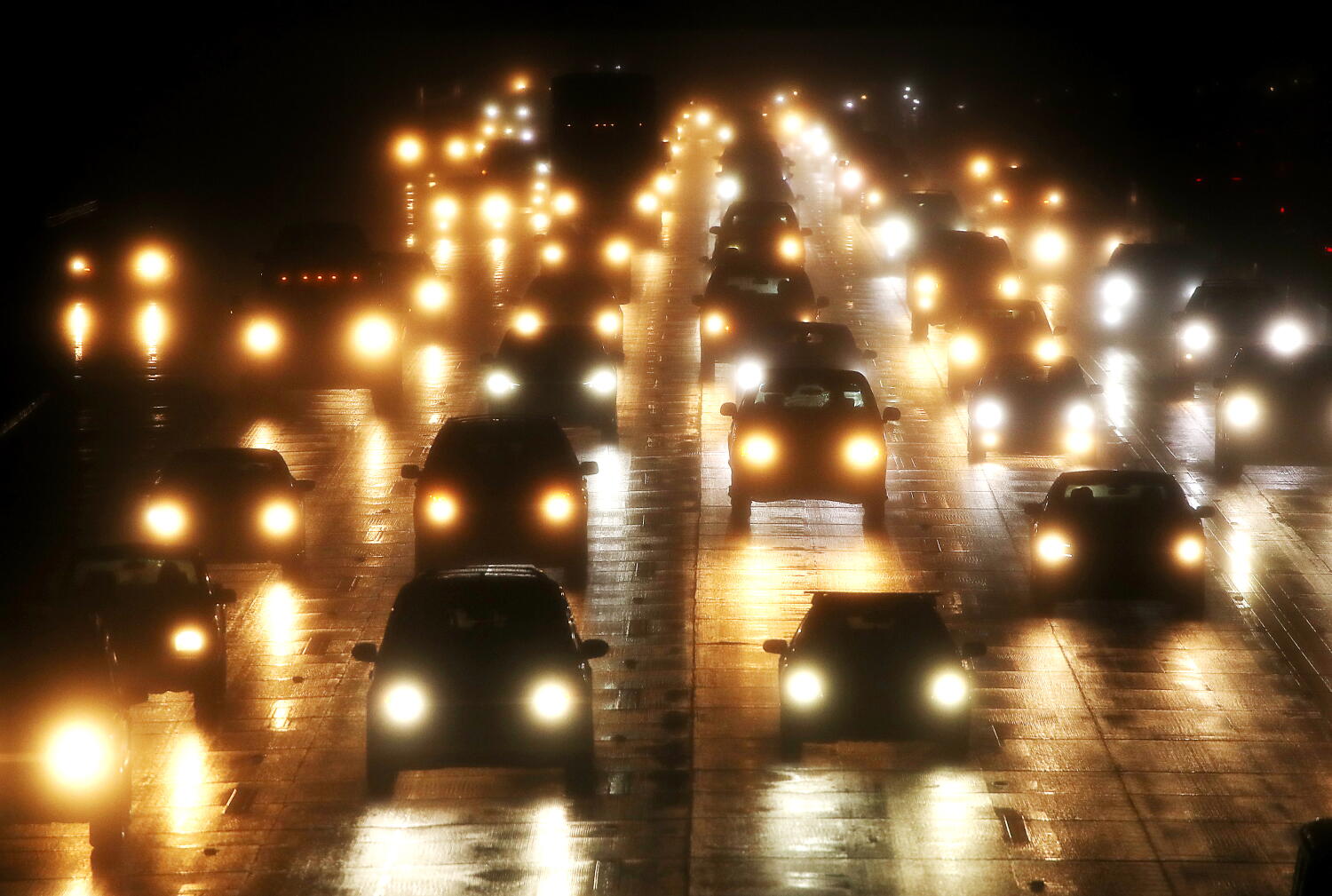
Every November, drone footage of the 405 Freeway transforms into global viral entertainment. Millions watch oceans of red and white brake lights bleed across Southern California asphalt, shaking their heads at Los Angeles car culture. Internet commentators joke that the number 405 stands for how many hours it takes to get anywhere.
The reality of Thanksgiving traffic on the 405 is far more calculated than a random surge of angry drivers.
If you live here, you know the viral videos rarely capture actual Thanksgiving Day. On the holiday itself, Los Angeles roads turn into quiet ghost towns. Many residents skip town or stay home to cook. Instead, the infamous gridlock captured by news helicopters always happens on the Tuesday or Wednesday afternoon before the turkey goes in the oven.
Let's look at why this specific stretch of highway breaks down so predictably year after year.
The Bottleneck Physics Nobody Talks About
The Interstate 405 spans roughly 72 miles, but the true nightmare zone concentrates heavily around West LA, where the highway intersects with major corridors like the 10 and the 101.
Traffic engineers face a structural trap here. You have thousands of vehicles funneling from multiple lanes into complex transition points. When holiday travelers stack on top of standard commuter traffic heading home early for the long weekend, the geometry fails completely.
Let's break down the actual math of the failure point:
- Lane drops: High-occupancy vehicle lanes merge or terminate abruptly near major interchanges, forcing sudden lane changes.
- Weaving friction: Drivers trying to exit toward LAX or the Westside cross paths with drivers trying to merge from local surface streets.
- The phantom traffic jam effect: A single tap on the brakes by one distracted driver triggers a shockwave that halts miles of traffic behind them within minutes.
When you pack heavy holiday volume into a system already operating at 120 percent capacity on an ordinary Tuesday, total gridlock isn't a malfunction. It's a mathematical certainty.
Why Fixing the 405 Remains Impossible
Politicians love promising relief, but adding lanes has repeatedly proven ineffective. Decades of urban planning data show that expanding asphalt simply induces more demand. Drivers who previously avoided the route decide to take it once new lanes open, filling the space immediately.
Public transit offers a theoretical escape, but Southern California's sprawling geography works against it. Most people working in job centers don't live next to a heavy rail station. Reaching a destination 30 miles away often requires multiple bus and train transfers, turning a 45-minute drive into a three-hour public transit odyssey.
How Locals Actually Survive the Holiday Rush
Experienced Angelenos don't gamble with the 405 before a holiday. They follow strict unwritten rules to keep their sanity intact.
If you must travel during Thanksgiving week, timing is your only leverage. Leaving between noon and seven p.m. on the Wednesday before Thanksgiving is an extreme sport. Locals either roll out before sunrise at four a.m. or wait until Thanksgiving morning when the asphalt clears out completely.
Avoid the apps that promise secret shortcuts through local side streets, too. Neighborhood arterials like Sepulveda Boulevard turn into parking lots just as fast once traffic spills off the freeway.
Plan your routes, adjust your departure windows by twelve hours, or accept that staying put is the ultimate luxury.