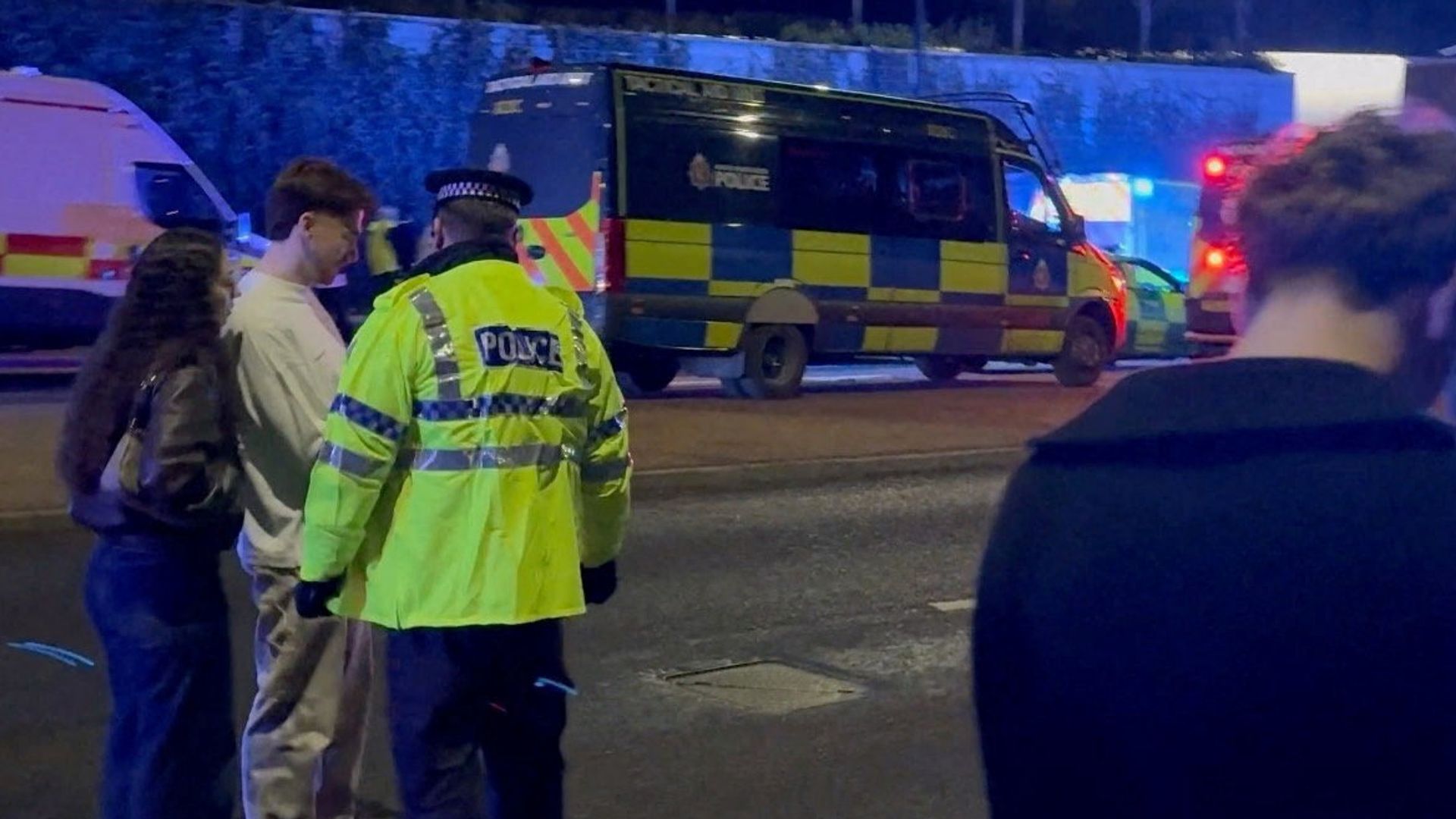
A small group of organised criminals is suspected of releasing a mystery substance inside Manchester's Co-op Live arena during Don Toliver's concert on November 22, 2026, to rob fans amid the panic. More than 12,000 people had to evacuate the venue, and 89 concertgoers reported eye or breathing symptoms, while Greater Manchester Police are also looking into similar incidents at two other Don Toliver tour stops in Europe.
When I read the initial breaking coverage, one detail immediately stood out. People weren't just choking on a foul odor or running for the exits. Nine separate reports of stolen jewelry emerged from that same night. Assistant Chief Constable Tom Harding of Greater Manchester Police stated on November 27 that detectives suspect a small gang of organised criminals targeted the crowd for robberies. Read more on a related topic: this related article.
Using a chemical irritant to manufacture chaos inside a packed arena isn't a random prank. It's a calculated tactic. When 12,000 people surge toward concourses and exits at once, normal crowd awareness drops, pockets and wrists get brushed in tight bottlenecks, and confusion gives thieves cover to slip away before security locks down zones.
http://googleusercontent.com/lmdx_content/tFlcKPheizTgFuKcKYfpcEzdvMXFEpXnJEuYESoBxVsrJUZLPOHDIGVkAMlGBMypbzXhVvEZgysoFUrTvdTVjzRgSKLFbjgNrXPYBHNRSPxlpuDfUtmwSZvtDuFrWnGzuRYOA984981 More journalism by Associated Press highlights similar perspectives on this issue.
What Happened at the Don Toliver Concert Evacuation
Shortly after 10:00 p.m. on Sunday, November 22, 2026, emergency crews responded to Co-op Live after fans began coughing, choking, and experiencing eye irritation. Many in the crowd reported a sharp, unpleasant smell, and police initially suspected tear gas.
Greater Manchester Police declared a major incident and evacuated over 12,000 attendees. Out of 89 people who displayed symptoms linked to the exposure, 88 underwent dry decontamination at the scene and one woman was taken to Manchester Royal Infirmary for further treatment.
The show never resumed. Don Toliver later addressed the disruption on Instagram, wishing injured fans well, postponing his London O2 Arena date to December 15, and telling people to stop bringing trouble into his shows.
If you've ever worked or attended a high-energy hip-hop or pop arena show, you know how fast crowd energy shifts. One minute thousands of fans are locked into bass drops and stage lighting. The next minute someone near the floor coughs, a wave of acrid air hits the rows nearby, and people start backing up without knowing why.
How Organised Robberies Exploit Crowd Chaos
Police haven't confirmed the exact chemical makeup of the substance yet, and Harding noted that investigators are dealing with something they haven't encountered in quite this way before. Still, the pattern makes grim sense from a crime-prevention standpoint.
Jewelry—especially chains, watches, and bracelets—is a frequent target at major concerts because it's visible, compact, and easy to flip. In a calm queue or seated bowl, grabbing a chain takes nerve and draws immediate eyes. During a sudden evacuation or surge toward concourses, victims are focused on breathing, finding friends, or reaching fresh air.
Here's where a lot of concertgoers get caught off guard. People assume arena security and bag checks stop dangerous items cold. In reality, small vials, sprays, or pocket-sized canisters are tough to catch on every single body when thousands of fans file through doors in a short window. Even tight perimeter screening can't watch every hand inside a dense pit or standing section once the music starts.
That doesn't mean venues are helpless. It means crowd-management plans have to treat chemical irritants and targeted theft as linked risks rather than separate headaches. When staff spot sudden localized coughing or a pocket of crowd movement, fast spot-lighting and targeted aisle containment can slow down opportunistic offenders before they melt into the wider exit flow.
Why the European Tour Connection Matters
One of the biggest developments in Greater Manchester Police's update is the cross-border angle. Harding confirmed that similar incidents happened at two other Don Toliver concerts in Europe, and officers are coordinating with law enforcement agencies handling those cases.
Touring gangs following major artists aren't brand new in live entertainment, though deploying an unknown irritant on this scale adds a dangerous twist. When an artist plays multiple cities on an international run, crews with a playbook can test what works in one venue and repeat it elsewhere.
From an investigative angle, linking cases across borders is slow work. Police have to compare CCTV footage, mobile phone clips, reporting timestamps, and stolen-property descriptions across different jurisdictions. As of November 27, no arrests had been made in connection with the Manchester incident, and detectives were still appealing to more than 100 attendees who might hold useful clues.
It's also worth noting what we still don't know. Police have not publicly verified the exact substance, nor have they presented public evidence proving every single jewelry theft that night was carried out by the exact same people. Being honest about those open questions matters. Jumping from a police suspicion to settled fact before forensic results and court findings come in only muddies the record.
Echoes of Manchester's Past and What Fans Felt
Any large-scale evacuation in Manchester carries heavy emotional weight. Co-op Live opened in 2024 roughly two miles from Manchester Arena, where 22 people died in the May 2017 bombing after an Ariana Grande concert.
Police explicitly acknowledged that footage from Sunday night could bring back painful memories of 2017, while stressing that investigators were not dealing with an attack of that nature or motive. Even when officials rule out a terrorist motive early or distinguish criminal theft from ideological violence, the human reaction in the moment is raw.
When you're standing in a dark arena and people around you start gasping and running, your nervous system doesn't wait for an official press release. You react to the rush of bodies and the sound of distress. Accounts from the concourse described paramedics, oxygen, silver foil blankets, and worried friends trying to piece together what had just gone wrong.
Honestly, that gap between raw fear and official clarity is one of the hardest parts of modern live events. Social media spreads rumors in seconds, while emergency responders and police have to verify air quality, treat casualties, and clear thousands of people safely before giving firm answers.
What Concertgoers and Venues Can Do Differently
You can't control what someone else brings into a building, and you shouldn't blame fans for getting robbed during a chaotic evacuation. You can, however, stack the deck in your favor before the lights go down.
- Skip high-value flashy jewelry at crowded shows. If you wear a heavy chain or expensive watch into a standing crowd or dense concourse, it's much easier to spot and snatch during a crush. Leave sentimental or high-value pieces at home on gig nights.
- Keep essentials zipped and forward-facing. Crossbody bags worn in front of your torso and zipped pockets beat loose back pockets or open totes every time, especially when crowds compress near exits.
- Pick your exit route before the headliner starts. Look for two ways out—not just the door you walked through—and agree on a meet-up spot outside the perimeter in case your group gets split up.
- Move laterally if a pocket of air smells sharp or people start choking. Don't lean deeper into a tight cluster to see what's happening. Step sideways out of the plume toward clean air and alert nearby stewards or security right away.
- Save photos, videos, and receipts if you witnessed theft or exposure. If you were at Co-op Live or another affected show, check your camera roll for unusual crowd activity near the time symptoms started and share relevant details with police rather than posting unverified guesses.
For arena operators and event security teams, the takeaway is just as practical. Train stewards to watch for sudden localized eye/throat irritation paired with opportunistic movement near dense rows, review concourse bottlenecks during rapid evacuations, and share intelligence quickly with neighboring venues and police forces when an artist's tour moves to the next city. You can follow official updates directly through Greater Manchester Police and Co-op Live as forensic testing and witness reviews continue.