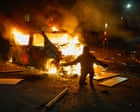
Another November fifth has come and gone, leaving behind scorched asphalt, flashing blue lights, and the familiar tired debate over seasonal disorder. Seven people were arrested across Scotland following widespread Bonfire Night chaos, with Glasgow emerging as a primary flashpoint. When emergency crews responded to a routine call on Greenside Street in the Blackhill area of the city, they walked straight into a trap.
A police van was torched, fireworks were aimed directly at frontline personnel, and both a police officer and an ambulance worker sustained minor injuries. While authorities were quick to point out that overall disorder dropped compared to previous years, targeting the people whose entire job is saving lives crosses a line that communities shouldn't brush off as youthful high spirits.
Behind the Scenes of the Glasgow Disruption
The trouble in Glasgow didn't materialize out of nowhere. Emergency services arrived on Greenside Street around 7:55 PM following reports of an injured male. What should have been a standard medical and safety response turned hostile instantly. A group descended on the scene, hurling industrial-grade fireworks like projectiles at police officers and Scottish Ambulance Service staff.
During the melee, a police vehicle was deliberately set ablaze, sending thick plumes of smoke into the night air and forcing specialist resources under Operation Amberlight to deploy. A 16-year-old male was arrested in connection with that specific incident, but police investigations are still digging through footage to track down others involved.
Edinburgh and Dundee also saw pockets of unrest. In Edinburgh's Oxgangs Road North, officers responding to roadblocks had fireworks shot directly at them. Meanwhile, Dundee's Kirkton area drew large crowds setting unauthorized fires. Yet, security analysts note that proactive intelligence sharing and heavier policing footprints managed to prevent the chaos from spiraling into the total gridlock seen in past decades.
Why the Fireworks Debate Keeps Failing
Every November sixth, politicians and community leaders express shock, condemn the attacks on emergency workers, and promise stricter enforcement. Then, the cycle resets for another twelve months. Restricting fireworks sales to the general public has been floated repeatedly, but bans often drive the market underground rather than stopping dangerous pyrotechnics from reaching teenagers.
When young people treat emergency vehicles like target practice, it points to a deeper breakdown in community engagement and local accountability. Fines and short-term detentions don't fix an environment where throwing a mortar at a paramedic feels like entertainment.
Operation Amberlight and similar high-visibility strategies prove that authorities can contain the worst of the violence, but containment isn't a long-term solution. Protecting firefighters and medics requires severe, binding consequences for anyone caught weaponizing explosives, alongside community programs that give youths something better to do than burn police vans.
The smoke has cleared across Glasgow streets, but the underlying tensions remain entirely unresolved. If communities want safe autumn celebrations, the response to targeting emergency workers needs to be absolute zero-tolerance, applied long before the next bonfire is lit.