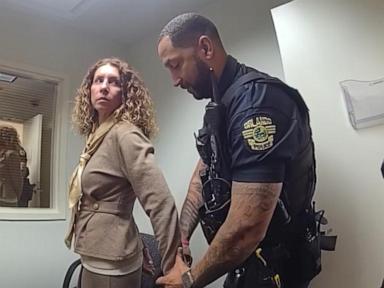
Trust in high-ranking academic officials took a sharp hit when New Jersey authorities arrested Joshua Kohut, a high-profile Rutgers University dean, over secret mobile phone recordings. Kohut, who served as the dean of research at the School of Environmental and Biological Sciences, now faces criminal charges that shatter the illusion of safety inside professional higher education spaces.
When people search for updates on this case, they want to know the facts behind the headlines, what legal penalties apply, and how institutions respond when leadership collapses into criminal behavior. Let us break down what actually happened and why this case matters beyond a single campus. In related news, we also covered: How The Gye Worthy Funeral Assault Court Case Unfolded After Arrest.
The Arrest and Charges
State law enforcement didn't act on mere rumors. According to New Jersey Attorney General Jennifer Davenport, investigators executed a search warrant targeting Kohut. They seized multiple electronic devices.
A forensic preview of one of those seized mobile devices revealed explicit "upskirt" videos capturing individuals' undergarment-clad intimate parts without their consent or knowledge. Consequently, prosecutors filed a criminal complaint charging the 51-year-old Cranbury resident with fourth-degree invasion of privacy. USA Today has analyzed this fascinating issue in great detail.
Under New Jersey statutes, a fourth-degree crime carries serious consequences. If convicted, Kohut faces up to 18 months in state prison alongside potential fines reaching $10,000.
Institutional Fallout at Rutgers
Universities typically scramble when top-tier administrators face criminal prosecution. Rutgers moved swiftly once law enforcement notified them.
The university placed Kohut on administrative leave immediately. Furthermore, school officials banned him from stepping foot on any campus property while the legal process plays out.
Kohut had built a long-standing career at the institution. He also worked as a professor in the marine and coastal sciences department and held a leadership role at the New Jersey Agriculture Experiment Station. Losing a tenured researcher and senior administrator to an arrest of this nature leaves a massive leadership vacuum, but universities face a heavier burden: restoring basic safety for students and staff who share these physical spaces.
The Broader Legal Landscape
This case brings a deeply uncomfortable issue back into public view. Digital voyeurism via mobile phones remains a persistent threat in offices, transit systems, and university hallways.
Many victims never realize they are being targeted until law enforcement stumbles upon digital archives during unrelated or targeted electronic searches. State prosecutors are increasingly treating these privacy violations with aggressive forensic tech reviews.
Investigators are actively looking for additional victims. New Jersey authorities have urged anyone who believes they were targeted by Kohut to contact state investigators directly. Law enforcement established dedicated contact channels through the Department of Law and Public Safety to handle sensitive disclosures.
The legal proceedings are just beginning. Kohut remains presumed innocent unless proven guilty in a court of law, but the immediate professional fallout is already absolute.