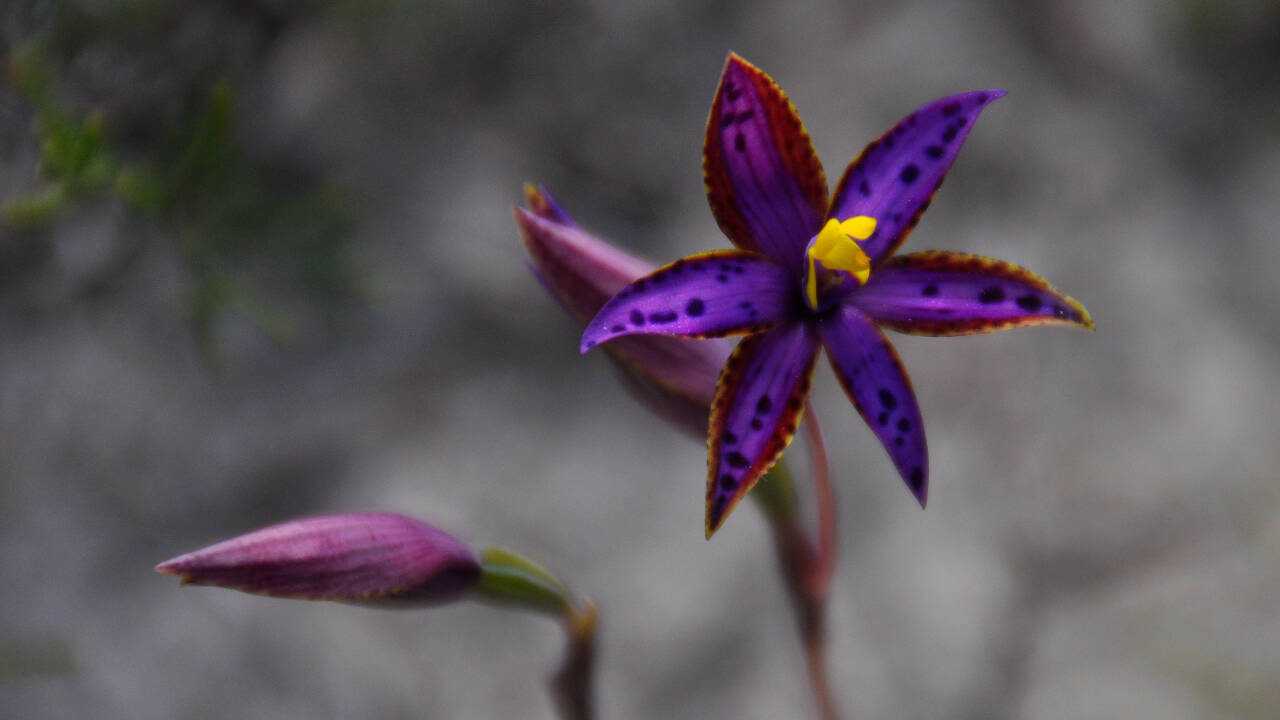
You can count the remaining wild Queen of Sheba orchids on your fingers and toes, and you'd still have digits left over. Fewer than 30 individual plants survive in the wild across Western Australia. They are so heavily guarded that known locations feature security fencing and continuous CCTV surveillance to stop poachers.
Traditional conservation methods failed this species. Only one in 20,000 to 50,000 wild seeds naturally germinates and grows into a mature plant.
Then scientists changed the math. Researchers at the Botanic Gardens and Parks Authority in Kings Park took a microscopic sample from a single seed and did something radical.
The Breakthrough of Somatic Embryogenesis
Plant cloning sounds like science fiction, but the reality is meticulous laboratory work. Senior plant breeder Digby Growns and his team utilized a propagation technique called somatic embryogenesis.
Instead of waiting on natural germination cycles, this method forces somatic cells to form embryos. You can multiply a single tiny seed into thousands of genetically identical offspring.
Started in 2021, the laboratory initiative scaled up rapidly. That single seed turned into over 1,000 healthy plants within a few years.
Speeding Up Mother Nature
Time is a luxury extinct-threatened plants don't possess. Conventionally grown orchids take roughly seven years just to reach their flowering stage.
The cloned Queen of Sheba orchids shattered that timeline. They bloomed after a little over three years.
Orchid research scientist Belinda Davis and her team noticed another major physical advantage. The lab-grown specimens developed underground tubers up to ten times larger than wild counterparts produced traditionally. Larger tubers mean higher energy reserves, giving the plants a fighting chance once returned to harsh natural habitats.
The Threat of Social Media and Tourism
Saving a species requires more than growing them in sterile lab tubes. Human interference remains a massive hazard.
Viral social media posts track rare flora locations with pinpoint accuracy. Nature photographers and curious tourists flock to fragile ecosystems, trampling the very banksia woodlands where the last wild orchids cling to survival.
When rare species trend online, poaching spikes. Physical fencing and cameras protect the remaining wild cluster, but public education campaigns are just as crucial.
The Fungal Obstacle Course
Growing a plant in a lab is only half the battle. Reintroducing it to the wild is notoriously difficult because orchids are picky eaters.
Land orchids depend entirely on specific underground fungi to germinate and survive. Without these microscopic partners, the plants starve.
Scientists are currently culturing those specific fungi strains inside the laboratory. The objective is simple: inoculate the cloned roots with the correct fungal networks before moving them outdoors.
What This Means for Global Plant Biodiversity
The success in Western Australia provides a blueprint for saving other critically endangered flora. Thousands of plant species teeter on the edge of extinction due to habitat loss, climate stress, and human collection.
When conventional propagation yields zero results, laboratory cloning shifts from an experimental luxury to an absolute necessity.
Check local botanical institutions for conservation volunteer opportunities if you want to support native habitat protection. Support regional seed banking initiatives that secure genetic blueprints before wild populations vanish entirely.