Dozens of masked attackers torched cars, set buildings on fire, and painted revenge slogans across at least four West Bank villages on Saturday night, triggering a sharp political clash inside Israel. Opposition leader Gadi Eisenkot didn't mince words on Sunday morning. He called the raids "Jewish terrorism" and pointed straight at ministers Itamar Ben-Gvir and Bezalel Smotrich for pushing the West Bank toward unchecked anarchy.
If you're looking for what actually happened and why it matters right now, the headline tells only part of the story. Yes, overnight arson in communities like Kafr Malik, Deir al-Sudan, Deir Ballut, and Deir Abu Mashal sparked fierce condemnation from Israeli opposition politicians. Yet the timing is what makes this moment explosive. Israel is still reeling from an inconclusive October 27 election that cost Prime Minister Benjamin Netanyahu his parliamentary majority, leaving Eisenkot tasked with trying to build a coalition while Netanyahu's caretaker cabinet remains in place.
What Happened Across the Villages Overnight
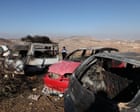
Residents in the West Bank woke up to smoke, sirens, and charred metal rather than routine morning quiet. In Kafr Malik near Ramallah, witnesses described waking around 2:30 a.m. to explosions as vehicles burned, and Hebrew graffiti on site read, "This is the first revenge." Nearby Deir al-Sudan saw cars set ablaze, Deir Abu Mashal reported torched vehicles, and reports from Deir Ballut pointed to a burning agricultural building.
Local residents say this wasn't a random one-off flare-up. Villagers in Kafr Malik pointed to newly established settler outposts nearby, along with ongoing harassment during the olive harvest and livestock theft. When a community's livelihood gets chipped away piece by piece, an arson raid at 2:30 in the morning feels like the latest chapter in a slow-motion squeeze rather than an isolated street brawl.
Israeli police opened an investigation and sent forensic teams to examine the scenes, with no immediate injuries reported from Saturday night's fires. Even so, the attacks landed days after a fatal overnight shooting near Jericho on Tuesday in which a 72-year-old Palestinian woman was killed during an attack involving militant settlers who had recently moved near homes taken from Palestinians.
Why Gadi Eisenkot Used That Phrase Now
Calling settler violence "Jewish terrorism" isn't just rhetorical shock value in Israeli politics. It's a deliberate political line in the sand. For years, mainstream and right-leaning Israeli leaders often treated violent extremists in the West Bank as fringe troublemakers or "hilltop youth" operating outside the norm, while hard-liners defended aggressive settlement expansion as a security asset.
Eisenkot, a former military chief leading the Yashar party and tapped by President Isaac Herzog to try to form a government within 28 days (with a possible 14-day extension), framed the issue around national security and state authority. From his perspective, letting militant groups burn property and stir chaos weakens the Israel Defense Forces, strains ties with allies, and damages Israel's standing abroad. He urged security agencies, including the Shin Bet, to use every available tool—including administrative detention and targeted operations—to halt the attackers.
Other opposition figures piled on quickly. Yair Lapid, head of Yesh Atid, accused the government of "criminal negligence" and argued that cabinet silence encourages extremists. Democrats leader Yair Golan warned that the West Bank sits on the brink of an explosion and could spark a third intifada unless a new government replaces Netanyahu's coalition. Retired major general and Knesset member Noam Tibon went even further, warning that failing to stamp out settler violence would tear Israel apart from within.
Netanyahu hadn't publicly answered the wave of Sunday criticisms at the time of reporting, leaving a sharp contrast between a beleaguered caretaker prime minister and rivals trying to prove they can restore order.
The Bigger Picture Behind the West Bank Surge
To understand why these fires are dominating headlines in late November 2026, you have to zoom out past a single night near Ramallah. Violence across the occupied West Bank has surged sharply since the October 7, 2023 Hamas-led attacks on Israel and the subsequent war in Gaza. According to AFP tallies based on Palestinian health ministry data, more than 1,100 Palestinians in the West Bank have been killed by Israeli forces or settlers since October 2023, while official Israeli figures report at least 51 Israelis, including soldiers, killed in Palestinian attacks or clashes there over the same span.
Around 3 million Palestinians live alongside more than 500,000 Israelis in West Bank settlements, which the United Nations and much of the international community regard as illegal under international law. That geography creates constant friction—especially along rural roads, farmland, and newly formed outposts where military oversight, policing, and settler-Palestinian contact collide daily.
International pressure has been building right alongside domestic political fury. Just days before Saturday's arson attacks, the United Kingdom sanctioned eight Israeli construction companies tied to West Bank settlement building, and Australia announced sanctions against three individuals and four Israeli entities, including a construction firm, over settlement expansion and human rights abuses. Even U.S. Ambassador Mike Huckabee drew attention in September for calling violent Israeli settlers "terrorists," a label U.S. officials have historically reserved for Palestinian militants.
Coalitions, Myths, and What Comes Next
Here's a misconception I see all the time when people read about Israeli political pushback against settler violence: assuming that harsh rhetoric from opposition leaders means the entire settlement project is about to vanish. Honestly, that's wishful thinking if you look closely at Israeli politics.
Many centrist and right-of-center politicians who condemn arson attacks and vigilante raids still support major settlement blocs or oppose Palestinian statehood, especially after October 7 hardened public attitudes on security. Analysts following the post-election deadlock have pointed out that while rivals like Eisenkot are going after violent extremists and ministers accused of enabling lawlessness, overturning the broader settlement enterprise is a much heavier political lift.
At the same time, Eisenkot faces steep math in coalition building after an inconclusive vote. Calling out Ben-Gvir and Smotrich rallies anti-Netanyahu voters and signals seriousness to international partners, yet turning harsh statements into a stable governing majority takes more than tough language.
If you're tracking this story closely—whether for news analysis, policy research, or regional context—a few practical steps will keep your understanding sharp and grounded:
- Track official security actions alongside speeches. Politicians trade blows on social media every week, so watch whether police arrests, Shin Bet operations, or prosecution rates actually follow Sunday's rhetoric.
- Watch the coalition clock in Jerusalem. Pay attention to whether Gadi Eisenkot can assemble enough Knesset backing within his initial 28-day window or if talks stall and push Israel closer to another political crisis.
- Separate frontline reporting from political spin. Cross-check local reporting from villages like Kafr Malik and Deir Ballut with official statements and international sanction notices so you don't confuse campaign posturing with facts on the ground.