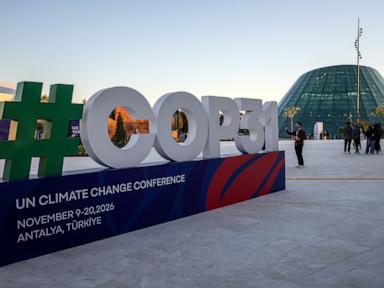
Two weeks of grueling diplomacy, overtime sessions, and late-night drafting ended in Antalya, Türkiye, with a stunned silence instead of a signature deal. Governments failed to adopt a cover decision at COP31, marking the first collapse of a major UN climate cover pact since Copenhagen in 2009.
Honestly, it wasn't a surprise to anyone who watched the drafts get gutted piece by piece. Countries clashed hard over fossil fuel language and climate finance, turning what was supposed to be a decisive step forward into a textbook standoff. When the final plenary broke down, nearly 200 nations walked away without a headline agreement on emissions cuts or hard adaptation cash.
If you're wondering what actually happened and why it matters right now, here's the short version. Major oil producers pushed back hard against explicit language calling for a transition away from fossil fuels, while wealthy nations refused to lock in binding adaptation money for vulnerable countries. Vulnerable nations and the European Union refused to sign off on a watered-down text that dropped fossil fuels and left funding vague. Consensus rules did the rest.
Why UN climate talks in Antalya hit a brick wall
UN climate summits run on unanimity. That rule sounds noble on paper, until a single bloc or major producer decides a clause crosses its red line. In Antalya, co-presidents Türkiye and Australia tried to thread an impossible needle between countries pushing to move away from coal, oil, and gas and nations determined to protect fossil fuel revenues.
Early drafts included language addressing a transition away from fossil fuels and floated an adaptation finance target of at least $120 billion. By the time later drafts circulated, references to moving away from fossil fuels had been stripped out, while carbon capture and storage remained prominent. For delegations from the European Union, Panama, and Pacific island states, signing a text that ignored coal, oil, and gas while leaning heavily on carbon removal felt like a step backward from earlier pledges.
Watching these negotiations unfold up close, you see the same trap repeat every year. Negotiators spend days writing creative compromises that sound diplomatic in press releases, yet fail the basic test of accountability. When a text leaves out the main drivers of warming and punts concrete money to future meetings, vulnerable countries know what happens next. The bill gets pushed onto communities already dealing with floods, heatwaves, and lost harvests.
The fossil fuel fight that split the room
The clash over fossil fuels wasn't a minor wording dispute. It went straight to economic survival and political leverage.
Coal, oil, and natural gas remain the primary drivers of human-caused warming, yet governments remain deeply divided over how fast and how explicitly to phase them out. Major oil and gas exporters—led in the pushback by countries like Saudi Arabia—resisted text that singled out fossil fuels for phaseout, favoring carbon capture and storage instead. Meanwhile, European leaders, including Irish Climate Minister Darragh O'Brien speaking for the EU, rejected drafts that omitted fossil fuels and argued the text failed to match scientific urgency.
There's a real tension here that critics of climate diplomacy often gloss over. Countries whose budgets depend heavily on oil and gas exports fear abrupt economic shocks if demand drops faster than their economies can diversify. At the same time, low-lying nations and climate-vulnerable states face existential risks if emissions stay high. Australia's climate minister Chris Bowen pointed out after the breakdown that the real-world shift toward clean energy is already moving fast, even when treaty text stalls. Still, diplomats know there's a big difference between market momentum and a shared global rulebook.
Where the climate finance promises broke down
Money is where polite diplomacy usually turns blunt. Developing nations came to Antalya asking for clear, measurable commitments to help them adapt to climate impacts that are already hitting hard.
According to figures cited in coverage of the UNEP Adaptation Gap Report 2026, international public adaptation finance for developing countries reached roughly $28.2 billion to $31.7 billion in 2024, compared with estimated annual adaptation needs of $305 billion by 2035. Against that gap, a proposed $120 billion target in an earlier draft was already less than half of projected annual needs—and even that number disappeared by the final stretch, replaced by calls for more technical work and a roadmap stretching toward next year's talks in Addis Ababa.
Developing countries have every right to be skeptical of vague multipliers without baselines. Saying you'll "at least triple" adaptation finance by 2035 sounds impressive until you ask two basic questions. Tripled from what starting year, and counted using what accounting rules? Loans at face value don't equal grants for a government already stretched thin by debt and disaster recovery. Meanwhile, the Loss and Damage Fund created at earlier summits still faces a massive gap between requested support and actual money delivered.
What the US absence meant in Antalya
Another major factor hanging over COP31 was who wasn't at the negotiating table. The United States sent no official government delegation for the second straight year following the Trump administration's withdrawal from the Paris Agreement.
Even when subnational coalitions and state or city representatives show up to keep momentum alive, a missing federal delegation changes the room. The US is one of the world's largest emitters and a major financial player. Without Washington participating formally in the main bargaining tracks, other countries have less leverage to extract big public finance pledges, and some major emitters feel less pressure to move faster.
At the same time, blaming everything on one country's absence lets other governments off too easily. Nearly 200 countries were in Antalya. The collapse happened inside the room over disagreements among nations that were sitting there.
Common misconceptions about a failed climate summit
When a UN climate summit ends without a cover decision, headlines often frame it as "game over" for climate action. That's a mistake.
- A failed cover deal means global emissions aren't changing. Policy and markets don't freeze just because diplomats hit an impasse. Clean power, grid electrification, and local climate rules keep moving in many regions even when UN text stalls.
- COP talks only matter if they produce a dramatic final pact. Technical work programmes, reporting rules, and side coalitions still operate across the UN system, even when the overarching political decision fails to pass.
- Every country agrees on the exact same path forward. Climate negotiations aren't a single team versus a villain. They're a tug-of-war among exporters, importers, industrialized economies, emerging markets, and frontline states with very different risk profiles.
Practical steps to track what happens next
If you follow climate policy, business risk, or local resilience planning, don't stop at the breakdown headline. Watch what actually moves over the next few months.
- Read the official UNFCCC session records, not just summit spin. Check the formal session documents from COP31 to see which agenda items and technical mandates survived even though the cover decision wasn't adopted.
- Track real capital flows, not diplomatic pledges. Look at actual multilateral development bank lending, grant vs. loan terms, and corporate transition plans rather than aspirational targets without baselines.
- Watch national and regional policy moves. Pay close attention to electricity grid investments, methane rules, industrial decarbonization mandates, and local adaptation budgets—those drive real-world change far faster than plenary speeches.
- Build climate resilience into concrete plans. If you run a business, manage property, or plan infrastructure, stress-test supply chains, insurance costs, and extreme weather exposure assuming warming will test past assumptions regardless of slow diplomatic timelines.