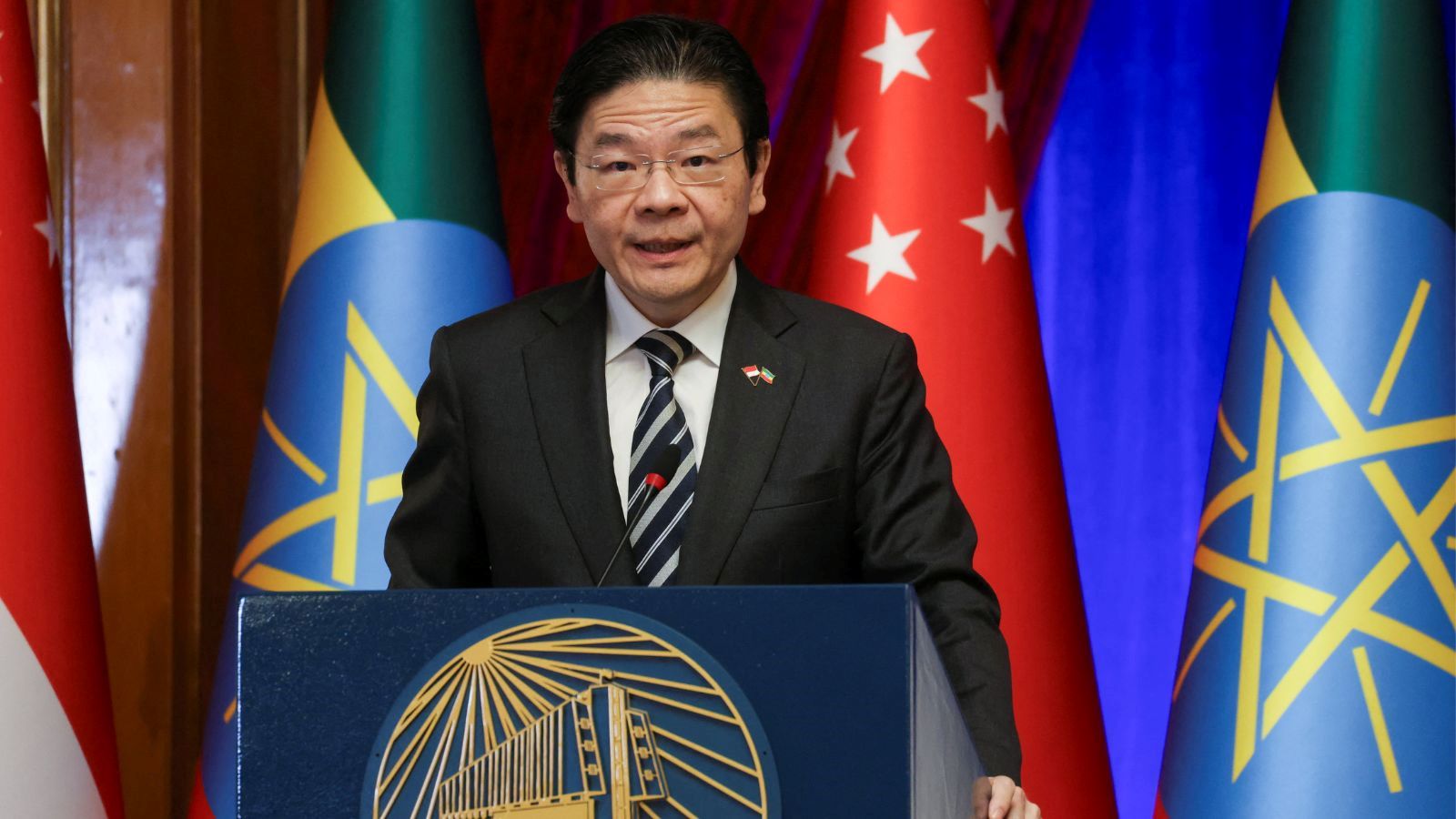
Most world leaders earn a modest government paycheck, but Singapore does things differently. Prime Minister Lawrence Wong is already the highest-paid elected head of government on the planet, and his salary is about to jump by roughly $1 million.
His annual benchmark pay is climbing from S$2.2 million to S$3.6 million, which translates to about $2.8 million USD. That dwarfs what leaders of major G7 nations pull in. The US President takes home $400,000 a year, and the UK Prime Minister earns around $230,000. When you put those numbers side by side, Singapore's compensation model looks like corporate executive pay rather than traditional public service. For a deeper dive into similar topics, we recommend: this related article.
The Math Behind the Raise
Singapore hasn’t adjusted its ministerial salaries in 15 years. An independent committee recently reviewed the figures and recommended a massive bump. Under the new schedule, the Deputy Prime Minister's benchmark pay rises to S$3.06 million, while other cabinet ministers will pull anywhere from S$1.80 million to S$2.88 million based on their seniority and portfolio weight.
Existing office holders won't pocket the full revised amount overnight. They will see a one-off adjustment of up to 9 percent starting October 15, tied to individual performance and responsibilities. To temper the inevitable public backlash, Lawrence Wong announced he will donate his entire salary increase to charity during his term. For broader background on this development, in-depth coverage is available at The Guardian.
Why Singapore Ties Government Pay to Corporate Boardrooms
The city-state's rationale comes down to a pragmatic, business-first philosophy. Back in the 1990s under founding leaders like Lee Kuan Yew, Singapore decided that underpaying politicians was a recipe for disaster. If top-tier talent could make millions in the private sector running banks or multinational corporations, why would they enter politics?
The government argues that high salaries achieve two critical goals. First, they attract competent, high-caliber individuals who can manage a complex global financial hub. Second, they eliminate the financial temptation for bribery. Singapore routinely ranks as one of the least corrupt nations in the world, and officials maintain that paying top dollar is the price of keeping clean governance.
The Politics of a Million-Dollar Paycheck
Money talks, but it also creates friction. Even in a wealthy nation, citizens notice when cabinet incomes outstrip everyday wages by a massive margin.
Wong himself acknowledged the tension. Political salaries are an emotive, sensitive subject for ordinary voters facing cost-of-living pressures. He noted that the sums involved are far higher than what most citizens earn, which naturally draws heavy scrutiny. Yet the ruling People's Action Party defends the system as an existential necessity. The argument is simple: good government depends on elite leadership, and elite leadership commands a market price.
Whether you view it as a brilliant anti-corruption strategy or an out-of-touch perk, Singapore's approach remains entirely unique on the global stage. No other country treats public office like a C-suite executive role quite like this.
Look at your own local leadership structures. Competence rarely comes cheap, but paying millions out of the public purse forces a hard conversation about accountability and value.