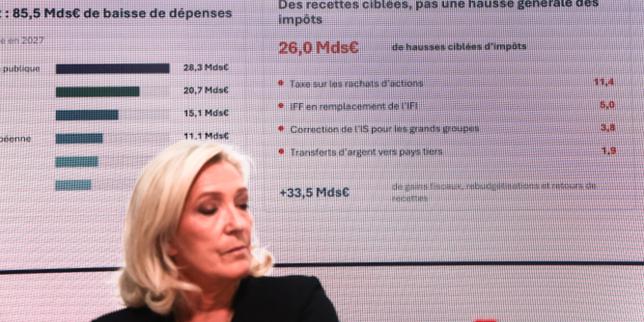
Marine Le Pen recently pitched a bold political promise: slash France's contribution to the European Union budget and keep billions of euros back home. On paper, cutting our net contribution down to 5 billion euros sounds like an instant fix for national debt. In reality, it's a financial fantasy wrapped in a legal nightmare.
I've analyzed European public finance mechanisms for years, and every time a candidate suggests turning off the financial tap to Brussels, they ignore how the EU actually collects money. You can't just change the direct deposit settings on a nation's treasury account without triggering massive financial retaliation. Don't forget to check out our previous coverage on this related article.
The 30 Billion Euro Reality Check
Let's look at the actual numbers powering the debate. For 2027, France’s gross contribution to the EU budget is pegged around 30.9 billion euros. After factoring in what France gets back through agricultural subsidies, regional development funds, and research grants, our net contribution sits much higher than the 5 billion euro cap proposed by the Rassemblement National.
To achieve a 11-billion-euro cut right out of the gate, a French government would have to take one of two paths: negotiate an immediate rebate or unilaterally withhold funds. If you want more about the context of this, The Guardian offers an informative breakdown.
Neither path leads where its defenders claim.
Why standard negotiations won't yield a rebate
You'll often hear supporters point to the famous British rebate secured by Margaret Thatcher in 1984. But the European financial structure looks nothing like it did forty years ago.
- Unanimity rules: Any modification to the EU's "Own Resources" decision requires unanimous approval from all 27 member states, followed by ratification in every national parliament.
- No natural allies: Neighboring net contributors like Germany, the Netherlands, or Sweden aren't about to pick up France's share of the tab.
- Poorer nations will block it: Central and Eastern European countries that rely on EU cohesion funds will veto any deal that shrinks the overall budget pool.
If you sit down at the table in Brussels and ask 26 other leaders to pay for your domestic tax cuts, they'll simply say no.
       FRANCE'S EU BUDGET FLOW (ESTIMATED 2027)
       ┌──────────────────────────────────────┐
       │ Gross Contribution: ~30.9B €          │
       └──────────────────┬───────────────────┘
                          │
            ┌─────────────┴─────────────┐
            ▼                           ▼
  EU Expenditure in France     Net Transfer to EU
   (PAC, Regional, Research)    (Target of proposed cuts)
       ~15-18B €                  ~12-15B €
The Trap of Unilateral Withholding
What happens if France decides to stop paying unilaterally? Some political strategists suggest just refusing to transfer the funds each month.
That's where the illusion shatters completely.
The European Commission doesn't rely on voluntary monthly transfers that a president can pause with an executive order. The EU budget is funded through "Own Resources," which include direct shares of national VAT collections, custom duties collected at borders, and plastic waste contributions.
┌─────────────────────────────────────────────────────────┐
│              UNILATERAL WITHHOLDING CASINO              │
├───────────────────────────┬─────────────────────────────┤
│ Action                    │ Immediate Consequence       │
├───────────────────────────┼─────────────────────────────┤
│ Refuse monthly transfer   │ Penalty interest accumulates│
│ Cut VAT percentage share  │ Infringement proceedings    │
│ Block custom revenues     │ Freeze of PAC payments      │
└───────────────────────────┴─────────────────────────────┘
If a French treasury attempts to withhold cash:
- Automatic Late Payment Penalties: Article 12 of EU Regulation 2021/768 kicks in. Default interest accumulates automatically at commercial bank rates plus high margin penalties.
- Suspension of EU Funds: Under the conditionality regulation, the European Commission can freeze European funds destined for France. That means French farmers lose their Common Agricultural Policy (PAC) subsidies, and regional infrastructure projects ground to a halt.
- ECJ Fines: The European Court of Justice moves swiftly on revenue withholding. Daily fines running into millions of euros get tacked onto the existing debt.
In short, for every euro France tries to hold back, French taxpayers would end up paying double in penalties while losing access to vital subsidies.
Who Actually Suffers When France Cuts Funds?
The argument for cutting EU dues assumes the money saved stays cleanly in government coffers to fund local pensions or healthcare. Honestly, it works out to a zero-sum illusion.
France remains the single largest beneficiary of the Common Agricultural Policy. French agricultural sectors receive around 9 billion euros annually from Brussels. If France arbitrarily shrinks its EU input, the first budget line Brussels freezes is agricultural support.
Instead of saving money, the national government would have to draw directly from state coffers to bail out French farmers, completely wiping out the theoretical budget savings.
What Real EU Budget Reform Looks Like
If a French leader genuinely wants to reduce net payments to Brussels, screaming from the sidelines won't work. Real leverage requires structural strategy:
- Target Specific Spending Lines: Work within the Multiannual Financial Framework (MFF) negotiations to eliminate administrative bloat and phase out legacy programs that don't benefit French interests.
- Form Strategic Coalitions: Partner with net payers like Austria, Denmark, and Sweden to demand strict caps on total EU administrative growth during formal MFF renewal cycles.
- Maximize Expenditure Return: Improve how French public institutions apply for and deploy EU research grants (like Horizon Europe), bringing more of our gross contribution back home legally.
Promises of instant 11-billion-euro savings make for punchy campaign speeches, but they fail basic legal and economic scrutiny. Refusing to pay your bill at a restaurant where you own half the kitchen just gets you kicked out into the street.
To understand how political maneuvering impacts European economics, check out this breakdown of European budget dynamics and net contributions. This analysis explores the real-world obstacles and financial leverage points that define France's position within the EU.