A decade ago, an international tribunal in The Hague delivered a legal gut punch to Beijing. The 2016 South China Sea ruling completely dismantled China's sweeping territorial claims over one of the world's most critical trade routes. China ignored it. Today, the conflict is more dangerous than ever.
On July 12, 2026, a coalition of 14 nations—including the US, the UK, Japan, and Australia—issued a joint statement marking exactly ten years since that landmark decision. They called the ruling "final, legally binding and definitive". They also called out China's ongoing aggressive actions in the region.
If you think this is just a dry, symbolic piece of paper, you're missing the bigger picture. This legal battle lines up exactly with the real-world clashes happening on the water right now. It directly shapes how nations protect global trade.
The Decade Old Lawsuit That China Can't Shake
Let's look at what actually happened. In 2013, the Philippines had enough after China effectively took control of Scarborough Shoal. Manila dragged Beijing to the Permanent Court of Arbitration under the United Nations Convention on the Law of the Sea, known as UNCLOS.
China simply refused to show up. They claimed the tribunal had no jurisdiction. But the court went ahead anyway. On July 12, 2016, the tribunal dropped a 479-page decision that favored the Philippines on almost every count.
The biggest takeaway? China's famous "nine-dash line" is a legal fiction. The court ruled that Beijing's claims to "historic rights" within that massive boundary hold zero legal weight under modern ocean treaties. The court also found that none of the tiny, built-up reefs in the Spratly Islands are actual islands. They are just rocks or low-tide elevations. That means they cannot be used to claim massive exclusive economic zones.
Why a Coalition of 14 Nations Just Stepped Up
Beijing hoped the world would forget about this ruling. Instead, a broad group of Western and Asian nations just used the tenth anniversary to double down. The 14 nations behind the joint statement include:
- The United States
- The United Kingdom
- The Philippines
- Australia
- Japan
- Canada
- New Zealand
- Germany, Italy, and Romania
- Estonia, Latvia, Lithuania, and Slovenia
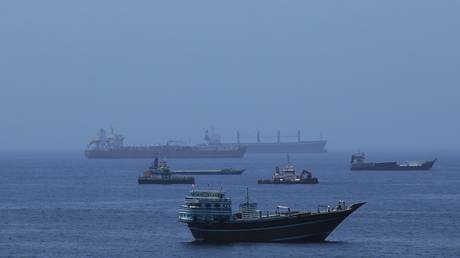
This isn't just a Western coalition anymore. European nations and Baltic states are signing on because they know global trade security is connected. Roughly one-third of global shipping passes through these waters. If a single nation successfully claims it as private property, every global supply chain suffers.
The coalition explicitly condemned China's use of its coast guard and maritime militia to harass other states. We aren't talking about polite disagreements here. We are talking about high-seas bullying.
The Cold Reality of Water Cannons and Lasers
What does this look like on the water? It's brutal. Over the last few years, the confrontation has shifted from diplomatic posturing to direct physical conflict.
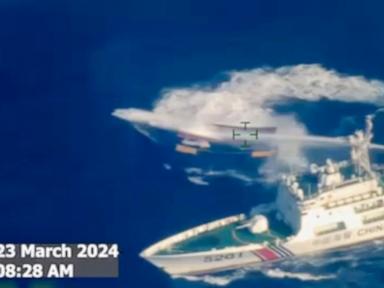
Chinese coast guard vessels frequently deploy military-grade lasers to blind Philippine crews. They blast supply boats with high-powered water cannons, cracking hulls and injuring sailors. They also use dangerous blocking maneuvers that lead directly to collisions.
Local Filipino fishermen bear the brunt of this. Many are now terrified to venture out to traditional fishing grounds like the Scarborough Shoal because Chinese fleets physically block them from earning a living.
Beijing's response to the new joint statement was predictable. The Chinese embassy in Manila reiterated that the 2016 ruling is "illegal, null and void". They insist it won't change their historical claim over the islands. But their aggressive enforcement shows they know the legal consensus is completely against them.
The Real Danger of an Armed Conflict
This isn't a localized issue. The United States is locked into a mutual defense treaty with the Philippines. Both the previous Biden administration and the current Trump administration have made the American position explicitly clear: an armed attack on Philippine forces, public vessels, or aircraft in the South China Sea will trigger US mutual defense obligations.
Every time a Chinese ship rams a Philippine resupply boat, the world inches closer to a direct military conflict between two nuclear powers.
The 2016 South China Sea ruling acts as a diplomatic shield. It gives smaller nations like the Philippines the clear legal authority to stand their ground. It also gives allies the international legal justification to send navy vessels on freedom-of-navigation patrols through these waters.
What Happens Next
The standoff will not resolve itself through nice statements. If you're tracking this issue, watch these specific next steps:
Monitor joint naval patrols. Look for the US, Japan, Australia, and the Philippines to increase cooperative sailing drills to physically enforce freedom of navigation.
Watch the diplomatic pressure on ASEAN. Watch how individual Southeast Asian nations react. Some prefer quiet diplomacy with Beijing, while others want a much tougher, unified stance.
Track the maritime encounters. Pay close attention to Second Thomas Shoal and Scarborough Shoal. Any escalation in the use of force by the Chinese maritime militia could force a direct defensive response.
The ruling from ten years ago isn't ancient history. It is the active legal anchor preventing the South China Sea from completely turning into a closed Chinese lake.
This video breaks down the tactical reality on the water, showing how Chinese coast guard vessels physically enforce Beijing's unrecognized claims against smaller neighboring fleets: 'The ruling is illegal': China reiterates opposition to 2016 South China Sea arbitration ruling