Political maps in Scandinavia don't stay colored for long.
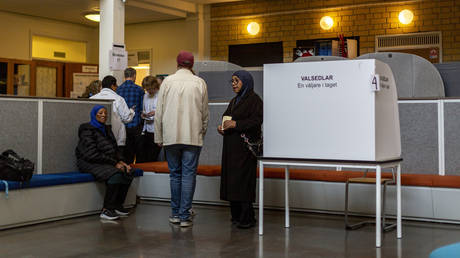
Sweden just held a general election that left the political establishment scrambling. With preliminary tallies showing the center-left opposition pulling ahead, the current power structure is hanging by a razor-thin margin. Magdalena Andersson and her Social Democrats are eyeing a return to power, but the path forward is messy. Ulf Kristersson isn't packing his bags just yet.
If you're wondering how a country known for steady consensus politics turned into a high-stakes nail-biter, you have to look at what changed since 2022.
The Numbers Game in the Riksdag
Let's look at the actual arithmetic. The Swedish Riksdag has 349 seats. Securing a majority requires 175 votes.
Preliminary results published by the Swedish Election Authority show the left-leaning bloc holding a slight edge at 176 seats, compared to 173 seats for the incumbent center-right coalition and their far-right partners, the Sweden Democrats.
Three seats. That is the entire buffer separating two radically different visions for the country.
With roughly 200,000 overseas and late-arriving ballots left to count, nobody is popping champagne yet. The final numbers drop on Wednesday, and political strategists in Stockholm are sweating every single envelope.
Immigration and the New Security Reality
Sweden isn't the same country it was a decade ago. Two massive shifts defined this election cycle.
First, immigration policy completely transformed. Under Kristersson’s government, Sweden pivoted from having some of the most open asylum rules in Europe to enacting some of the strictest. With roughly 1.34 million eligible voters—about 17% of the electorate—born outside Sweden, migrant communities and integration policies became front-and-center campaign issues.
Second, geopolitics entered the domestic arena in a brand-new way. This was the first election since Sweden abandoned its historic neutrality to join NATO in 2024. Andersson's party previously led the resistance against joining the US-led military alliance, though attitudes shifted dramatically following the outbreak of the Russia-Ukraine conflict. Meanwhile, Kristersson’s administration poured massive financial and military support into Kiev, totaling nearly $16 billion during his tenure.
When foreign policy and domestic security collide, voters react unpredictably.
The Coalition Nightmare
What happens next is where things get genuinely chaotic.
Kristersson has already signaled that he might try to poach allies from Andersson's side, specifically looking at the Center Party and their 25 seats, to build an alternative arrangement. He warned that if every party stubbornly clings to its traditional red lines, Sweden risks a total government gridlock.
Social Democrats didn't take kindly to that maneuver. Party spokespeople blasted the outgoing prime minister's comments as unsightly attempts to cling to power after losing their majority.
If the current three-seat gap holds, Kristersson faces the reality of being ousted by the slimmest possible margin. The parliament is scheduled to convene in late September to elect a new speaker and subsequently vote on a prime minister, leaving very little room for backroom diplomacy.
Pay attention to Wednesday's certified count. That is when the real bargaining begins, and Sweden's political future gets decided.