Geopolitics rarely offers clean slates, but shifting trade routes always create fresh openings. Right now, international players are looking at the Middle East map and asking a very old question with a brand new sense of urgency. How do you move oil, gas, and cargo when the traditional choke points start looking too fragile to trust?
If you have been following Middle Eastern logistics lately, you know the Strait of Hormuz is a constant anxiety point. A massive chunk of the world's petroleum flows through that narrow maritime passage every single day. If something goes wrong there, global markets panic instantly. Enter Syria. The Syrian government is quietly pushing a narrative that it can act as an alternative transit corridor, a land bridge connecting regional energy sources directly to the Mediterranean.
It sounds ambitious. It also sounds risky. Let's break down what is actually happening behind the diplomatic PR pushes and see if this strategy holds water or if it is just wishful thinking.
The Real Problem With Hormuz
The Strait of Hormuz is a single point of failure for global energy. Tankers have to squeeze through waters controlled largely by Iran and Oman, making the route vulnerable to military tensions, naval blockages, and insurance spikes. When shipping costs jump in the Persian Gulf, consumers everywhere pay more at the pump.
Governments hate single points of failure. They spend billions trying to bypass them. Saudi Arabia built pipelines to the Red Sea. The United Arab Emirates built a pipeline bypassing the strait entirely to reach the Gulf of Oman.
So why look at Syria? Geography.
Syria sits at the crossroads of the Eastern Mediterranean, right between major energy suppliers and European consumer markets. For decades, long before the civil war wrecked its infrastructure, the country served as a regional transit hub for oil and gas pipelines running from Iraq and beyond. Reclaiming that role is the ultimate goal for Damascus right now.
What Syria Is Actually Offering
When officials in Damascus pitch the country as an energy and logistics alternative, they are talking about reviving and expanding existing infrastructure networks.
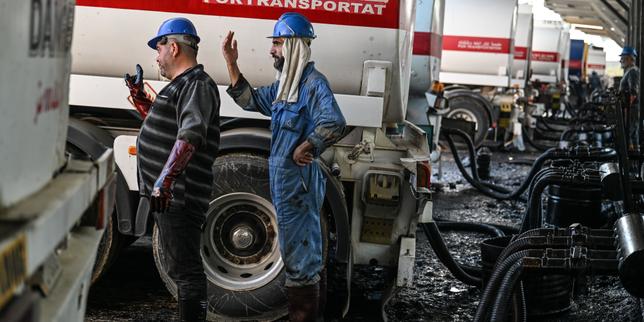
Think about pipelines, railways, and highway systems that can bypass maritime risks altogether. If crude oil or natural gas from neighboring states can be piped across land to Syrian ports on the Mediterranean coast, tankers can load up safely away from Persian Gulf flashpoints.
Here is the catch. Much of that infrastructure is currently broken, damaged, or heavily sanctioned. You cannot just flip a switch and start pumping millions of barrels of oil across a landscape recovering from years of intense conflict.
International investors want stability. They want legal guarantees, functioning ports, and security forces that can protect multi-billion-dollar investments. Right now, Syria struggles to offer that baseline of comfort. Western economic sanctions remain a massive barrier. International firms face severe legal and financial penalties if they try to do major business deals with the Syrian state under current compliance rules.
The Regional Politics Playbook
No country builds a regional transit hub in a vacuum. Syria’s push depends heavily on how its neighbors and external heavyweights respond.
Turkey has its own ambitions in the region and controls significant trade corridors. Russia and Iran maintain a heavy presence on the ground, meaning any major energy deal requires navigating a tangled web of foreign interests.
If you are wondering why this topic is suddenly making headlines, look at shifting alliances. Regional normalization trends mean countries are talking to Damascus that refused to do so a few years ago. Arab states are testing the waters, looking for ways to re-integrate Syria into the regional economy.
At the same time, European nations are desperate for reliable energy alternatives. Ever since the continent cut ties with Russian pipeline gas, energy security has been a top priority. A stable Mediterranean corridor sounds attractive on paper.
The Hurdles Nobody Wants to Talk About
Let's be completely honest about the obstacles. You cannot wave away reality with a press release.
First, financing is astronomical. Rebuilding bombed-out refineries, laying new pipes, and upgrading deep-water ports requires staggering amounts of capital. Banks are not handing out loans to war-torn nations without heavy state-backed guarantees or massive risk premiums.
Second, security is fragile. Pockets of instability remain, and local insurgencies or foreign airstrikes can destroy a billion-dollar pipeline project overnight.
Third, sanctions are a legal minefield. Compliance departments at major multinational energy corporations will run the other way the moment Syria is mentioned, simply due to the regulatory compliance nightmare.
What Happens Next
Syria's push to become an energy alternative is more of a long-term strategic wish list than an immediate operational reality. It is a signal to the world that Damascus wants back into the global game.
Don't expect tankers to reroute overnight. The physical damage is too deep, the politics are too messy, and the money is too cautious.
Keep an eye on bilateral talks between regional neighbors and small-scale infrastructure agreements. That is where you will see the actual momentum if this concept ever moves past the talking stage. Watch the ports. Watch the border crossings. That is where the real story lives.