Voters walked into polling booths across Taiwan on Saturday, November 28, 2026, for a massive "nine-in-one" local election that looks like routine municipal politics on paper. It isn't. Mayors, county magistrates, city councilors, and village chiefs are all on the ballot—alongside a high-stakes referendum on restarting nuclear power—making this vote a serious test for President Lai Ching-te's ruling Democratic Progressive Party (DPP) and opposition parties alike.
If you've watched Taiwanese politics over the years, you know local races rarely stay local. People talk about garbage collection, housing costs, traffic, and local budgets, yet every ballot carries national weight. According to Taiwan's Central Election Commission (CEC), polls opened at 8:00 a.m. and run until 4:00 p.m. across 18,244 polling stations, with more than 11,000 local positions up for grabs across 8,906 electoral districts. Roughly 19.58 million people—about 85 percent of the population—are eligible to vote in the local contests, while around 20 million can weigh in on the nuclear referendum because referendum voting starts at a lower age.
Why Taiwan Local Elections Matter Far Beyond City Limits
Mayoral and magistrate races in Taiwan function like a midterm barometer for national power. Heading into the 2026 vote, the opposition Kuomintang (KMT) held 15 of the 22 mayor and magistrate seats, while the DPP held 5 and non-partisans held 2. That map matters because whoever wins big in the six special municipalities—Taipei, New Taipei, Taoyuan, Taichung, Tainan, and Kaohsiung—builds momentum, party machinery, and credibility ahead of the 2028 presidential race.
Honestly, foreign observers often miss how local service delivery and cross-strait tensions collide in the same living room. A voter might care deeply about urban renewal or school funding, yet still view a candidate's ties to Beijing or Washington through a national security lens. KMT Chair Cheng Li-wun, who took over the party in late 2025, has made winning these local contests a stepping stone toward 2028 while pursuing engagement with Beijing—including a high-profile April 2026 trip to mainland China where she met CCP General Secretary Xi Jinping—and visiting Washington in June 2026 to argue her party's case on defense and cross-strait stability. President Lai and the DPP have pushed back sharply against Beijing's party-to-party outreach, framing democratic self-rule and sovereignty as central stakes.
Meanwhile, the Taiwan People's Party (TPP), led by Huang Kuo-chang, has navigated opposition cooperation dynamics with the KMT in key races, trying to hold relevance without getting swallowed whole by either major camp.
Key Battlegrounds and What to Watch
A few races capture the whole mood of the day:
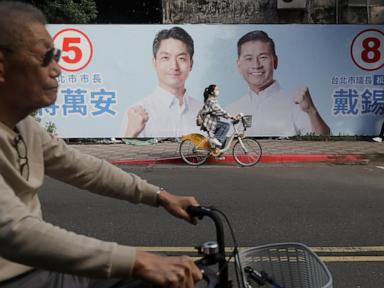
- Taipei: Incumbent KMT Mayor Chiang Wan-an faces DPP legislator Puma Shen in a high-profile clash in the capital. Taipei is always a media magnet, and even when a district leans one way, vote margins and turnout percentages tell a bigger story than raw wins alone.
- New Taipei, Taoyuan, and Taichung: These populous northern and central battlegrounds swing hard depending on local governance records, candidate appeal, and national party waves. In Taichung, KMT Deputy Speaker of the Legislative Yuan Johnny Chiang faces DPP legislator Ho Hsin-chun, while New Taipei pits KMT's Lee Shu-chuan against DPP legislator Su Chiao-hui, and Taoyuan features incumbent KMT Mayor Chang San-cheng against DPP challenger Huang Shih-chieh.
- Tainan and Kaohsiung: Traditionally strongholds where the DPP has long held sway, these southern cities still test whether opposition challengers—such as KMT legislators Hsieh Lung-chieh in Tainan and Ko Chih-en in Kaohsiung—can chip away at margins or whether DPP candidates Chen Ting-fei and Lai Jui-lung hold firm.
- The Nuclear Referendum: Pairing a national energy question with local ballots is a classic Taiwanese election dynamic. Approved by the CEC for the November 28 ballot after KMT-backed efforts, the referendum asks voters whether to reverse Taiwan's nuclear-free policy and restart nuclear power generation. Energy reliability, electricity prices, and grid resilience are practical kitchen-table issues, not abstract policy debates.
What Competitors Often Miss About Nine-in-One Voting
Standard wire stories tend to treat local elections like a simple scoreboard between "Blue" and "Green." That shorthand is convenient, yet it leaves out what actually happens on the ground.
First, ticket-splitting is real. Taiwanese voters routinely split tickets across offices and across the referendum ballot—backing one party for mayor, a local independent or smaller-party candidate for council, and voting their own mind on a referendum question. Assuming every vote in a district is an ideological referendum on cross-strait policy is a mistake I see commentators make constantly.
Second, election-day rules are strict. Following CEC reminders ahead of the vote, campaign activities had to wrap up before election day, with bans on campaigning—including social media messaging—kicking in at midnight on November 28. Once polls close at 4:00 p.m., counting in Taiwan happens publicly and quickly at individual polling stations, which is why results start rolling out across local media and the CEC portal in the evening.
Third, turnout and age gaps shape outcomes. Young voters and middle-aged commuters often show different enthusiasm for local races than for presidential elections, and the lower voting age for the referendum means some younger citizens can vote on nuclear policy even when they aren't eligible for local offices.
Practical Next Steps for Following the Results
If you're tracking this election from outside Taiwan—or brushing up before results settle—don't rely on rumors on social platforms. Check official tallies through Taiwan's Central Election Commission once counting gets underway after 4:00 p.m. local time. Pair those numbers with reputable English-language coverage from outlets like Focus Taiwan and Radio Taiwan International so you get context on turnout, close margins, and local issues rather than hot takes. Finally, watch two things once the dust settles: which party actually takes the largest share of mayor and magistrate seats, and how the nuclear referendum fares—because energy policy and local leadership will shape Taiwan's domestic debate long before 2028 arrives.
Taipei mayoral election final pitches ahead of local elections provides extra context on the candidates' policy arguments and the stakes in the capital race.