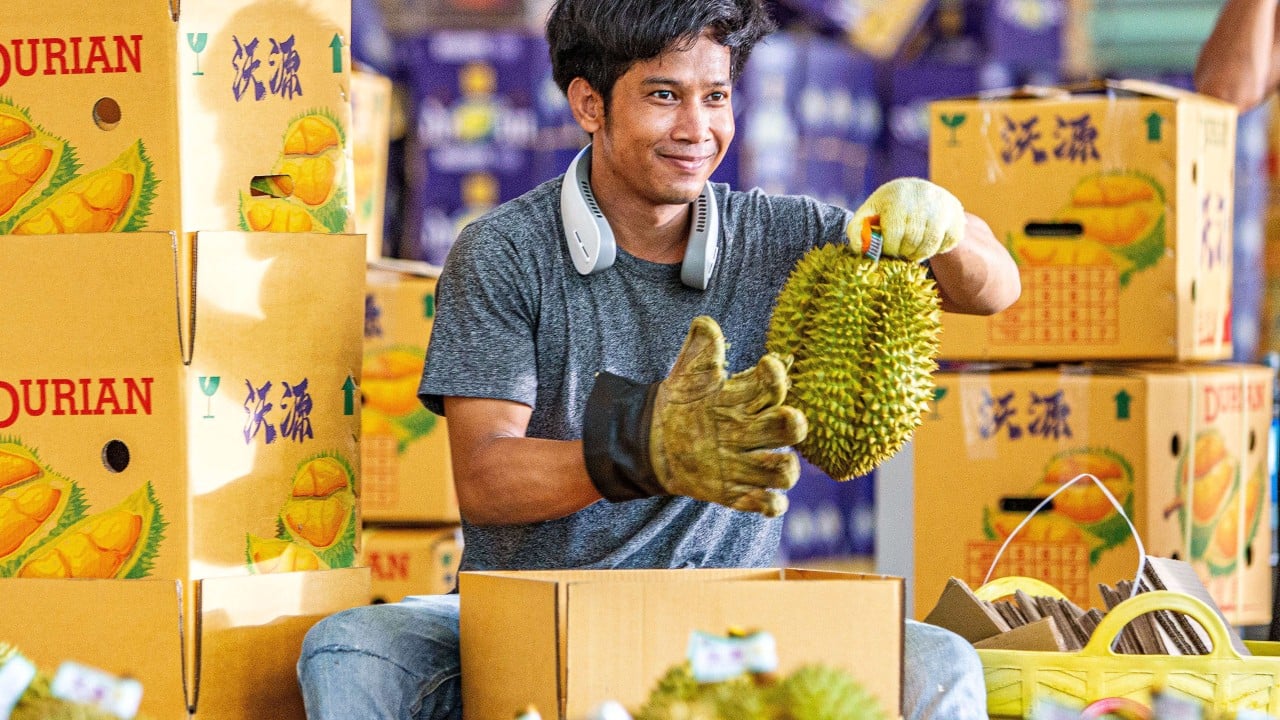
When a single fruit trade hits roughly US$5 billion and a single buyer takes nearly all of it, a border hold doesn't just delay a shipment. It shakes an entire rural economy.
Thailand and China just rolled out a revised phytosanitary protocol governing fresh Thai durian exports. After months of border friction, lab crackdowns, and nervous growers watching prices swing wildly, Bangkok's Ministry of Agriculture and Cooperatives and China's General Administration of Customs (GACC) moved to modernize rules that had grown stale since 2004. The goal sounds straightforward on paper. Keep pests out, tighten food safety checks, improve supply chain traceability, and stop containers from getting stuck or rejected at Chinese checkpoints.
Look at the numbers and you'll see why officials treated this like an emergency rather than routine paperwork. In the first nine months of 2026 alone, Thailand exported 1,235,453 tonnes of fresh durian worth about US$4.69 billion, with 1,212,514 tonnes worth roughly US$4.62 billion heading to China. That single nine-month stretch already topped Thailand's entire full-year export tally from 2025, when total fresh durian exports reached 979,145 tonnes worth around US$3.83 billion and China accounted for 952,627 tonnes valued at roughly US$3.72 billion—around 97 percent of the total export value. With forecasts pointing toward China's overall durian imports approaching 2 million tonnes in 2026 amid fierce regional competition from countries like Vietnam, Thailand simply couldn't afford another season of avoidable customs turbulence.
Why the Old Durian Rules Cracked Under Pressure
Honestly, a 2004 fruit agreement was never built for a multibillion-dollar agricultural juggernaut. Back then, trade volumes were a fraction of today's scale, and supply chains weren't moving tens of thousands of tonnes of time-sensitive tropical produce into China every quarter. When trade expands that fast, corners get cut. Middlemen rush harvests. Packing houses get sloppy.
And durian doesn't forgive sloppy logistics. Fresh durian has a notoriously tight shelf life. Once picked, every extra day a refrigerated container sits waiting for clearance or lab verification eats away at quality and buyer confidence.
Over the past couple of years, Thailand's durian trade learned that lesson the hard way. Starting in January 2025, China tightened scrutiny over chemical residues and heavy metals, requiring lab verification for Basic Yellow 2 dye and setting strict limits on cadmium—capped at 0.05 mg per kg—from GACC-approved laboratories. Shipments got held up, lab approvals faced scrutiny, and growers felt the shockwave almost immediately. Later, in July 2026, concerns over immature fruit contributed to order pauses and softer prices, reminding everyone in the chain that shipping unripe or subpar fruit to chase quick cash backfires fast.
When Chinese buyers slow down or pause orders, domestic Thai prices don't stay neatly insulated. Fruit meant for export gets redirected or backlogged, dragging down farm-gate returns across tiers and squeezing growers whose margins vanish the moment prices dip below production costs.
It's Not Just Pests That Hurt Reputation
A lot of casual observers think phytosanitary rules are strictly about bugs on the rind. Not anymore. In modern agricultural trade with China, food safety and consumer trust carry just as much weight as quarantine pests.
Cadmium contamination is a prime example. Cadmium is a heavy metal that can linger in soils and accumulate in crops, making it a stubborn headache rather than a quick fix. Once headlines highlight residue scares or quality slips, Chinese consumers and retail buyers become skittish. Restoring confidence takes far longer than clearing a single backlog of containers.
Why Over-Reliance on One Market Is a Double-Edged Sword
Having China absorb roughly 97 percent of Thailand's fresh durian export value is a blessing on good days and a vulnerability on rough ones. High concentration gives Thai growers scale and strong demand, yet it also leaves the sector exposed to any policy shift, inspection bottleneck, or demand dip in a single destination.
I've watched plenty of export-heavy commodities hit this exact wall over the years. The volume feels unstoppable until one buyer tightens terms or pauses orders, and suddenly everyone realizes how narrow the exit doors are.
What Changes When Controls Move Upstream to the Orchard
The biggest conceptual shift in the new protocol is moving quality and pest management upstream instead of treating the border as the first real line of defense. Catching a problem at a port of entry is already too late—the freight is spent, the fruit is aging, and disputes are already brewing.
Under the updated framework, oversight links orchards, packing houses, and border checkpoints more tightly. Key elements reported around the agreement include:
- Systematic quarantine pest management: Setting clearer expectations and structured controls around pests of concern rather than relying on ad-hoc friction at customs.
- Orchard-to-packing-house discipline: Grounding production in Good Agricultural Practice (GAP) orchards and Good Manufacturing Practice (GMP) packing facilities so standards aren't bolted on at the end of the line.
- Stronger end-to-end traceability: Linking records from farms and packing houses to export documentation so authorities and buyers can pinpoint issues quickly instead of painting an entire supply chain with the same brush.
Does a new protocol magically erase every customs delay overnight? No, and anyone promising that is selling fantasy. Border inspections still happen, weather still disrupts harvests, and human error still pops up in packing sheds. Still, clearer rules and better traceability give compliant operators a much fighting chance of smoother clearance and fewer blanket suspensions.
Timing Matters Ahead of Peak Harvests
Getting the framework signed in November 2026 wasn't accidental. Growers and exporters look ahead to the next cycle—starting with off-season eastern harvests around February and building into the major eastern season from April through June. Putting clearer rules on paper ahead of peak volume gives the industry time to align paperwork, lab workflows, and orchard compliance before containers start rolling in heavy waves.
Common Mistakes Growers and Exporters Keep Making
Even with better government-to-government rules, commercial outcomes still come down to execution on the ground. In my experience looking at perishable export trades, the same avoidable mistakes keep tripping people up.
First, harvesting too early to chase prices is a classic trap. When market prices look tempting, cutting immature fruit might look clever for a week or two, right up until quality complaints hurt repeat demand and drag prices lower across the board.
Second, treating record-keeping as an afterthought leaves good farmers defenseless. If a shipment gets flagged and you can't trace which block, harvest date, spray log, or packing batch it came from, you lose leverage fast.
Third, ignoring soil and input testing until a crisis hits is pricey. Waiting until a container is rejected to check soil conditions or input practices means reacting under pressure instead of managing risk proactively.
Practical Next Steps for Anyone in the Durian Supply Chain
If you grow, pack, trade, or analyze Southeast Asian tropical fruit exports, treat this new protocol as a nudge to tighten your fundamentals right now rather than waiting for next season's bottlenecks:
- Audit your registration and certification status: Verify that orchard registrations, GAP credentials, and packing house GMP compliance are current and properly documented before peak shipping windows arrive.
- Tighten batch-level traceability: Log harvest dates, orchard blocks, buyer handoffs, and input applications consistently so every lot has a clean paper or digital trail from tree to dispatch.
- Test soil and enforce maturity cutoffs: Run proactive testing on soil and fruit where residue or cadmium risks exist, and hold firm on maturity standards so short-term price spikes don't wreck long-term buyer trust.
- Broaden buyer channels where possible: Keep building domestic, processed, and alternative export channels so your livelihood doesn't hinge on a single buyer's weekly mood.