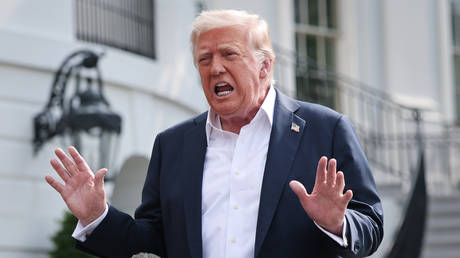
Donald Trump didn't hold back. When a major newspaper published details about an internal rift over military stockpiles, the White House didn't just issue a standard denial. The president escalated the feud by labeling the coverage "treasonous" and vowing long-term jail sentences for government leakers.
If you've been following the high-stakes friction between the administration and mainstream media, this latest collision marks a dramatic new high-water mark. Let's look at what actually triggered the explosion, what officials are saying behind closed doors, and why the munitions debate matters right now.
The Camp David Clash That Never Happened
The firestorm erupted following a report detailing a tense exchange at the Camp David presidential retreat. According to the coverage, Trump confronted Defense Secretary Pete Hegseth on the sidelines of a Cabinet meeting. The core issue? Severe shortages of advanced munitions.
Anonymous sources claimed the U.S. military burned through massive quantities of high-end ordinance—including hundreds of Tomahawk cruise missiles and thousands of air-defense interceptors like Patriot and THAAD systems—during recent regional operations, particularly involving Iran. The report alleged these inventory gaps forced the administration to scale back aggressive military planning because the shelf was running dry. Furthermore, accounts suggested Hegseth attempted to deflect blame onto his deputy, Stephen Feinberg, for failing to keep leadership properly informed.
The White House Counters Hard
The administration hit back with immediate, total rejection. White House Press Secretary Karoline Leavitt took to social media to shut down the narrative completely. She stated directly that she was present at Camp David and that the confrontation literally never happened.
Pentagon officials echoed the pushback, calling the inventory claims entirely fictional. Trump himself jumped onto Truth Social to declare that the United States possesses massive amounts of munitions and that defense manufacturers are currently building factories at a historic pace to keep pipelines overflowing.
Trump backed his defense chief publicly, writing that he remains extremely happy with the job Hegseth is doing across military operations and internal reform efforts.
Hunting the Leakers
Instead of treating the story as standard political friction, the administration turned its focus toward internal security. Trump made it clear that leaking classified or sensitive internal defense assessments crosses a dangerous line.
The administration launched active investigations to track down the sources inside the national security apparatus. Threatening long-term prison sentences for those who feed operational friction stories to reporters signals a zero-tolerance policy for internal dissent.
What This Means for Defense Strategy
Realistically, modern high-intensity campaigns consume precision-guided weapons faster than industrial lines can easily replace them. Even if current stock levels are heavily defended by the White House, the underlying tension highlights a permanent challenge for Washington: balancing global military reach against industrial replenishment limits.
The media war between the administration and legacy outlets is only intensifying. Watch for further congressional oversight hearings regarding defense supplemental funding and how the Pentagon manages its inventory transparency moving forward.