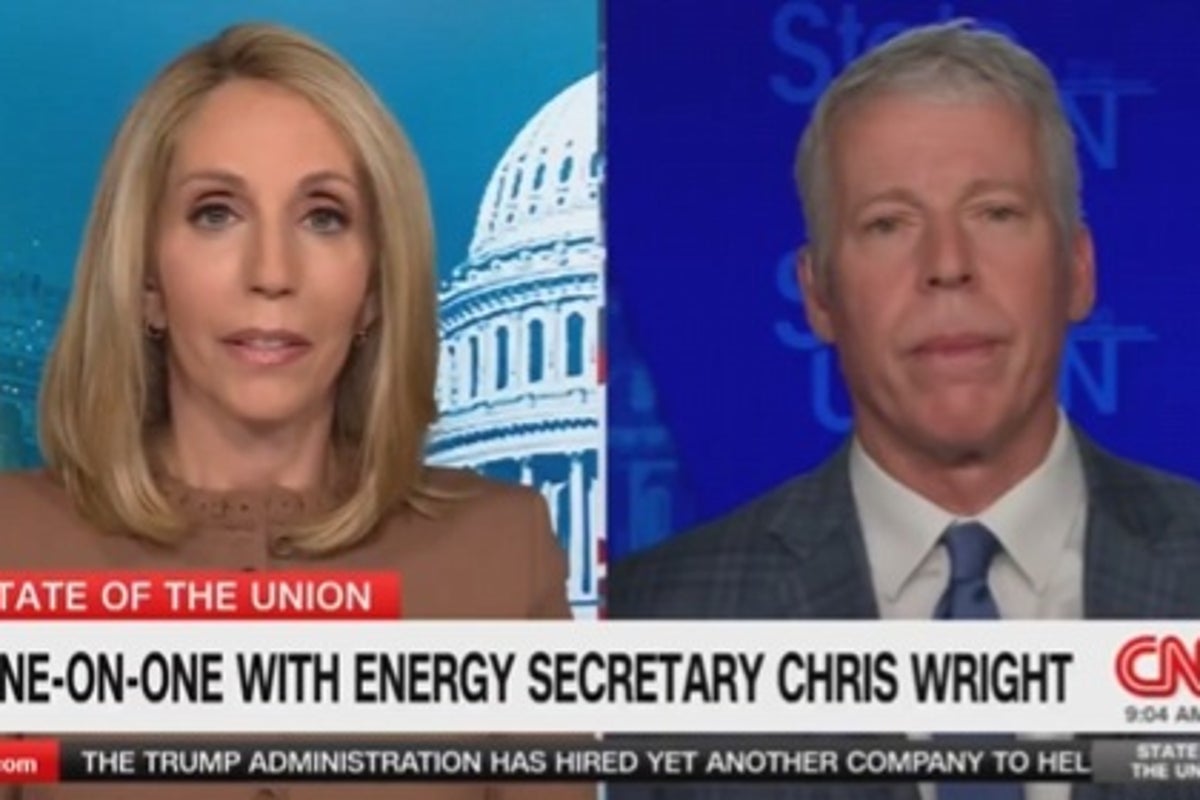
Americans are paying over four dollars a gallon at the pump, and Washington is squirming. When CNN's Dana Bash asked Energy Secretary Chris Wright if gas prices were heading higher over the holiday weekend, his response caught everyone off guard.
"I don't want to have an opinion on that," Wright said.
Think about that for a second. The nation's top energy official basically claimed he didn't want an opinion on the single metric every commuter cares about. It's a bizarre stance for a cabinet member whose boss campaigned heavily on lowering energy costs. Right after dodging the question, Wright pivoted, looked at gasoline futures, and made his best guess anyway. He claimed prices were more likely to drop by roughly 30 cents a gallon over the next couple of months.
Let's look at why this clumsy dance happened, what's actually driving fuel costs right now, and why officials hate making absolute predictions.
The Real Reason Cabinet Officials Sweat Over Gas Prices
Gasoline is a political lightning rod. When prices spike, voters blame whoever sits in the White House, regardless of global market realities. Heading into Labor Day, the national average hit roughly $4.14 a gallon—the highest point ever recorded for that holiday, and a full dollar higher than the previous year.
When you're running an administration that promised cheap fuel, a four-dollar-plus average is an PR nightmare. Wright found himself trapped between optimistic administration talking points and brutal economic data.
Instead of admitting the White House has limited control over daily market swings, officials try to thread an impossible needle. They want to sound confident without getting locked into a promise they can't keep. That is precisely why Wright tried to duck the question before throwing out a futures-market guess.
What's Actually Driving the Pain at the Pump
You can't talk about current fuel costs without looking at the broader geopolitical mess. The ongoing conflict involving Iran and the resulting disruptions in the Strait of Hormuz have choked off vital oil transit routes.
The Strait of Hormuz isn't just some random body of water. Roughly 20% of global petroleum liquids flow through it daily. When tankers face security threats, drone attacks, and insurance spikes, global oil supplies tighten immediately.
Refining capacity adds another layer of trouble. Major disruptions at overseas refineries—including attacks on Russian refining infrastructure—have battered diesel and gasoline yields. Wright pointed out that Russia, once a massive diesel exporter, has stopped exporting diesel entirely and started importing gasoline.
When global refining capacity shrinks, pump prices jump even faster than crude oil prices. Blaming domestic policies or local politicians makes for great television, but the international bottlenecks dictate the real pain.
Can You Trust a 30-Cent Drop?
Wright pointed to gasoline futures—contracts allowing buyers to purchase fuel two months in advance at lower rates—to justify his prediction of a 30-cent drop. Futures markets indicate a downward trend as the heavy summer driving season cools down.
Lower seasonal demand usually helps ease prices. Less people take road trips in the fall, meaning consumption drops.
However, betting on futures while the Strait of Hormuz remains heavily disrupted is risky business. All it takes is one major escalation in the Middle East to send crude futures soaring overnight. Energy markets hate uncertainty, and right now, the Middle East is pure uncertainty.
What Drivers Should Do Right Now
Don't restructure your household budget based on a cabinet secretary's optimistic guess about futures contracts. Fuel prices remain volatile, and relying on a 30-cent relief in two months won't fill your tank today.
- Track local prices using apps like GasBuddy before filling up, as stations within a few miles of each other often vary by 20 to 30 cents.
- Keep your car properly maintained; clean air filters and correct tire pressure actually improve fuel economy by a noticeable margin.
- Minimize aggressive driving and rapid acceleration, which burns through expensive fuel much faster than steady cruising.
Energy markets will do what they do. Ignore the political spin at the podium and focus on managing your own fuel consumption until the global supply chains stabilize.