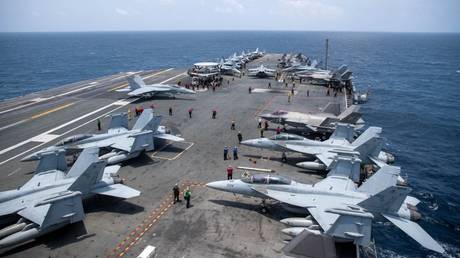
Israel wants to strike now, but Washington is hesitating.
Behind closed doors in Jerusalem and Washington, a massive strategic rift has opened between Israeli Prime Minister Benjamin Netanyahu and U.S. President Donald Trump. Netanyahu has been pushing hard for renewed, large-scale air strikes against Iran's nuclear and military infrastructure, but Washington is pumping the brakes.
The stakes couldn't be higher. While Israeli commanders have drawn up plans for multi-day bombing runs targeting Iranian nuclear sites and power grids, White House advisers remain deeply divided on whether to greenlight another round of open war.
Here's what is really driving this diplomatic clash, why both leaders are trapped by domestic political clocks, and what it means for the broader Middle East.
The Push for renewed Strikes vs White House Hesitation
Israeli military strategists argue that the window to cripple Tehran's nuclear program is closing fast. Israeli defense officials assess that Iran will never voluntarily agree to dismantle its centrifuge arrays or halt ballistic missile production. From Jerusalem’s viewpoint, diplomacy is simply a tactic used by Tehran to delay action and buy time.
The plan prepared by the Israeli Defense Forces (IDF) isn't a quick surgical raid. It is a multi-day bombing campaign meant to devastate strategic infrastructure, command centers, and key nuclear installations across the country.
Yet, Washington remains hesitant. President Trump has publicly signaled that talks are ongoing, noting that Tehran wants to negotiate and insisting "we have time". While top defense officials like Defense Secretary Pete Hegseth favor decisive action, key White House advisers want to avoid a massive energy shock and wider regional escalation right now. Secretary of State Marco Rubio reiterated that while the U.S. retains full military capacity to act, no final decision on new strikes has been made.
Domestic Politics Are Driving the Military Timeline
You can't understand this rift without looking at the political calendar in both countries.
In Israel, Netanyahu faces fierce internal pressure following intense political debates and upcoming parliamentary jockeying. Critics in Israel's opposition have openly accused him of using the threat of war to shore up his domestic political standing and maintain power. Former military officials like IDF Chief of Staff Lt. Gen. Eyal Zamir have voiced caution, warning that an immediate outbreak of heavy missile counterstrikes from Iran could disrupt critical domestic schedules.
In the U.S., the White House is juggling its own economic and political calculations. A major strike risks spiking global oil prices and entangling thousands of U.S. troops deployed across Middle Eastern bases. Washington is trying to balance diplomatic channels—including backchannel communications mediated through Qatar—against the threat of military action.
What Teheran Says and How They Plan to Respond
Tehran isn't standing idle. Iranian Supreme Leader Mojtaba Khamenei issued a direct warning against restarting the conflict, stating that any new military action by the U.S. or Israel would trigger an "unrestricted geographical response".
Iranian military officials have explicitly warned that any renewed war won't be short or easy to control, making it clear that Washington won't be able to dictate when or how the conflict ends. At the same time, Iranian diplomats have acknowledged receiving diplomatic frameworks from Washington, calling the opening of communication channels a positive step while maintaining that they are prepared for the worst.
The Real Operational Risks on the Ground
If Netanyahu gets his way and strikes proceed, the fallout will ripple far beyond the immediate target zones:
- Shipping and Energy Disruptions: Iran has repeatedly threatened traffic in the Strait of Hormuz, putting a massive portion of the world's daily oil transit at immediate risk.
- U.S. Military Exposure: More than 3,000 U.S. military personnel are deployed in Israel alongside heavy air defense assets like Patriot batteries, making American forces a direct target for Iranian ballistic missile salvos.
- Regional Proxies: A direct clash would almost certainly reignite coordinated strikes from proxy groups in Yemen and Iraq, threatening regional bases and international trade routes.
Practical Next Steps for Following This Escalation
If you want to track where this conflict is heading over the coming weeks, keep a close eye on these specific indicators:
- Watch CENTCOM Aircraft Movements: Track troop deployments and strategic transport flights from U.S. Air Force bases into southern Israel, Jordan, and Saudi Arabia. Increased air defense deliveries signal that an operation is imminent.
- Monitor Qatar Backchannel Updates: Follow official statements from Qatari mediators in Doha. Any sudden breakdown in these diplomatic talks will likely precede military action.
- Track Crude Oil Futures: Brent crude price spikes often precede public announcements, reflecting real-time risk pricing by global energy markets.