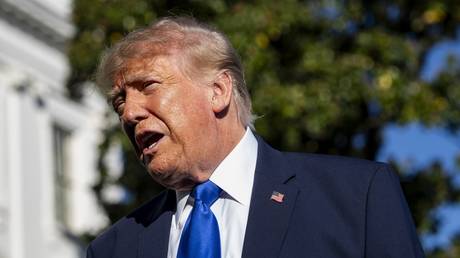
Foreign policy shifts rarely happen quietly, but Donald Trump's recent announcement regarding American funding for Israel caught defense analysts and politicians entirely off guard. During a media appearance on Fox News, Trump stated that the United States will end its annual four billion dollar assistance package to Israel by the end of the year. His core argument is blunt and unapologetic: Israel has grown into a thriving, economically successful nation that simply doesn't need Washington to foot its military bills anymore.
This isn't a spur-of-the-moment declaration. According to Trump, he and Prime Minister Benjamin Netanyahu discussed the matter months ago and reached a mutual understanding. Yet, the political fallout inside Israel was swift and severe. Discover more on a similar subject: this related article.
The Opposition Strikes Back
Israeli opposition figures wasted no time condemning the move. Yair Golan, leader of the Democrats party, blasted the decision as a catastrophic error. Golan argued that cutting off the funds during a period of heavy military strain places an unfair and crushing financial burden directly onto ordinary Israeli citizens.
From the opposition's perspective, defense expenditures have skyrocketed to unprecedented levels. With offensive weapon stockpiles needing replenishment and air defense systems depleted from prolonged conflicts, Golan claimed that a responsible prime minister should be fighting to protect or increase foreign assistance rather than dismantling it. The argument highlights a deep domestic anxiety: who pays for national security when external subsidies dry up? More analysis by Al Jazeera highlights similar views on this issue.
Why Washington Is Changing Course
If you look past the political posturing, the timing of this announcement aligns with shifting domestic political dynamics in the United States. Trump pointed out that political opponents often weaponize foreign assistance packages as a talking point against Republicans. By framing Israel as an economic powerhouse capable of purchasing its own defense equipment—much like wealthy European allies do—the administration aims to neutralize a frequent point of contention in Washington budgets.
At the same time, the White House maintains that stopping direct payments doesn't mean total abandonment. Trump clarified that the US would still step in to help if an emergency situation truly demanded it. However, moving away from a steady annual check marks a distinct psychological and structural break in US-Israeli relations.
What Happens Next
The immediate future remains clouded by logistical questions. Existing military pacts and congressional allocations usually operate on longer timelines, meaning defense planners in both countries are scrambling to figure out how this end-of-year cutoff will actually be implemented.
For Israel, the economic reality means defense spending will likely have to absorb a much larger share of the national budget. For Washington, it signals a transition toward a transactional foreign policy model where established aid traditions are up for renegotiation. The era of automatic multi-billion dollar checks is coming to a close, forcing both nations to adapt to a completely new diplomatic playbook.